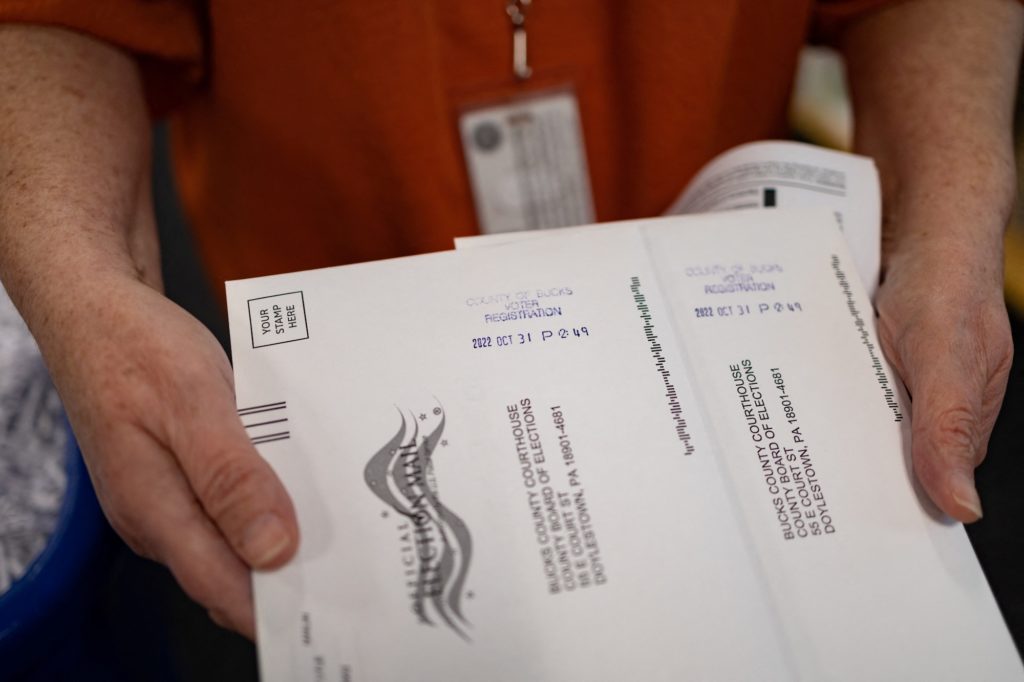
The U.S. Supreme Court heard a case challenging state rules that let mail-in ballots postmarked by Election Day be counted if received after Election Day; 14 states plus D.C. currently allow this. The Republican National Committee argues federal law fixes the election date and precludes counting ballots received later; a decision is expected around June and could force states to change procedures months before the midterms. If the Court sides with the RNC, some states may still count ballots for state offices but be barred from counting ballots for federal races received after Election Day, and broader federal legislation (e.g., the SAVE Act) could further alter vote rules.
The legal fight over late-arriving absentee ballots is less a one-off electoral technicality than a catalyst for durable policy and operational changes across state election systems. Expect states to accelerate rule-making and backend process changes (chain-of-custody protocols, cut-off synchronization between state and county systems) within weeks of any decisive opinion; that operational churn increases the probability of localized counting delays and contested certifications in razor-thin House and gubernatorial races.
A practical second-order effect: increased election-law litigation creates recurring revenue opportunities for litigation financiers and boutique firms, and drives demand for compliance/software firms that provide ballot-tracking, timestamping, and audit logs. Meanwhile, political-outcome sensitivity of regulatory regimes (energy, healthcare, tax) means a court-driven change that tilts control probabilities in swing districts will reprice policy-exposed sectors ahead of actual legislative action — markets will front-run probable policy shifts rather than wait for statutory change.
Market reaction will be bifurcated between short-term volatility spikes around decision dates and medium-term sectoral rotation as expectations crystallize. The asymmetric trade is volatility and event-hedging (cheap aftershock insurance) plus concentrated sector bets sized to withstand reversal if Congress or states counteract the ruling within a single legislative cycle.
Contrarian risk: the consensus assumes permanent disenfranchisement of late ballots; in reality, many states can and will adopt administrative fixes or legislative patches quickly, muting long-duration political regime bets. That implies favoring option-based, time-limited exposures over large outright directional equity bets until post-decision implementation paths are visible.
AI-powered research, real-time alerts, and portfolio analytics for institutional investors.
Request DemoOverall Sentiment
neutral
Sentiment Score
0.00
