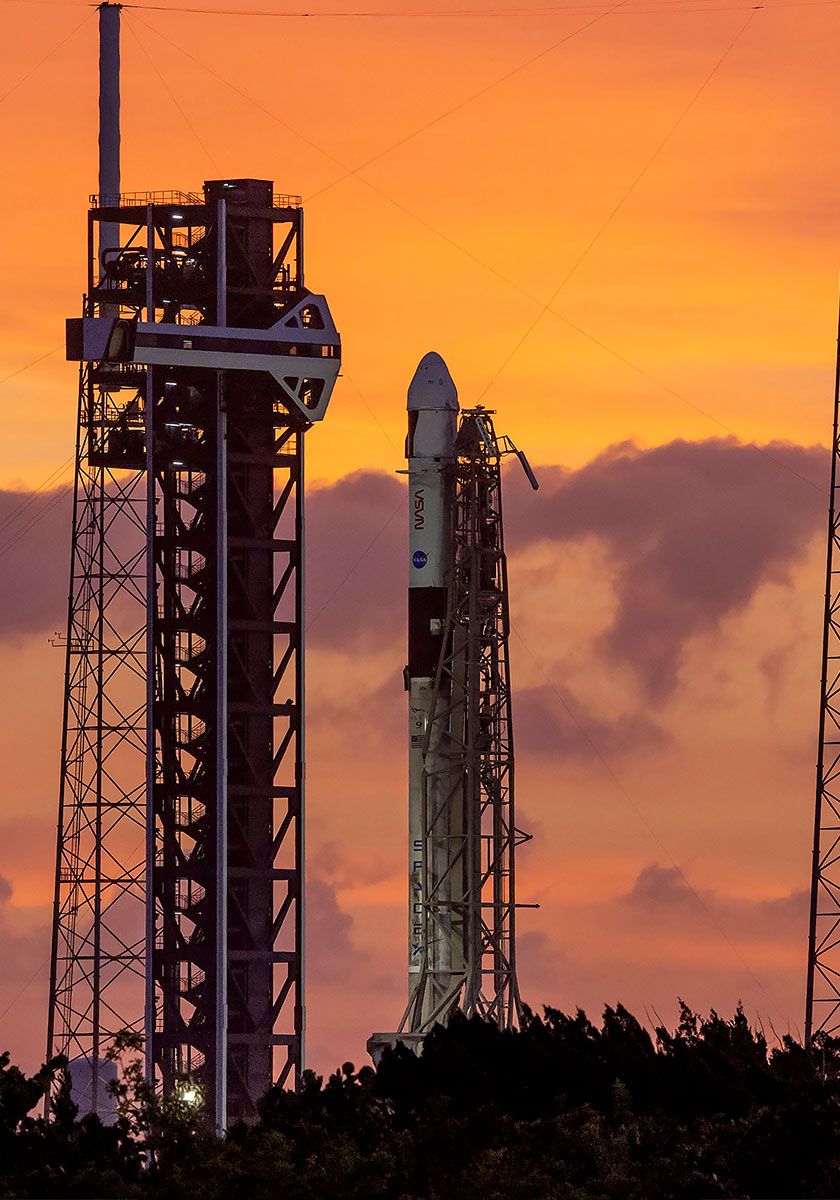
Falcon 9 launched the Transporter-16 rideshare mission on Mar 30 at 04:02 a.m. PT carrying 119 payloads; the first stage booster flew its 12th mission and successfully landed on the ‘Of Course I Still Love You’ droneship. The payload stack included cubesats, microsats, hosted payloads, a reentry vehicle and multiple orbital transfer vehicles (with eight payloads to be deployed later); SpaceX has now launched over 1,600 payloads via its Rideshare program. The mission featured multiple second-stage engine restarts and a detailed timed deployment manifest; local sonic booms were possible depending on conditions.
High-cadence, low-cost rideshare is shifting value capture away from pure lift providers and into mid/late-stream services—payload integration, in-orbit transfer, and data monetization. As launch becomes ever-cheaper and more routine, margin pools will compress at the launch level but expand for firms that bundle mission assurance, propulsive last-mile delivery, and persistent ground infra; this favors asset-light integrators and software/data players over hardware-centric small-launch startups.
Second-order supply-chain effects are already emerging: bottlenecks will migrate from engines and fairings to deployers, avionics, ground stations and regulatory/compliance services. Expect pricing pressure on standardized PPODs and surge demand (and pricing power) for mission-assurance insurance, collision avoidance services, and orbital-debris remediation technology over a 12–36 month horizon.
Tail risks that could reverse these dynamics include a single high-profile anomaly that triggers tighter regulatory oversight, national security export controls that slice foreign demand, or capacity shocks in key components (GNSS receivers, rad-hard electronics) which would raise lead times and re-accelerate pricing power for dedicated small-launchers. Near-term catalysts: earnings/contract announcements from manifest integrators and insurance-rate moves; medium-term catalysts: regulatory rulings on space traffic management and proof points from in-orbit transfer vendors.
From a competitive standpoint, incumbents that vertically integrate (launch + last-mile + data services) will capture the lion’s share of incremental economics; pure-play small-launch OEMs without downstream services are exposed to margin compression. That bifurcation creates asymmetric trading setups where platform/aggregator exposures look structurally underpriced versus single-asset launch plays.
AI-powered research, real-time alerts, and portfolio analytics for institutional investors.
Request DemoOverall Sentiment
neutral
Sentiment Score
0.00
Ticker Sentiment
