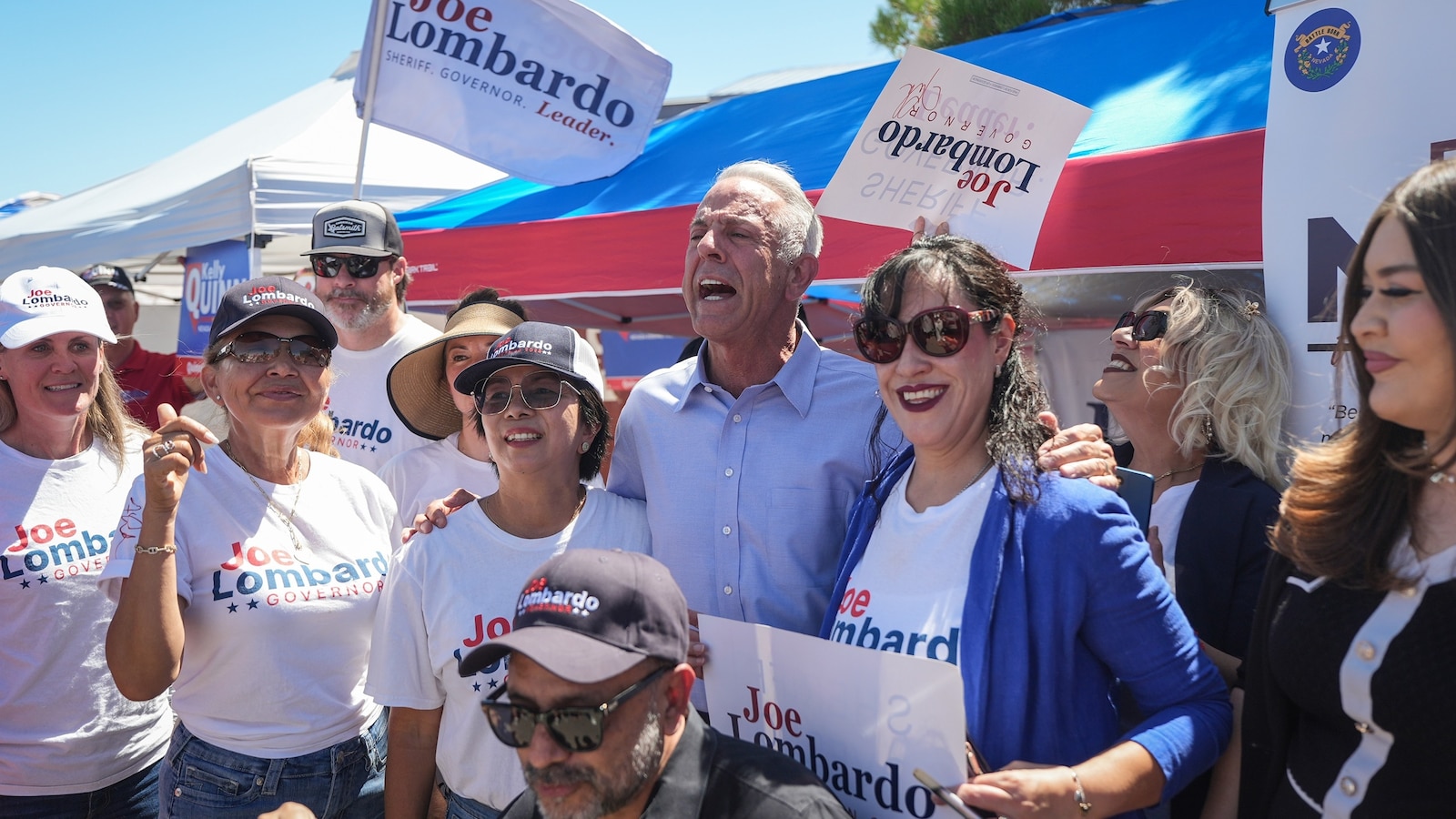
Nevada’s governor’s race is tightening around a narrow 1.5% 2022 margin, with Republican Gov. Joe Lombardo facing Democrat Aaron Ford in a contest that may signal GOP viability in battleground states heading into 2028. The article highlights headwinds including weak Nevada tourism, high unemployment, housing affordability pressure, and tariff-related costs, while also noting Lombardo’s ties to Trump and Ford’s extensive litigation against the Trump administration. The piece is politically significant but likely limited in direct market impact.
This race is less about one governor’s odds and more about whether Republicans can keep winning in Sun Belt battlegrounds without full-throated alignment to Trump-era economics. The market-relevant signal is that Nevada’s electorate is structurally moving toward volatility: more nonpartisan voters, a tourism-sensitive labor market, and affordability stress make it a high-beta referendum on wage growth versus cost-of-living pain. If Lombardo survives despite weak macro sentiment, it would validate a template for GOP incumbents in 2026-2028: distance tactically from Trump on tariffs/immigration optics, but preserve law-and-order branding and pragmatic governance. For ICE, the immediate read-through is not directional revenue from this single race, but policy regime risk. A Lombardo win lowers the odds of abrupt state-level friction around detention/enforcement logistics in a key border-adjacent labor market, while a Ford win raises the probability of more aggressive state litigation and local resistance, increasing operating complexity and settlement costs for private contractors over the next 12-24 months. The bigger second-order effect is reputational: if Democrats successfully make immigration enforcement a pocketbook issue in a tourism-heavy state, that playbook can spread to other battlegrounds and increase headline volatility around enforcement contractors. The contrarian view is that the consensus may be overestimating the ballot-box penalty from tariffs and immigration by assuming straight-line voter anger. In a state where employment and visitation are the real economic transmission mechanism, a modest improvement in jobs or tourism into 2026 could quickly neutralize the anti-Trump macro narrative, especially if the incumbent is seen as a buffer against chaos. That means the trade is less “short Trump beta” and more “own optionality around a narrow-margin outcome”: the path dependency is high, and polling swings of just 1-2 points can matter more than the national mood. For investors, the key is to treat this as a sentiment catalyst with asymmetric policy tails rather than a clean fundamental earnings event. A Lombardo hold would likely reduce left-tail regulatory risk for ICE, while a Ford upset could sharpen scrutiny of immigration contractors and private detention vendors. Either way, the real catalyst window is the next 3-6 months as campaigning intensifies and immigration/tariff rhetoric gets re-priced into battleground expectations for 2026-2028.
AI-powered research, real-time alerts, and portfolio analytics for institutional investors.
Request DemoOverall Sentiment
mildly negative
Sentiment Score
-0.15
Ticker Sentiment
