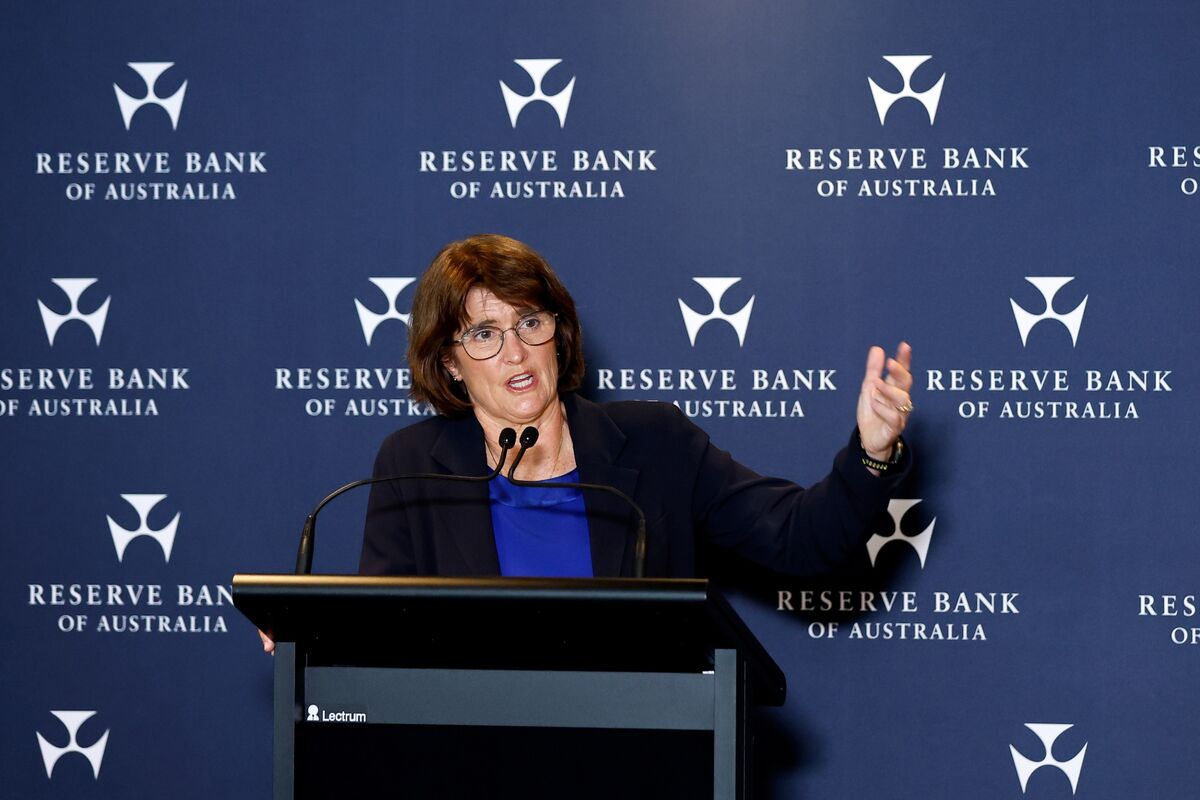
The Reserve Bank of Australia recently cut interest rates following a post-Covid economic soft landing. According to Bloomberg Economics' James McIntyre on the Bloomberg Australia podcast, the outlook for interest rates, the impact of Trump’s tariff war, and implications for the housing market are key areas of focus.
The Reserve Bank of Australia (RBA) has executed another interest rate cut, successfully navigating a post-Covid economic 'soft landing' that has eluded many other central banks. This development is viewed with a moderately positive sentiment (score 0.6) and an optimistic tone, and is assessed to have a significant market impact (score 0.75). Key forward-looking considerations, as highlighted by Bloomberg Economics, revolve around the future trajectory of Australian interest rates, the potential economic repercussions of prospective US tariff implementations, referred to as 'Trump’s tariff war,' and the subsequent effects on the Australian housing market. While peripheral corporate news includes Rio Tinto's new CEO search and Goldman Sachs APAC changes (GS ticker sentiment: 0.0, neutral), the core focus remains on the macroeconomic environment shaped by the RBA's monetary policy. The RBA's achievement provides a cautiously optimistic outlook, though external trade policy risks and domestic housing sector sensitivity warrant continued vigilance.
AI-powered research, real-time alerts, and portfolio analytics for institutional investors.
Request DemoOverall Sentiment
moderately positive
Sentiment Score
0.60
Ticker Sentiment
