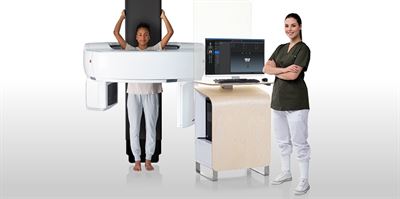
Planmed Oy's Planmed XFI weight-bearing CBCT scanner has received CE marking under the EU Medical Device Regulation (MDR 2017/745) for upper/lower extremities and head/neck imaging, clearing the device for commercial use in Europe after prior availability in the U.S. The high-resolution, low-dose scanner is positioned to improve detection of subtle fractures and load-bearing misalignments at point of care and will be exhibited at ECR 2026; Planmed is part of Planmeca Group, which reported combined turnover of EUR 1.2 billion and 4,400 employees in 2024. The certification materially supports Planmed’s European market entry and commercial expansion in orthopedic imaging, though the announcement is unlikely to be market-moving for investors at large.
Market structure: Planmed XFI’s CE MDR clearance expands European supply of weight-bearing CBCT and benefits Planmed/Planmeca (private) and component suppliers (flat-panel makers, detectors). Public beneficiaries are broad imaging OEMs with modular portfolios (GE, PHG, SHL.DE) because niche CBCT growth can drive mid-single-digit incremental imaging revenues over 12–36 months if adoption captures 5–10% of extremity imaging. Incumbent pure-play 2D X‑ray vendors and independent outpatient imaging centers (referral volume) face modest downside as point‑of‑care 3D reduces repeat visits and downstream referral revenue.
Risk assessment: Tail risks include EU MDR reinterpretation, payer noncoverage, or component shortages that could delay commercialization by 3–12 months; clinical adoption risk (training, workflow) could stretch to 24–36 months. Near-term catalyst windows: ECR March 4–8, 2026 (product visibility), first 6–12 month European procurement orders, and Q2–Q4 2026 sales disclosures from public OEMs. Hidden dependencies include hospital CAPEX cycles and national reimbursement codes—if payers refuse separate reimbursement, ASPs and adoption rate drop materially.
Trade implications: Direct tactical plays favor diversified imaging leaders: allocate small, conviction-weighted positions (2–3% each) in GE (GE), Philips (PHG), and Siemens Healthineers (SHL.DE) with 6–12 month horizons; buy 6–12 month call spreads on GE to leverage upside while capping risk. Use a relative-value pair: long GE (2%) / short RadNet (RDNT) (1–1.5%) over 6–12 months to capture hardware share gains vs. potential outpatient volume loss. Size positions conservatively given adoption uncertainty; re-evaluate at ECR and on first EU order announcements.
Contrarian angles: Consensus underestimates adoption friction — historical parallel: point‑of‑care ultrasound took 3–5 years to meaningfully dent radiology volumes; therefore upside for OEMs is likely front‑loaded but limited to 5–10% revenue tailwinds over 24–36 months, not transformational overnight. Overlooked risk: increased competitive entry could compress ASPs by 5–15% within 2–4 years; trigger a stop-loss or hedge if adoption exceeds 10% within 12 months (signaling faster price competition).
AI-powered research, real-time alerts, and portfolio analytics for institutional investors.
Request DemoOverall Sentiment
mildly positive
Sentiment Score
0.30
