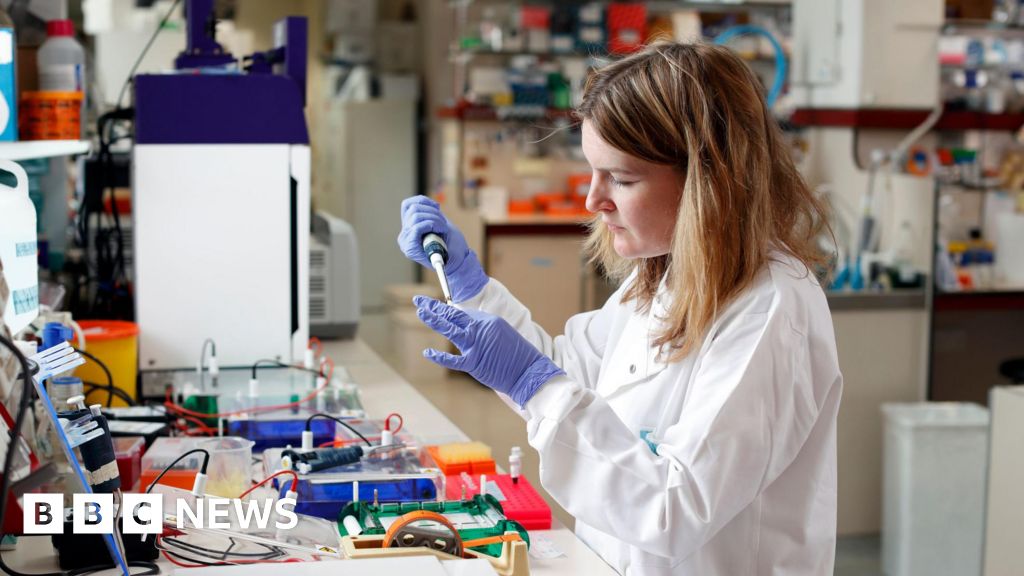
UK Research and Innovation (UKRI), which manages roughly £8bn of public research funding annually, has been ordered to 'focus and do fewer things better,' pausing new grants and reallocating funds with an emphasis on commercialisation; the reorganisation is expected to be fully implemented by April 2027. The Science and Technologies Facilities Council (STFC) has been tasked with finding £162m in savings while Innovate UK has paused new SME support and laid off local advisers, raising short-term funding uncertainty for early-stage UK tech, biotech and space-related ventures and potentially reducing the pipeline of investible startups.
Market structure: The UKRI pause reallocates an £8bn budget toward fewer, more commercial projects and forces councils (STFC needs £162m savings) to triage grants. Expected outcome: early-stage grant availability likely falls materially (scenario range 20–50% fewer supported SMEs over 12–24 months), concentrating public seed capital toward large-cap partners and approved commercial avenues. That increases bargaining power and valuation support for incumbents (BAE, AZN) and raises funding gaps for UK micro-VC and AIM-listed biotech/space names, increasing idiosyncratic volatility.
Risk assessment: Tail risks include large-scale project cancellations, withdrawal from non-mandatory international commitments, or a rapid brain-drain of researchers to EU/US (low-probability, high-impact). Time bands: immediate — grant freezes and advisor layoffs; 3–12 months — pipeline thinning and fewer university spinouts; to April 2027 — full reallocation and structural shift to commercialisation. Hidden dependencies: regional jobs, co-investment from private VC, and R&D tax credit changes; catalysts are the next HMT spending review and any Tory leadership/election moves.
Trade implications: Tactical longs: overweight large-cap UK defense and pharma (BAES.L, AZN.L) and FTSE 100 ETF (EWU) to capture reallocation; tactical shorts/hedges: AIM/small-cap UK biotech basket and UK small-cap ETFs (size 1–2% NAV each). Options: buy 3-month FTSE put spreads (5%–12% strikes) to hedge a UK small-cap shock; consider 3-month GBP put (5% OTM) vs USD as growth sentiment proxy. Rotate 5–10% from UK small-cap exposure into global large-cap healthcare and US/CAN space-tech names over 30–90 days.
Contrarian angles: Consensus focuses on doom for UK science; what’s underappreciated is M&A upside — well-capitalised global pharma/defense firms will buy distressed spinouts, creating a takeover pipeline over 12–36 months. Reaction may be overdone in micro-cap prices; look for quality spinouts with validated IP trading at >40% haircuts as acquisition targets. Historical parallel: post-2010 austerity produced short-term pain but accelerated consolidation and private-sector acquisition; similar dynamics could deliver >30% IRR for disciplined buyers of intellectual-property-rich assets.
AI-powered research, real-time alerts, and portfolio analytics for institutional investors.
Request DemoOverall Sentiment
moderately negative
Sentiment Score
-0.48
