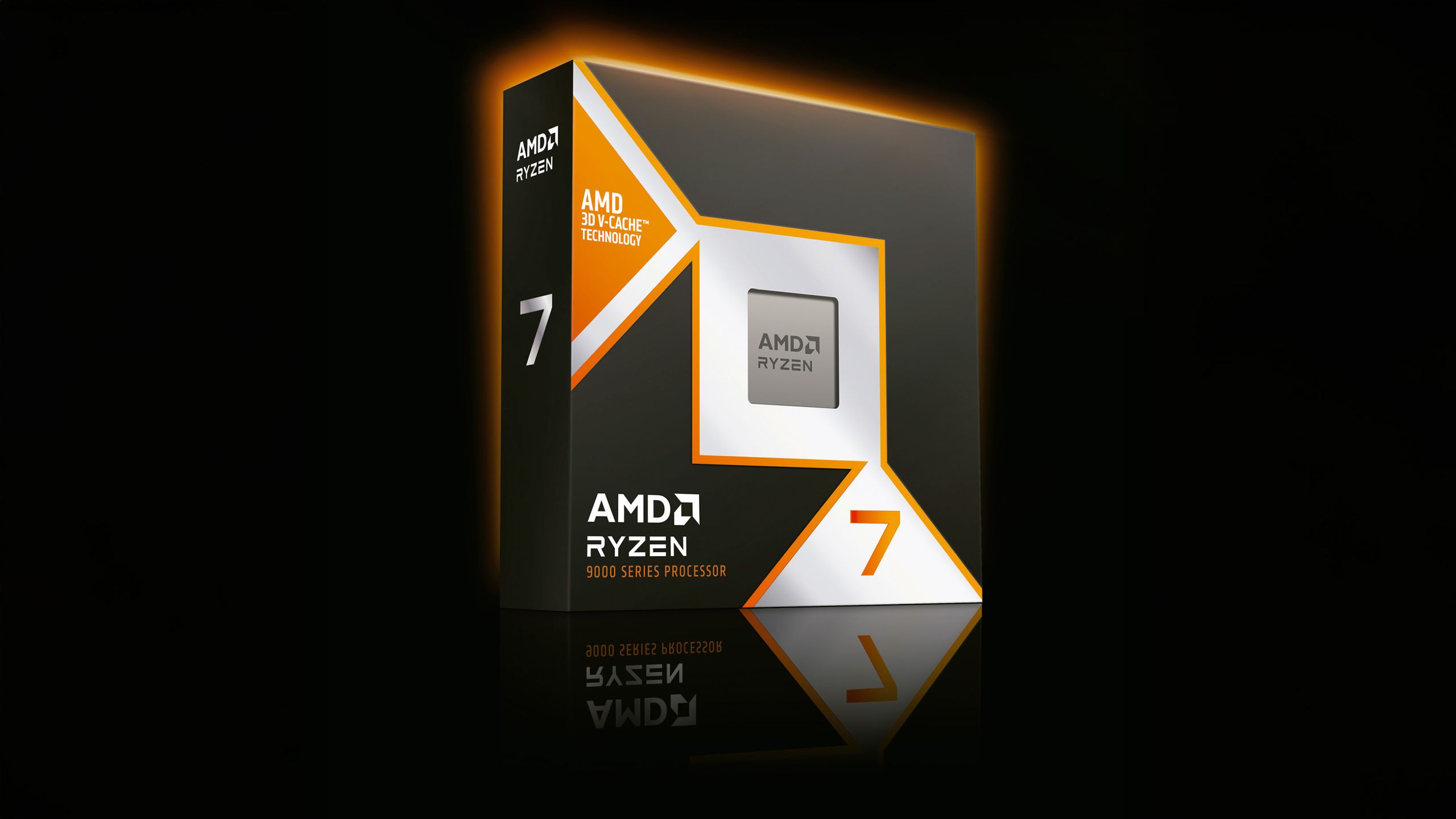
AMD will launch the Ryzen 7 9850X3D at $499 on January 29, with units already available for preorder on Amazon; the Zen 5 3D V-Cache chip is a higher-binned successor to the 9800X3D with a 400 MHz boost-clock increase and AMD claims up to a 7% gaming uplift and up to 27% advantage versus Intel's Core Ultra 9 285K. The 9850X3D features 8 cores/16 threads, 104MB cache, 120W TDP (162W MTP), and official DDR5-5600 support, while AMD argues second-gen 3D V-Cache reduces sensitivity to memory speed (DDR5-4800 vs DDR5-6000 <1% in internal tests), easing upgrade costs amid tight DRAM supply and rising memory prices.
Market structure: AMD (AMD) is the direct beneficiary — higher-binned Ryzen 7 9850X3D at $499 reinforces pricing power in the high-end gaming segment and preserves a moat around 3D V-Cache. Losers include Intel (INTC) at the gaming flagship layer and lower-end CPU OEM SKUs that compete on price; DRAM suppliers (MU, SWKS) are ambiguous—higher DDR5 prices help suppliers but AMD’s claim that DDR5-4800 is sufficient caps upside for premium DIMMs. Retail channels (AMZN) gain near-term transitory revenue from preorders.
Risks & dynamics: Immediate risk (days–weeks) centers on real-world benchmarks and channel sell-through that can swing sentiment ±10–20%. Short-term (1–3 months) tail risks: production/yield problems on 3D stacking or an aggressive Intel price cut; long-term (quarters) risk: Intel architecture roadmap and DRAM cycle normalization compress margins. Hidden dependencies include motherboard BIOS readiness, OEM adoption pace, and inventory build in channels that could delay revenue recognition.
Trade implications: Expect a measured AMD outperformance vs INTC over the next 3 months if benchmarks confirm a 5–7% gaming lead; DRAM price moves will amplify margins for suppliers. Cross-asset: stronger AMD narrative supports risk-on equities and tech credit spreads, while weakening Intel could increase sector dispersion—monitor implied vols for 30–90 day options. Catalysts to watch: independent benchmarks (within 2 weeks post-launch), monthly DRAM spot indices (weekly), and Intel product/price responses (next 60–90 days).
Contrarian/sizing: The market may underprice the odds of benchmark disappointment—if AMD real-world gains are <3% vs 9800X3D the stock could retrace 10–15% short term. Conversely, DRAM price resilience is a second-order risk that could lift semiconductor suppliers more than AMD; historical parallel: 5800X3D adoption showed durable but niche uplift, not broad platform replacement. Unintended consequence: AMD messaging that cheap DDR5 suffices could reduce incremental DRAM TAM, hurting memory makers despite headline optimism.
AI-powered research, real-time alerts, and portfolio analytics for institutional investors.
Request DemoOverall Sentiment
mildly positive
Sentiment Score
0.35
Ticker Sentiment
