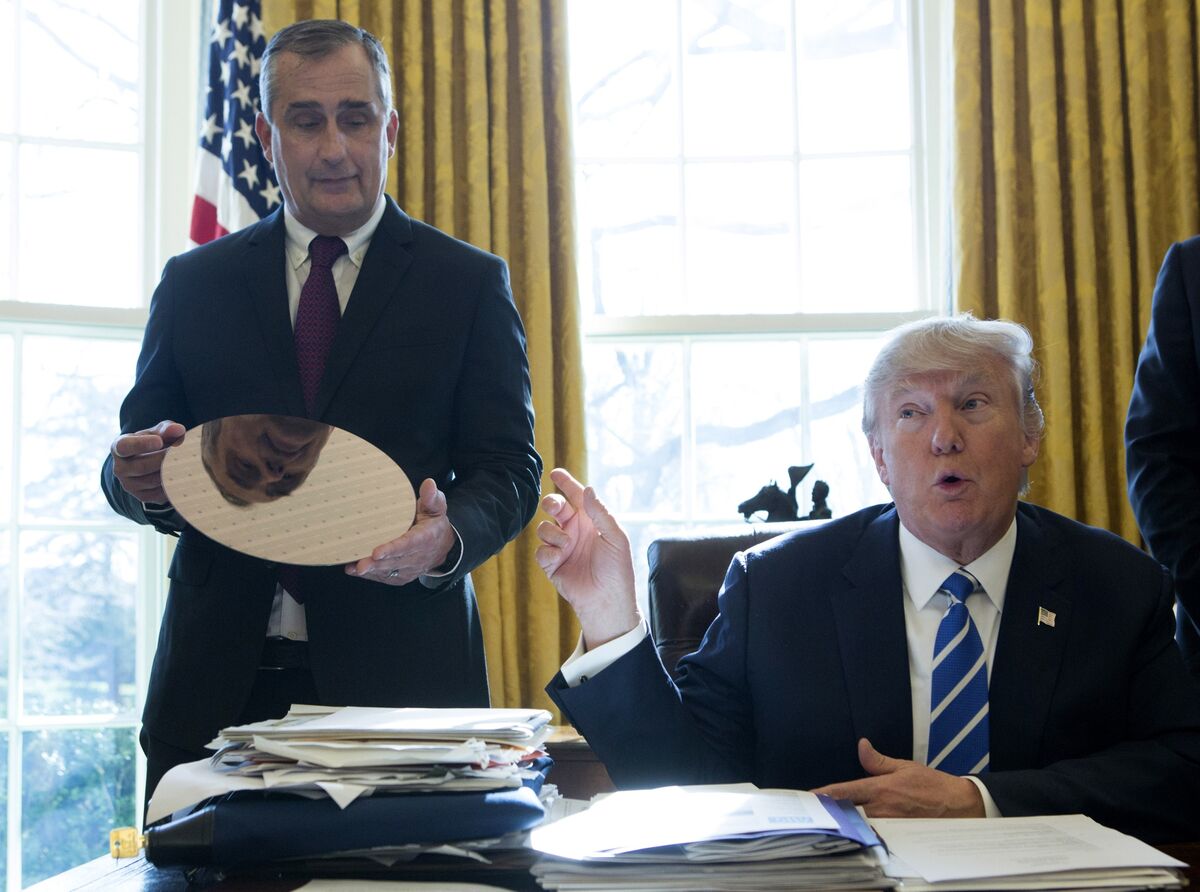
The Trump administration has acquired just under 10% of Intel, the largest U.S. semiconductor company, a move that follows a Defense Department stake in a rare-earth mining firm and signals further government investments in the semiconductor sector. This action is framed as a controversial application of industrial policy, sparking debate over the government's role in taking equity stakes in vital U.S. companies and raising concerns about potential political influence and personal enrichment.
The U.S. government, through the Trump administration, has acquired a substantial equity position of just under 10% in Intel Corp (INTC), the nation's largest semiconductor firm. This action is not an isolated event but part of a broader, and controversial, industrial policy strategy that reportedly includes further investments in the semiconductor sector and follows a similar Defense Department stake in a rare-earth mining company. The move has generated significant debate and is viewed with strong negativity (sentiment score: -0.7), focusing on the potential for political motivation and influence rather than purely strategic national interest. For Intel, this introduces the U.S. government as a major shareholder, creating a notable overhang of political and governance risk, as reflected in the negative sentiment specific to the stock (INTC: -0.3). The development fundamentally alters the company's shareholder structure and exposes it to potential government interference in its strategic direction.
AI-powered research, real-time alerts, and portfolio analytics for institutional investors.
Request DemoOverall Sentiment
strongly negative
Sentiment Score
-0.70
Ticker Sentiment
