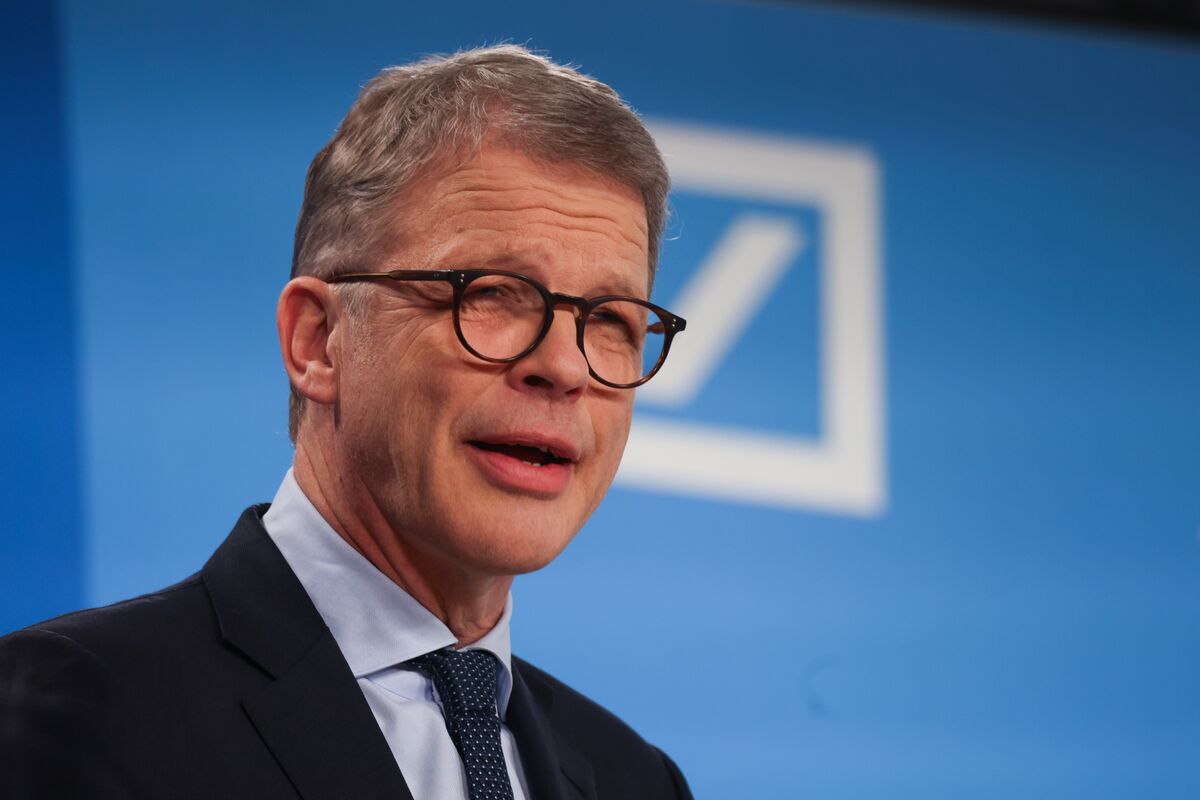
Deutsche Bank CEO Christian Sewing said Germany’s banks are not panicking over the cyber risk posed by Anthropic’s new AI model, though it must be incorporated into daily risk management. The article is a precautionary commentary rather than a sign of immediate losses, regulatory action, or operational disruption. Market impact is likely limited, with the main relevance being heightened awareness of AI-enabled hacking risks for the banking sector.
The key market implication is not an immediate earnings hit to European banks, but an acceleration of capex and vendor selection across the cybersecurity stack. When banks publicly downplay AI-enabled hacking risk, they are signaling that the incremental spend will be absorbed as “run-rate hygiene” rather than crisis-driven budget expansion, which tends to favor incumbent security platforms and large systems integrators over pure-play point solutions. The second-order effect is margin pressure for banks: higher compliance, model governance, and authentication costs will likely show up gradually over the next 2-4 quarters, not as a discrete event. For Deutsche Bank, the risk is less direct loss from cyber incidents and more about operational drag and reputational asymmetry. Large global banks can usually absorb the technology burden, but smaller lenders and fintech-adjacent providers may be forced into faster vendor consolidation, creating a winner-take-more dynamic for a handful of enterprise security vendors. If this threat becomes more salient, expect procurement to tilt toward providers that can demonstrate controlled, auditable AI usage rather than the newest model features, which is a subtle headwind for the most aggressive AI infrastructure names. The contrarian view is that public calm from bank leadership may reflect preparedness, but it can also understate tail risk: sophisticated AI lowers the cost of phishing, social engineering, and rapid exploit iteration, so incident frequency may rise before defenses are fully adapted. That makes the next catalyst more likely to be a high-profile breach at a mid-tier institution than a broad sector stress event. Time horizon matters: near term this is a sentiment-neutral issue for banks, but over 6-18 months it could reshape procurement budgets and vendor market share if regulators push for stricter model-risk controls.
AI-powered research, real-time alerts, and portfolio analytics for institutional investors.
Request DemoOverall Sentiment
neutral
Sentiment Score
0.00
Ticker Sentiment
