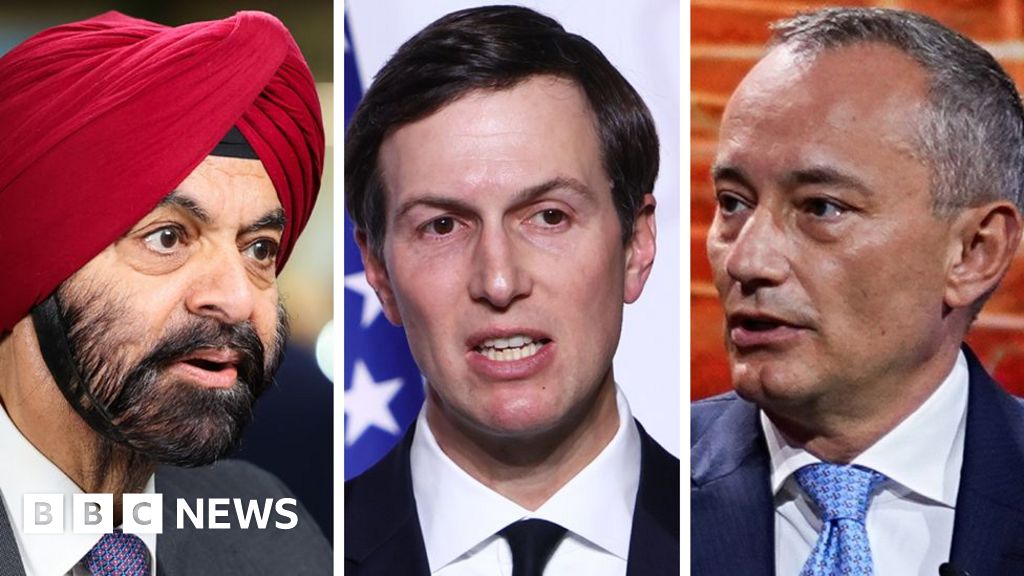
The White House named the founding members of President Trump’s Executive Board to oversee Gaza’s temporary governance and reconstruction, chaired by Trump and including Sir Tony Blair, Marco Rubio, Steve Witkoff, Jared Kushner, Marc Rowan, Ajay Banga and Robert Gabriel. The board will supervise a Gaza Executive Board and a 15-member technocratic National Committee for the Administration of Gaza (NCAG) led by Ali Shaath, with Nickolay Mladenov as on-the-ground representative. Portfolios and responsibilities have not been allocated, no Palestinians or women have been announced at the top level so far, and the structure raises political and implementation risk for reconstruction, donor coordination and potential contracting opportunities.
Market structure: The announced Board of Peace concentrates private-sector, political and financial heavyweights — beneficiaries likely include large construction/engineering contractors, private-equity managers, and global payments firms that handle reconstruction flows. Expect multi-year demand for heavy equipment, cement, shipping, and cross-border payments; a plausible base case is $5–20bn of reconstruction contracts over 12–36 months, which increases pricing power for large-cap contractors and specialty insurers while squeezing small local providers.
Risk assessment: Key tail risks are renewed hostilities (20–35% probability within 12 months), donor fatigue or sanctions-driven funding freezes, and governance failure/corruption that delays spending. Immediate market impact should be muted (days); short-term (weeks–months) risk premia in EM debt and regional FX can widen; long-term (12–36 months) cashflows drive winners — but only if secure corridors, insurance, and banking rails are established.
Trade implications: Direct plays favor MA (payments/settlement exposure) and large-scale contractors/PE-related equities (Apollo/APO exposure to fees/deal flow). Use option structures to cap downside: 3–6 month MA call spreads to express upside from fee growth; consider 6–18 month exposure to materials (VMC/CAT) and defense (RTX/LMT) for security-related tail hedges. Pair trades: long large-cap contractors vs short small-cap regional contractors/insurers that lack balance-sheet capacity.
Contrarian angles: Consensus prices in a fast, donor-backed rebuild; that may be optimistic — governance bottlenecks and insurance gap could delay revenue 12–24 months, creating a buying window. Conversely, underappreciated domestic payment rails/remittance upside could lift MA by >10% vs broader fintech; insurers that reprice risk aggressively may be over-sold once corridors are guaranteed.
AI-powered research, real-time alerts, and portfolio analytics for institutional investors.
Request DemoOverall Sentiment
neutral
Sentiment Score
0.00
Ticker Sentiment
