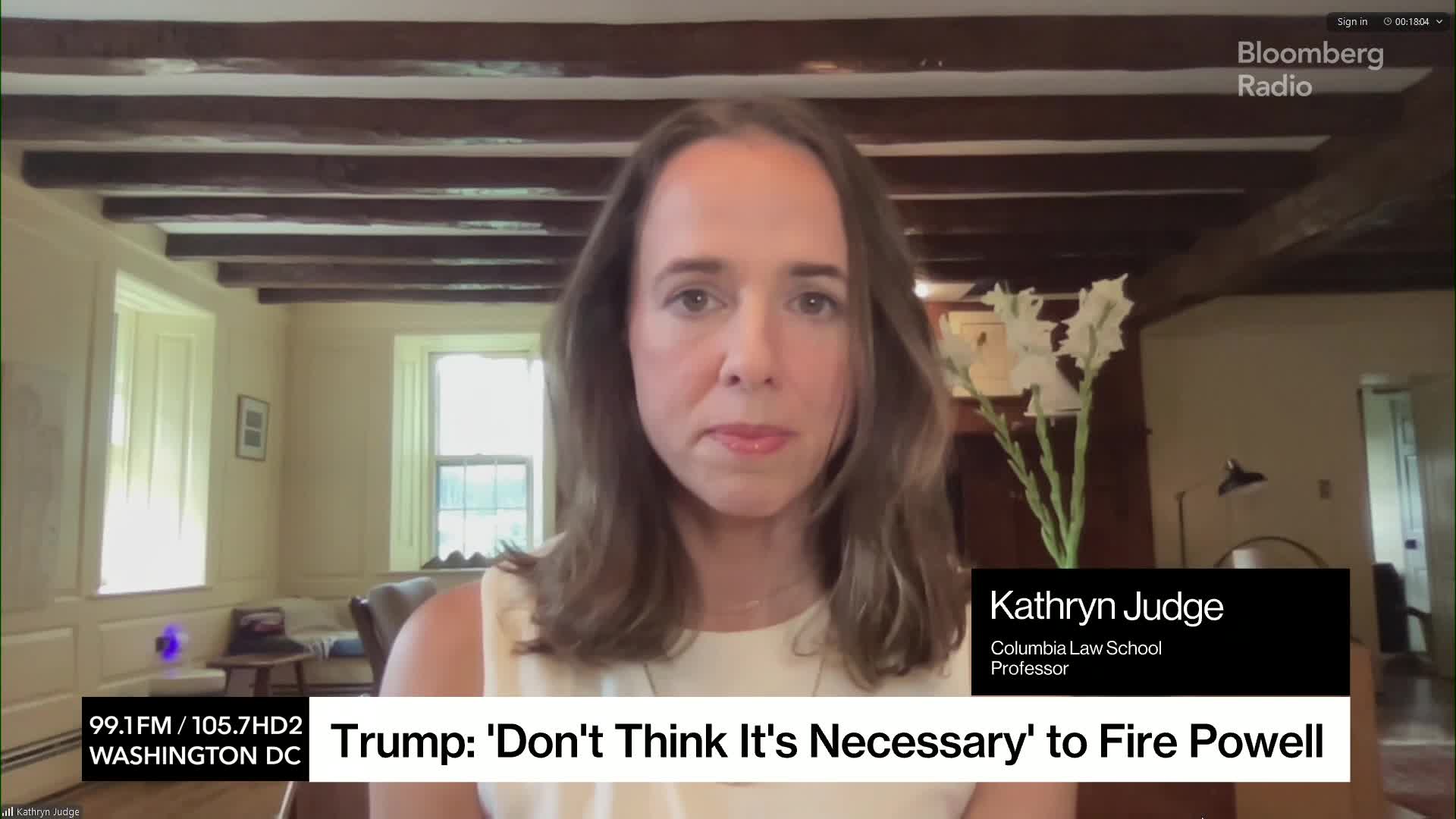
Columbia Law Professor Kathyrn Judge indicates President Trump's threats to dismiss Federal Reserve Chair Jerome Powell are not legally supported, but emphasizes that the greater concern lies in the President's actions to erode the Fed's authority and credibility. This commentary underscores broader market concerns regarding political challenges to central bank independence and its potential impact on policy stability.
Commentary from Columbia Law School professor Kathyrn Judge highlights a significant institutional risk centered on the Federal Reserve's independence. While the legal grounds for President Trump's threats to dismiss Chair Jerome Powell are reportedly weak, the more substantial issue identified is the persistent effort to undermine the central bank's authority and credibility. This political pressure introduces a high degree of uncertainty into the outlook for U.S. monetary policy, a factor contributing to a moderately negative market sentiment. The challenge to the Fed's operational autonomy is a material event, as it threatens the policy stability and institutional credibility that have historically anchored market expectations and asset pricing.
AI-powered research, real-time alerts, and portfolio analytics for institutional investors.
Request DemoOverall Sentiment
moderately negative
Sentiment Score
-0.50
