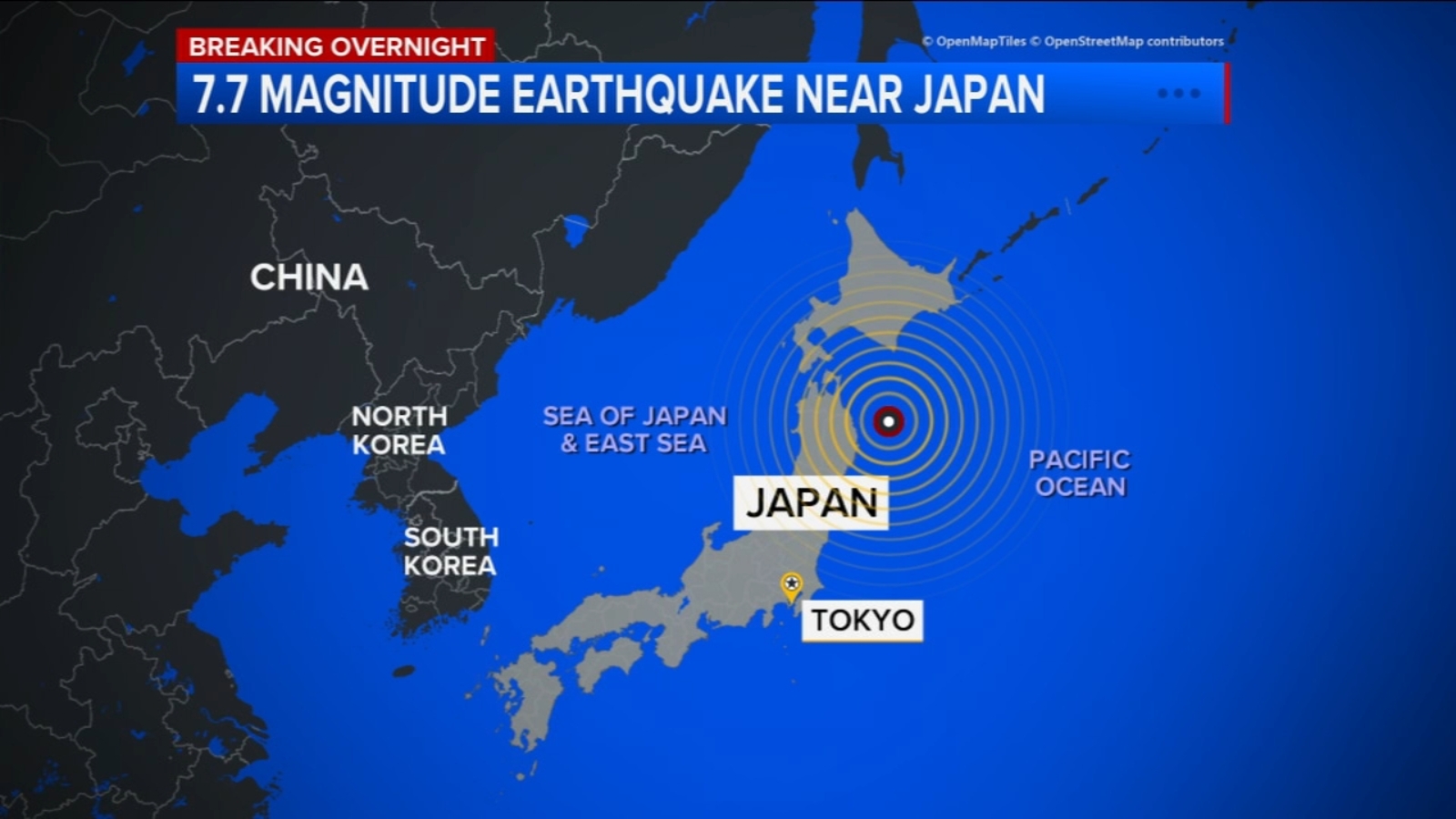
A preliminary magnitude 7.7 earthquake off northern Japan triggered a brief tsunami alert, 80 cm tsunami readings at Kuji port, and non-binding evacuation advisories for more than 128,000 residents. One person was injured, and Shinkansen services between Tokyo and Shin-Aomori were partially suspended. Nuclear facilities were reported intact, and the Pacific Tsunami Warning Center later said the tsunami threat had passed, but the event heightens near-term regional disaster risk.
The immediate market read is not a broad Japan beta shock; it is a localized duration/event-risk repricing. The highest-probability impact is in transport and coastal logistics over the next 1-5 trading days: even a short suspension of rail and port operations can force inventory buffers higher, delay same-day manufacturing inputs, and trigger small but measurable revenue leakage for operators with thin margin per seat/turn. The second-order effect is that firms with time-sensitive, just-in-time supply chains in northern Honshu may see temporary working-capital absorption and expedited freight costs, while insurers and reinsurers likely see only sentiment-driven moves unless aftershocks compound. The more interesting tail is optionality around infrastructure resilience and policy. Japan’s repeated advisories keep the market’s focus on seismic hardening, backup power, and emergency logistics, which can support contractors and electrical equipment names on any pullback after the initial “risk-off” headline fades. Defense-adjacent electronics, communications redundancy, and industrial automation vendors benefit if corporate capex is redirected toward resilience upgrades rather than expansion; that is a months-long trade, not a one-day trade. The contrarian point is that the move may be over-discounting catastrophe probability while underpricing operational friction. A 1% near-term mega-quake probability is low in absolute terms, but the distribution is fat-tailed enough that companies with exposed coastal assets may deserve a modest de-rating versus peers even if no larger event occurs. Conversely, any normalization in the next 48-72 hours could reverse headline-driven selling quickly, especially in transport and travel names where algorithmic de-risking tends to be mechanical and short-lived.
AI-powered research, real-time alerts, and portfolio analytics for institutional investors.
Overall Sentiment
mildly negative
Sentiment Score
-0.15
