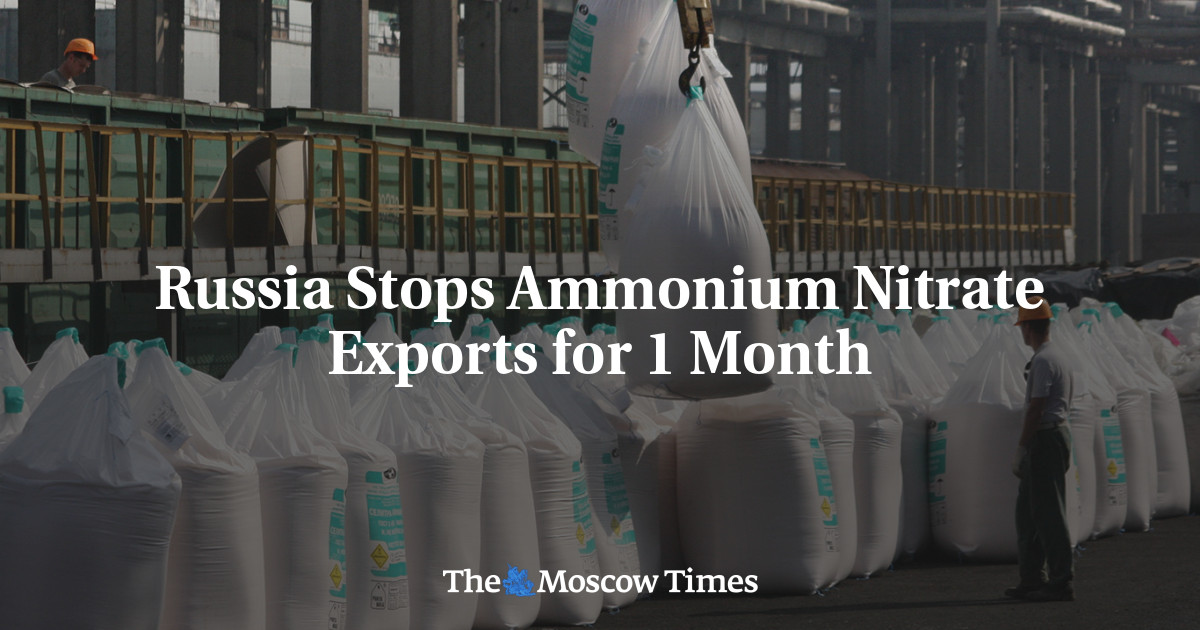
Russia banned ammonium nitrate exports for one month to secure domestic fertilizer supplies ahead of spring planting; Russia produces ~25% of the world’s ammonium nitrate. The government halted new export licenses except for state contracts and set an ammonium nitrate export quota of 2.6 million metric tons for Dec 2025–May 2026, with broader nitrogen/compound fertilizer caps through May 31, 2026. The move, combined with a Strait of Hormuz disruption (24% of global ammonia flows) and recent drone strikes that put Acron’s Dorogobuzh plant (≈11% of Russia’s output) offline, heightens global fertilizer supply risk and likely pressures prices and agricultural input availability.
This shock amplifies an existing seasonal vulnerability: nitrogen fertilizer markets have tight liquidity heading into planting so even modest reductions in available product can move spot prices sharply within weeks. Expect a near-term cascade where spot ammonia/AN indices spike, distributors hoard inventory, and importers scramble for alternative grades (urea, UAN), widening intra-fertilizer spreads by double digits; a 15–30% move in ammonia prices over 1–3 months could translate to a 10–25% swing in EBITDA for low-cost producers with spare capacity.
Second-order winners are businesses that capture margin between commodity fertilizer and delivered farm inputs: vertically integrated nitrogen producers, short-haul logistics providers in low-cost gas regions, and chemical tanker owners with ammonia-capable parcels. Losers include distributors long on inventory bought at prior levels, cash-strapped farmers forced to under-fertilize (reducing yields later in the season), and commodity processors that cannot pass through input costs; a 3–6 month fertilizer deficit can push crop prices materially higher in the harvest window.
Key risks and catalysts are asymmetric: upside risk is rapid escalation (attacks, port disruptions) that curtails more capacity, compressing supply within days; reversal drivers include swift substitution to urea/UAN, re‑routing via third-country intermediaries, or diplomatic/insurance fixes that restore normal flows — each could unwind price premia in 4–12 weeks. Monitor three quantitative triggers: weekly ammonia/AN spot index moves >10%, urea/AN basis compression, and chemical tanker charter rates (ammonia-capable) up >25% month-over-month.
Tactically, position sizing should reflect time-decay and binary geopolitical tail risk: favor defined-risk, multi-month option structures and short-dated commodity plays that capture the planting-season window while hedging for a policy or routing reversal. Maintain a small insurance short on price overshoot (sell premium) to monetize the case where market has already front-loaded the risk premium.
AI-powered research, real-time alerts, and portfolio analytics for institutional investors.
Request DemoOverall Sentiment
mildly negative
Sentiment Score
-0.30
