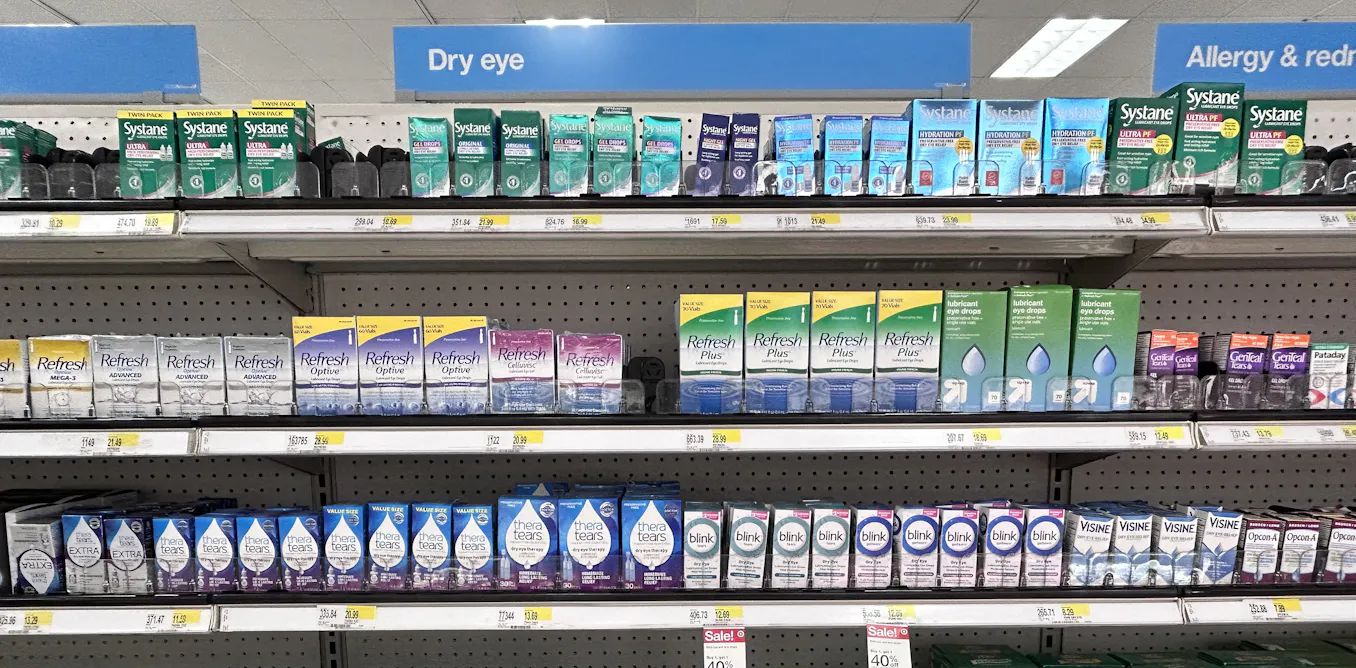
K.C. Pharmaceuticals recalled more than 3.1 million bottles of lubricating eye drops on March 3, 2026 after failing to properly test sterility; eight product SKUs across major retailers (Walgreens, CVS, Kroger, Dollar General et al.) and multiple private-label brands are affected with expirations Apr–Oct 2026. The recall follows a 2023 FDA warning letter and industry sterility outbreaks, signaling heightened regulatory and operational risk for the manufacturer and potential reputational/recall costs; no infections reported to the FDA as of early April. Investors should expect elevated inspection and compliance scrutiny across OTC eye-drop manufacturers and localized revenue/refund impacts for the affected SKUs and retail partners.
Retailers will experience a concentrated P&L and operational hit over the next 1–3 quarters driven by refunds, inventory write-offs and SKU delisting — not from top-line volume loss but from margin erosion and increased shrinkage allowances. The larger, persistent impact is regulatory: an FDA enforcement cycle that raises compliance costs for private-label OTC producers will accelerate supplier consolidation, effectively raising switching costs and giving scale advantages to national pharmacy chains with vertically integrated pharmacy and quality-control capabilities.
Second-order demand dynamics favor channels that can triage consumer health concerns quickly. Expect a measurable short-term uplift in pharmacist consultations and sales of premium, single-use sterile alternatives at national pharmacies and clinics over 2–6 months, improving basket-size metrics even as low-margin dollar-channel sales dip. Conversely, value-focused grocers and dollar chains with heavy private-label OTC penetration will face both reputational spillover and margin pressure as buyers reprice supplier risk.
Tail risks are asymmetric: the base-case is contained financial pain for retailers, but two catalysts could materially widen the hit within 3–12 months — class-action litigation aggregating claims across states, or follow-on FDA findings at other low-cost manufacturers prompting broader category inspections. A quick reversal is possible if manufacturers rapidly certify sterility with third-party validators and retailers transparently shift to validated suppliers, which would restore consumer confidence within a single quarter.
AI-powered research, real-time alerts, and portfolio analytics for institutional investors.
Request DemoOverall Sentiment
strongly negative
Sentiment Score
-0.65
Ticker Sentiment
