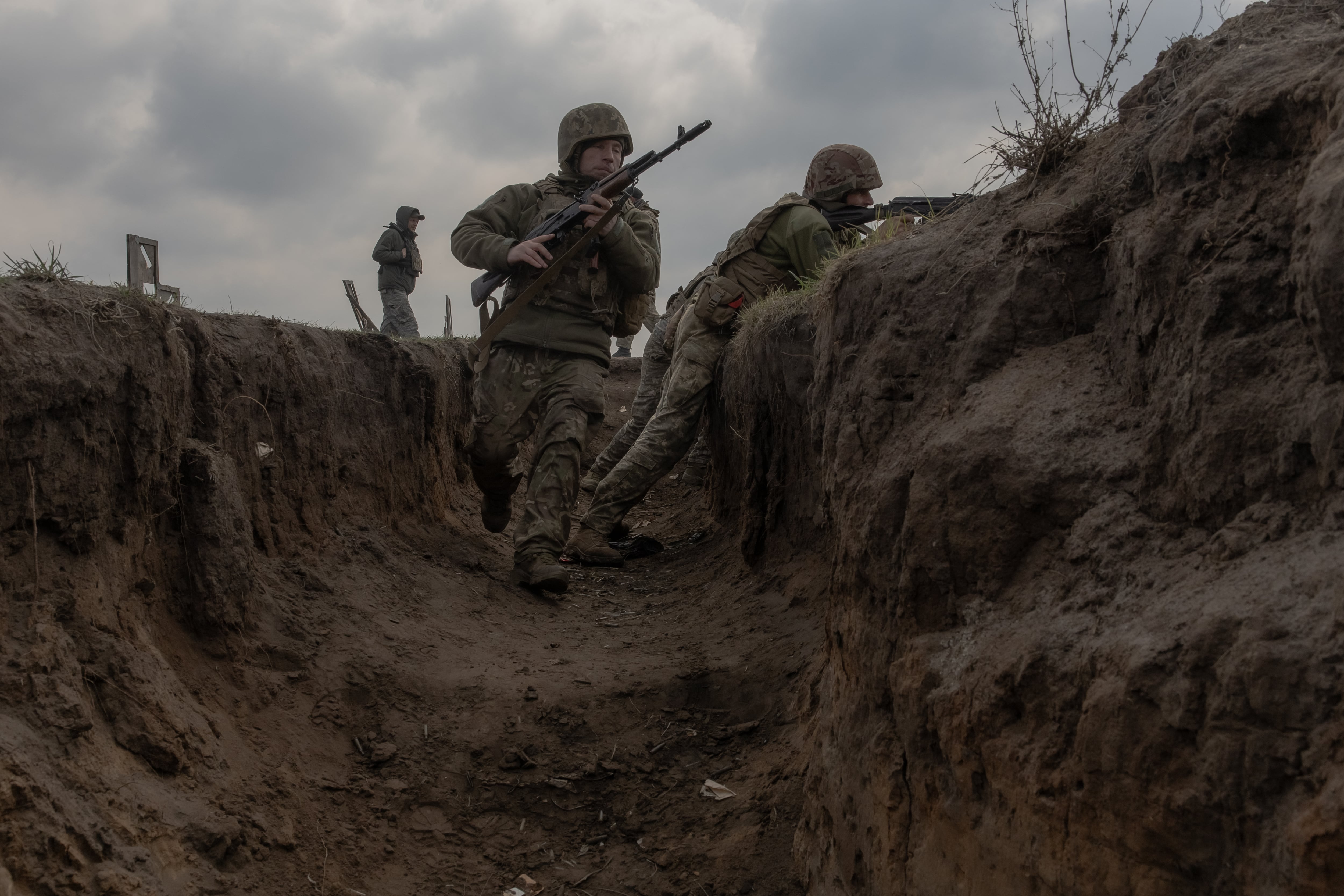
Russia and Ukraine reported continued fighting along the 745-mile front line despite a U.S.-mediated ceasefire agreed for May 9-11, with both sides accusing the other of violations. Ukraine said 180 battlefield clashes occurred in 24 hours, while Russia claimed 23,802 ceasefire violations since the truce began; at least one person was killed and three wounded in Belgorod, and three people were killed in Ukraine’s Zaporizhzhia and Kherson regions. The continued breakdown in ceasefire conditions keeps geopolitical risk elevated and reinforces uncertainty around broader peace talks.
The market implication is not “peace” but a repricing of the probability distribution around conflict intensity. A fragile ceasefire that fails immediately is usually more bearish for Europe than an openly continuing war because it keeps defense spending elevated while delaying any risk premium compression in energy, industrial metals, and European cyclicals. The most actionable second-order effect is that defense order books remain sticky even if headlines soften: procurement budgets are set on multi-quarter cycles, and policymakers are unlikely to reverse course after a clearly violated truce. The bigger near-term trade is in European risk assets and shipping/energy-related volatility, not direct war headlines. If investors infer that diplomacy is structurally impaired, EU banks and domestically exposed cyclicals face a higher discount rate via weaker growth expectations and a modestly firmer EUR risk premium, while defense primes and counter-UAS suppliers retain upside as inventory replacement and munitions replenishment continue. Any relief rally in European equities is likely to be shallow unless there is a 2-4 week pattern of reduced frontline incidents, not just fewer missile salvos. The contrarian angle is that the market may overestimate the probability of a durable escalation leg. Russia has incentives to keep battlefield pressure high while preserving enough diplomatic ambiguity to avoid a broader Western policy shift; that limits the odds of immediate sanctions shock. The key catalyst window is days, not months: if ceasefire violations keep dominating headlines into the next 1-2 weeks, expect a rotation back into defense and away from EU beta. If talks resume with even partial monitoring mechanisms, the crowded long-defense trade could see a quick 5-8% de-rating in the higher-multiple names even though revenues stay intact. A separate tail risk is infrastructure disruption: persistent strikes near logistics corridors raise the odds of intermittent Black Sea and land-bridge bottlenecks, which can ripple into grain, fertilizer, and industrial input pricing. That creates a modest inflation impulse for Europe without much growth offset, a toxic mix for rate-sensitive sectors. The setup favors tactical positioning rather than outright directional macro bets.
AI-powered research, real-time alerts, and portfolio analytics for institutional investors.
Request DemoOverall Sentiment
moderately negative
Sentiment Score
-0.45
