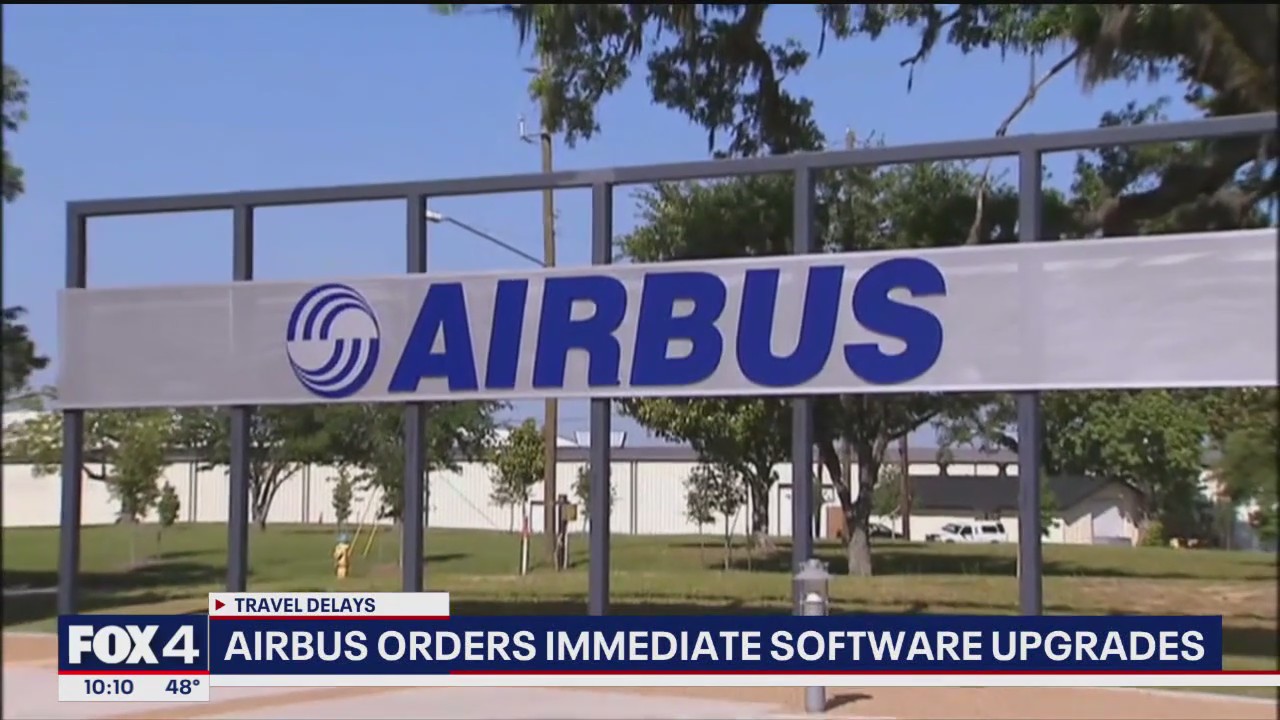
Airbus has issued software (and hardware) fixes for a reported 6,000 A320-family jets after identifying that intense solar radiation can corrupt data critical to flight controls. American Airlines reported its Tech Ops completed repairs overnight on all 209 affected A320-family aircraft and expects no further operational impact from the Emergency Airworthiness Directive. Airbus is coordinating with aviation authorities via an Alert Operators Transmission to roll out protections fleet-wide, a remediation that could impose inspection and implementation costs for operators but has been quickly addressed by this carrier.
Market structure: This is a short-term win for aftermarket and tech service providers (AAR - AIR, HEICO - HEI) who see an immediate, measurable surge in labor hours and software/hardware retrofit demand; airlines with large A320 fleets (AAL, UAL, LCCs) bear concentrated operational & cost risk if the AOT widens. Competitive dynamics: Airbus faces reputational and regulatory pressure that can modestly erode OEM bargaining leverage (procurement concessions, warranty claims) while MROs pick up pricing power for urgent work; expect MRO utilization to rise by mid-single digits over 30–90 days. Cross-asset: airline equities and short-dated implied vol will spike (5–20% intraday for affected names), credit spreads for high-yield airline debt could widen 10–40bps if groundings expand, EUR vs USD could see a small negative knee-jerk vs aircraft-export concerns.
Risk assessment: Tail risks include an expanded FAA/EASA grounding (low probability 5–10%) that would cause a 10–25% draw in affected airline stocks and force multi-month schedule disruptions; a catastrophic incident (<<1%) would create multi-quarter legal/capex liabilities to Airbus and insurers. Time horizons: immediate (0–7 days) = ops disruption and IV spikes; short-term (1–3 months) = MRO revenue recognition and potential warranty reserves; long-term (3–24 months) = regulatory standards/hardware retrofits and OEM contract renegotiations. Hidden dependencies: avionics suppliers, spare-parts inventory and MRO labor capacity could bottleneck; insurers may reprice airline exposure within 3–6 months.
Trade implications: Favor small, tactical long exposure to MRO/aftermarket (AIR, HEI) for 4–12 weeks to capture surge pricing; protect airline equity exposure (AAL) with short-dated put spreads sized to portfolio gamma. Use options to exploit IV: buy 30–60 day AAL 5% OTM put spreads (define risk at 0.5–1% portfolio) to hedge a 10–20% downside; consider a 3-month EADSY (Airbus ADR) 10–20% OTM put spread as a low-cost tail hedge against regulatory escalation. Sector rotation: modestly trim cyclicals sensitive to travel disruption (hotel/car rental) by 1–3% and reallocate to industrials/MRO names for 1–3 month tactical window.
Contrarian angle: Market likely overprices immediate airline operational damage — American fixed 209 jets overnight, signaling that operators and OEMs can execute rapid remediation; implied vol may therefore mean-revert within 1–2 weeks, creating short-vol re-entry opportunities. Consensus underestimates capacity constraints at MROs: if labor/parts limit throughput, MRO revenue upside could be capped, so size positions small (1–2% each) and use tight stops. Historical parallel: prior Airbus/Boeing software ADs produced quick fixes and limited long-term OEM equity impact, suggesting any airline equity weakness is a tactical, not structural, buying opportunity if regulatory escalation does not occur in 30–60 days.
AI-powered research, real-time alerts, and portfolio analytics for institutional investors.
Request DemoOverall Sentiment
neutral
Sentiment Score
0.10
Ticker Sentiment
