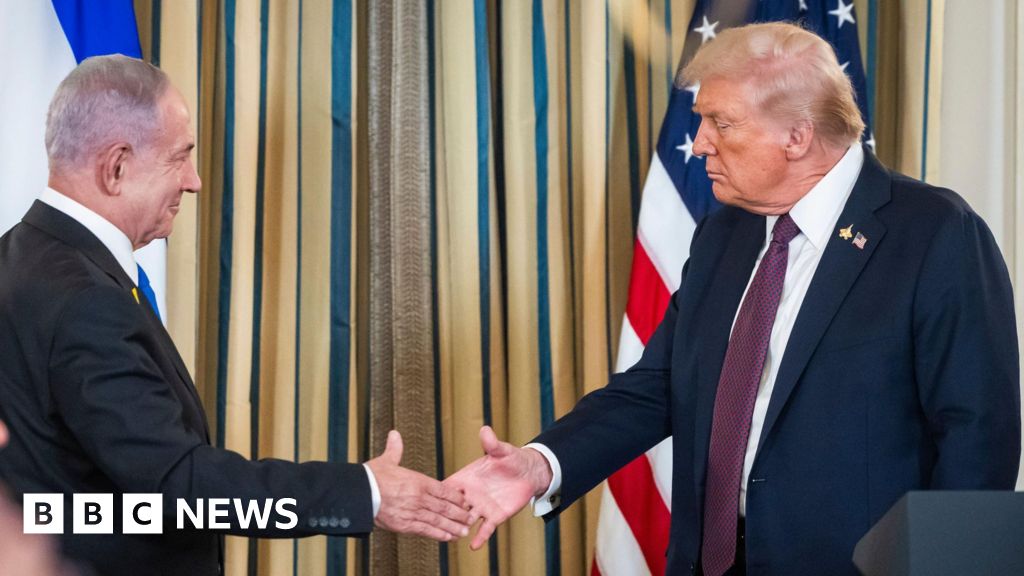
Donald Trump has introduced a framework agreement for ending the Gaza war, which, despite gaining initial support from several Arab nations and a public endorsement from Israeli PM Netanyahu, is fundamentally undermined by its lack of detail and conflicting interpretations. While the plan vaguely references a pathway to Palestinian self-determination, Netanyahu has privately denied agreeing to a Palestinian state, indicating a critical divergence. This inherent ambiguity, coupled with potential sabotage from ultra-nationalist elements within Israel's ruling coalition, suggests a high risk of the agreement failing to de-escalate regional tensions and achieve a lasting resolution, despite its initial momentum.
A new U.S.-led framework for a Gaza ceasefire has garnered initial diplomatic momentum, securing public support from key Arab nations and Israeli Prime Minister Benjamin Netanyahu. However, the plan is fundamentally undermined by a significant lack of detail and critical, conflicting interpretations from its primary signatories. The core weakness lies in the divergence between the framework's vague reference to a "pathway to Palestinian self-determination" and Netanyahu's privately filmed, emphatic denial of agreeing to a Palestinian state. This ambiguity creates two opposing versions of the accord's objective, one focused on a two-state solution and the other on achieving Israel's war aims without Palestinian statehood. This dynamic is exacerbated by domestic political pressure within Israel, where ultra-nationalist coalition partners have condemned the plan, mirroring the conditions that reportedly led to the failure of a similar initiative over a year ago. The structure of the agreement provides Israel with multiple opportunities to veto or obstruct negotiations, suggesting a high probability that the process will break down, perpetuating regional uncertainty and sustaining geopolitical risk premiums.
AI-powered research, real-time alerts, and portfolio analytics for institutional investors.
Overall Sentiment
moderately negative
Sentiment Score
-0.50
