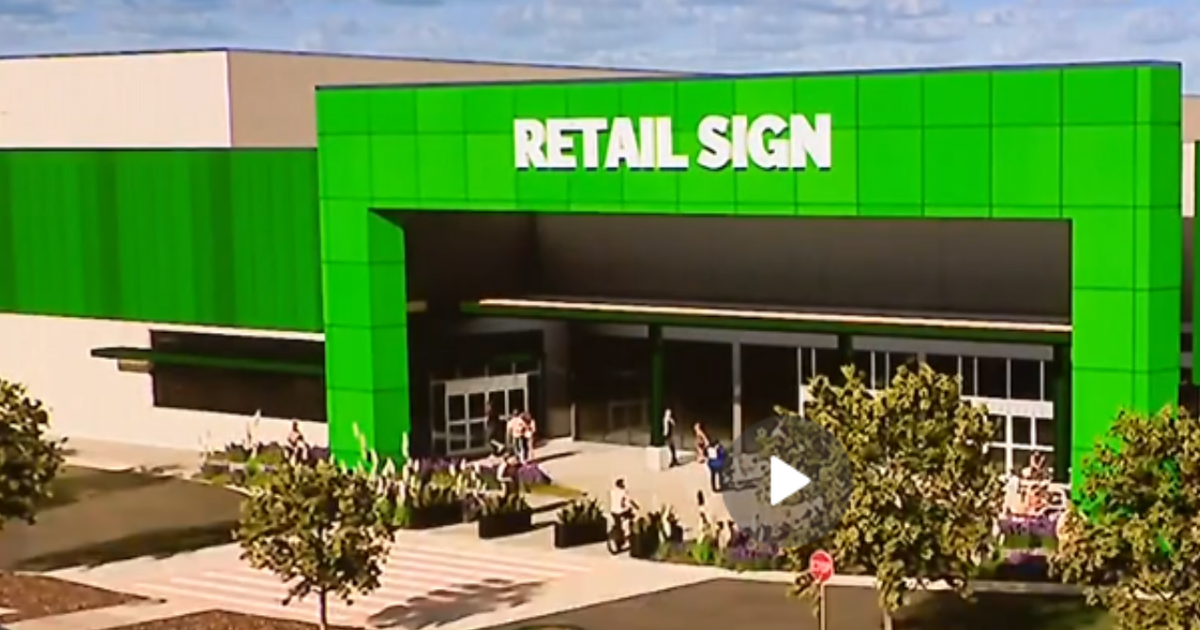
Orland Park's board approved plans for an Amazon retail facility at the LaGrange/159th commercial corridor, clearing the way to demolish the former Petey's restaurant and build a roughly 220,000 sq ft store on 35 acres with seven loading docks. Projected employment includes 200 construction workers during build-out and about 500 Amazon employees thereafter; local residents raised traffic and truck-flow concerns ahead of approval. The development expands Amazon's physical retail and logistics footprint in a major suburban retail node and implies modest local economic and employment upside, though community traffic mitigation and permitting could affect timing and operations.
Market structure: Amazon’s approved 220,000 sq ft fulfillment/retail site (35 acres, 7 docks, ~500 employees) is a net positive for AMZN’s omnichannel footprint and local industrial real estate (Prologis-style landlords) while pressuring nearby brick-and-mortar specialty retailers and third‑party carriers (FDX/UPS) over time. The project increases Amazon’s last‑mile capacity, which can lower per‑unit delivery costs and incrementally boost pricing power in the Chicago suburbs; expect localized downward pressure on retail rents but modest upward pressure on industrial rents and short‑haul trucking demand during construction.
Risk assessment: Tail risks include permit/legal delays or traffic restrictions that could extend construction >6–12 months and inflate capex by >15%, plus heightened unionization or wage demands in the Chicago market that could lift operating costs 5–10% locally. Immediate market impact is muted (days); short‑term (weeks–months) risk centers on construction and community pushback; long‑term (12–36 months) impacts are on delivery economics, carrier volumes, and local commercial real estate valuations. Hidden dependencies: municipal incentives/tax abatements and routing curfews materially change project IRR and operating hours.
Trade implications: Direct plays: overweight AMZN (small 1–2% position) to capture long‑run omnichannel leverage; overweight industrial REITs (PLD) for increased logistics demand; consider tactical short exposure to FDX/UPS (small sizing) as Amazon internalizes flows. Options: implement a 3–6 month AMZN call spread (buy ATM+5% / sell ATM+25%) to express upside with defined cost; pair trade: long AMZN vs short FDX sized 2:1 on a 6–12 month horizon. Entry/exit: scale into positions on pullbacks of 3–7% and trim if municipal/legal negative headlines surface in 30–60 days.
Contrarian angles: The market underestimates regulatory/traffic backlash risk; local opposition could force delivery curfews or egress limits that strip expected efficiency gains, making the project a lower‑return buildout. Conversely, consensus may underappreciate the multiplier on adjacent industrial land values and third‑party logistics demand during construction—historically Amazon builds lead to +5–10% re‑rating of nearby logistics assets within 12 months. Unintended consequences include accelerated carrier disintermediation (hurting FDX/UPS revenues) and municipal demands for community benefits that erode project economics.
AI-powered research, real-time alerts, and portfolio analytics for institutional investors.
Request DemoOverall Sentiment
mildly positive
Sentiment Score
0.30
Ticker Sentiment
