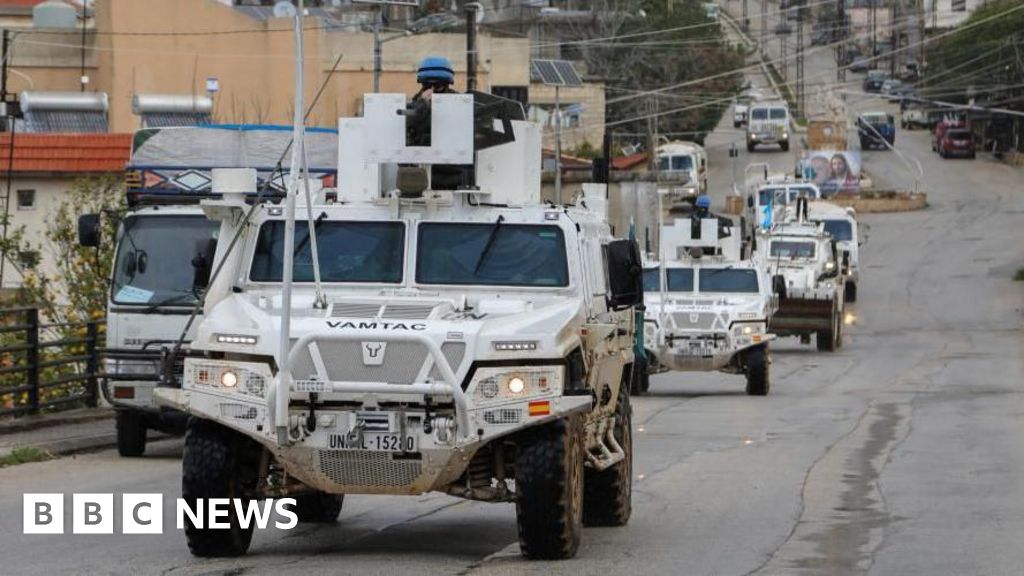
Three UN peacekeepers were killed in southern Lebanon over the weekend (two Indonesian peacekeepers killed Monday by a roadside explosion, one Indonesian killed Sunday by a separate projectile); a third peacekeeper was severely injured and a fourth wounded. UNIFIL and the UN have launched investigations, the IDF says it was not responsible, and Israel reported four of its soldiers killed separately — escalating cross-border tension after Israel announced stepped-up operations against Hezbollah. The developments heighten regional geopolitical risk and are likely to prompt risk-off moves in regional assets and could pressure energy and defense-related markets.
A deterioration in cross‑border deterrence dynamics in northern Israel/border regions will create a multi‑month re‑rating of defense and ISR economics rather than a one‑off knee‑jerk move. Expect procurement timelines to be pulled forward: primes and integrators can convert near‑term order flow into 12–24 month revenue visibility while component suppliers (optics, EO/IR, secure comms) face 3–6 month lead‑time pressure that expands OEM margins.
Markets will price a near‑term geopolitical risk premium into regional assets and energy curves. Brent forward spreads typically steepen within 30–60 days of renewed frontier hostilities; implied volatility on oil and regional equity ETFs can rise 40–120% in the first month, while Israel/EM sovereign credit spreads can widen by 100–250bps before diplomatic placation. Reinsurance and war‑risk premiums are a second‑order transmission mechanism—shipping and project finance costs jump almost immediately, biting tourism and LNG project timelines.
Key catalysts are discrete and time‑bound: an Iran direct strike or mass militia mobilization would materialize the higher‑impact paths within days; a coordinated diplomatic de‑escalation (UN/US/EU mediation) can reverse risk premia in 2–8 weeks. Balance of probabilities today favors episodic escalation (weeks–months) not full regional war; position sizing should reflect that asymmetry and the high cost of being under‑hedged on the downside.
AI-powered research, real-time alerts, and portfolio analytics for institutional investors.
Overall Sentiment
strongly negative
Sentiment Score
-0.80
