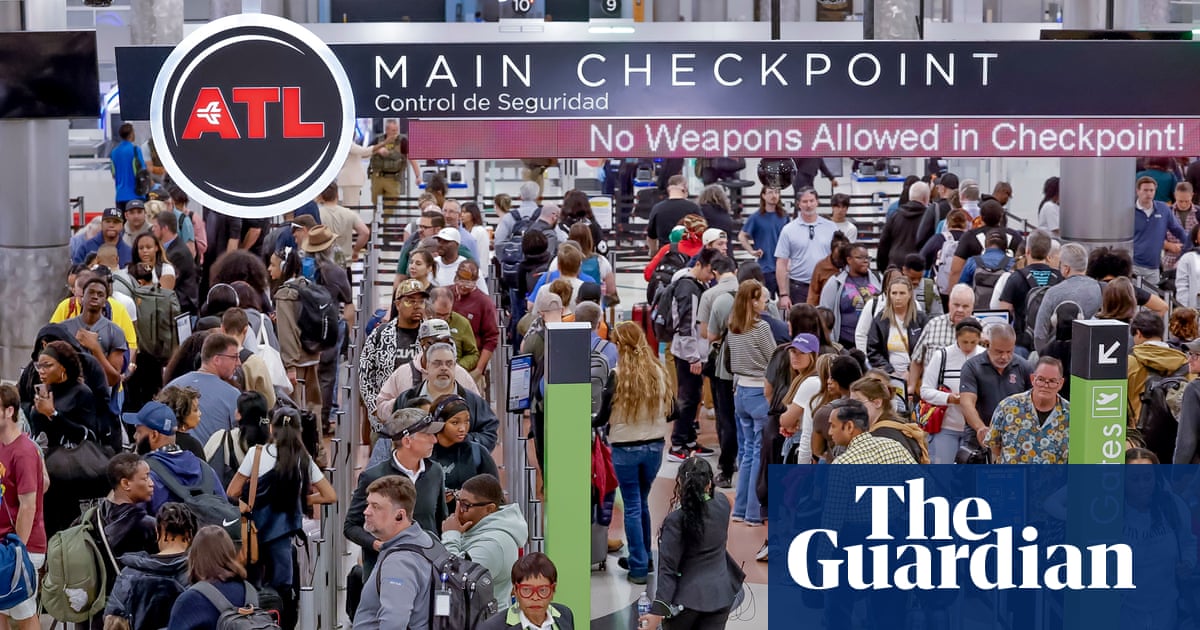
Hours-long security lines hit major US airports after Congress failed to pass Department of Homeland Security funding for the fiscal year, leaving many TSA screeners unpaid and refusing to work. Democrats are withholding funding pending immigration-enforcement reforms and accountability for alleged ICE violence, while Republicans rejected funding-only measures; the Save America Act — which would change voter-registration rules — lacks votes to overcome a filibuster. President Trump has said he will not sign legislation until the Save America Act passes and has urged ending the filibuster, prolonging the impasse and the risk of continued airport disruptions that could pressure travel-sector operations.
Operational shock is front-loaded and concentrated: unpaid screeners compress throughput, which directly raises turn times, crew-overtime and re-accommodation costs for airlines over days-to-weeks. This is not a demand shock — it’s a supply-side capacity hit that magnifies unit costs during peak travel windows; expect disproportionate P&L sensitivity in carriers with tight crew utilization and hub-centric networks.
Second-order beneficiaries and losers separate along capital intensity and contract structure. Airlines with larger domestic leisure exposure and simpler networks (lower connection rates) absorb short delays better than hub-dominant legacy carriers; airport concessionaires and parking operators face revenue-at-risk from lower dwell times if lines choke live footfall for multiple weeks. Conversely, vendors of automated screening and outsourced security services stand to see procurement acceleration once political control resolves, creating a quarter-to-quarter transfer of spend from payroll to capex/service contracts.
Political timeline is the dominant catalyst: a resolution within 2–3 weeks (temporary funding patch) largely limits economic damage to transitory operating costs; a stalemate into late spring/summer shifts outcomes into reputational and booking-loss territory, materially hurting near-term yields and potentially shaving multiple percentage points off next-quarter EPS for exposed carriers. Tail risks include broader DHS funding cuts or a permanent shift toward contractualized private screening if Congress attaches structural reforms — that would reallocate revenue streams across the travel ecosystem over 6–24 months.
The consensus underprices optionality: market headlines focus on headline delays, not the procurement reallocation and automation acceleration that benefits certain defense/security names. Tactical hedges for a short operational shock and asymmetric, longer-dated upside to select security/tech suppliers is the clean risk/reward profile to target.
AI-powered research, real-time alerts, and portfolio analytics for institutional investors.
Request DemoOverall Sentiment
mildly negative
Sentiment Score
-0.20
