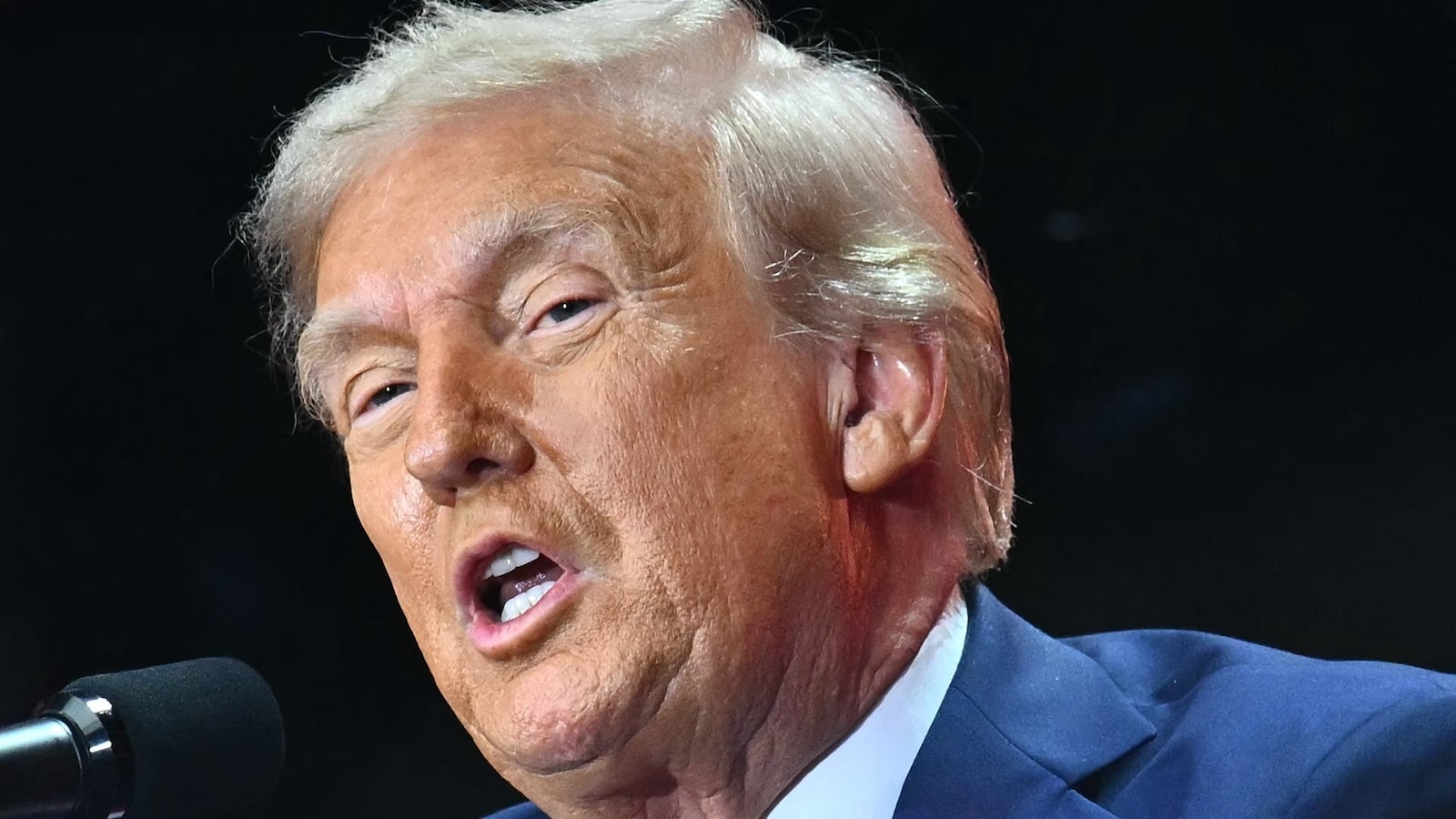
President Trump is set to address the UN General Assembly, emphasizing renewed American strength and critiquing 'globalist institutions,' amid high-stakes geopolitical discussions. His position on the Israel-Hamas conflict includes opposing Palestinian statehood recognition, viewing it as rewarding Hamas and hindering hostage release, contrasting with allies like France. Trump also expressed increasing frustration with Russian President Putin, linking the Ukraine war's resolution to other nations ceasing Russian oil purchases, indicating potential shifts in U.S. foreign policy and global alliances that could impact international stability and energy markets.
President Trump's upcoming address to the United Nations General Assembly signals a potential shift in U.S. foreign policy, centered on a theme of 'renewal of American strength' and a critique of 'globalist institutions.' This rhetoric, combined with specific policy stances, suggests a more transactional and potentially unilateral approach to international relations. A key point of divergence with allies is on the Israel-Hamas conflict, where the U.S. opposes the formal recognition of a Palestinian state—a move recently made by France—on the grounds that it rewards Hamas and hinders hostage negotiations. This friction could introduce instability into traditional Western alliances. Furthermore, the administration's strategy for the Russia-Ukraine war is explicitly linked to energy markets. Trump has indicated that a resolution is contingent on other nations ceasing purchases of Russian oil, stating his belief that 'If the oil price comes down... Russia will settle.' This directly ties geopolitical pressure to commodity price manipulation, creating a significant variable for energy markets and signaling potential U.S. actions to influence oil prices as a foreign policy tool.
AI-powered research, real-time alerts, and portfolio analytics for institutional investors.
Request DemoOverall Sentiment
neutral
Sentiment Score
0.00
