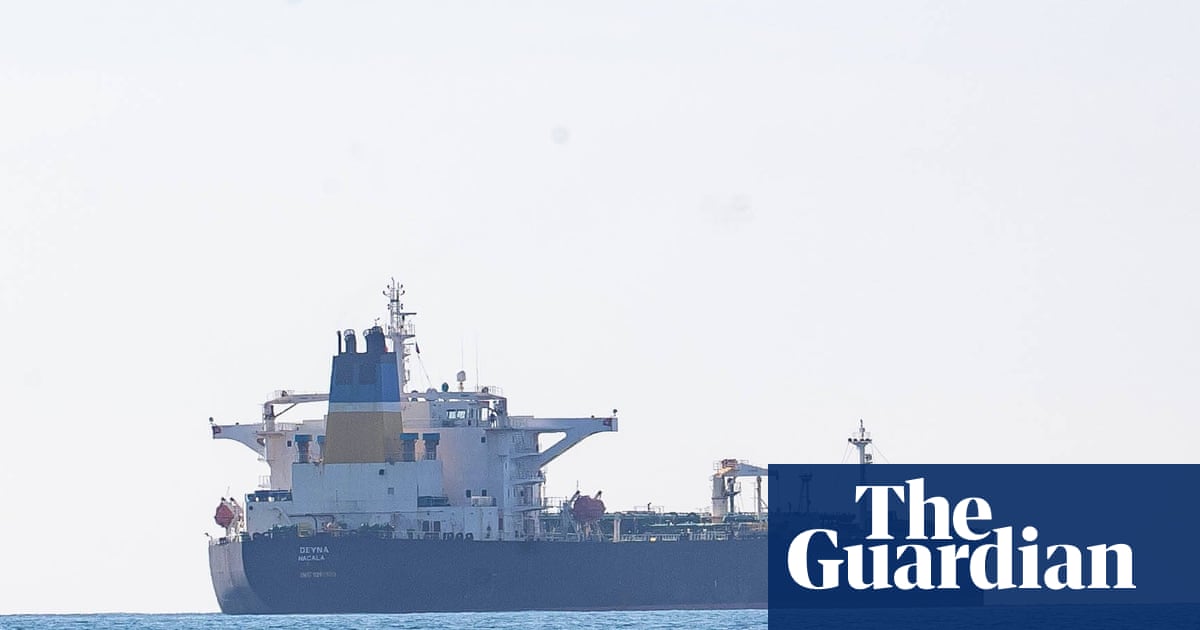
The UK has authorised armed forces and law enforcement to board Russian oil tankers in British waters, targeting vessels sanctioned by the UK as part of an effort to disrupt a shadow fleet (more than 600 vessels have been sanctioned collectively by the EU/UK/US). The move follows UK support in the Bella 1 seizure and aims to prevent sanctioned exports of Russian crude — many shipments head to China, India and Turkey — with seizures potentially leading to criminal proceedings and sale of cargoes whose proceeds could be sent to Ukraine. Russia has warned it may deploy naval forces to protect Russian-linked vessels, raising the risk of direct confrontation and potential disruption to seaborne oil flows.
The immediate market lever is shipping risk premia: credible UK interdiction raises insurance and charter uncertainty for non-Western-flagged, older tankers and should reroute demand to modern, flagged tonnage. Expect TCE (time-charter equivalent) spreads for premium, compliant VLCC/Aframax owners to widen vs shadow-fleet tonnage by 20–40% within 1–3 months as charterers avoid legal exposure and P&I clubs push for cleaner flags. That shift is structural: owners with Western management, transparent beneficial ownership and access to Western banks will see both higher utilization and better financing access, compressing their cost of capital relative to opaque owners.
The principal tail risks are escalation and legal friction. A Russian naval response or formal escorts would raise the probability of kinetic incidents — low-probability but high-impact — that could spike global oil volatility for weeks; conversely, protracted legal challenges to seizures create a slow-burn effect that only modestly trims Russian flows but meaningfully raises transaction costs. Mechanically, a 1% shock to seaborne Russian exports historically moves Brent by ~0.3–0.5% in the near term; sustained interdiction that reduces flows by several percent would be required to materially rerate energy equities.
The consensus hawkish read underestimates adaptivity: buyers and traders can re-route cargoes, use blending, and shift to longer-term contracts to blunt seizures. That suggests most price impact will be concentrated in freight, insurance and owners of compliant tonnage rather than across broad energy production names — a sector-bifurcation trade rather than a crude demand shock. Time horizon: freight/insurance moves (days–months); defense and capex shifts (months–years).
AI-powered research, real-time alerts, and portfolio analytics for institutional investors.
Request DemoOverall Sentiment
mildly negative
Sentiment Score
-0.15
