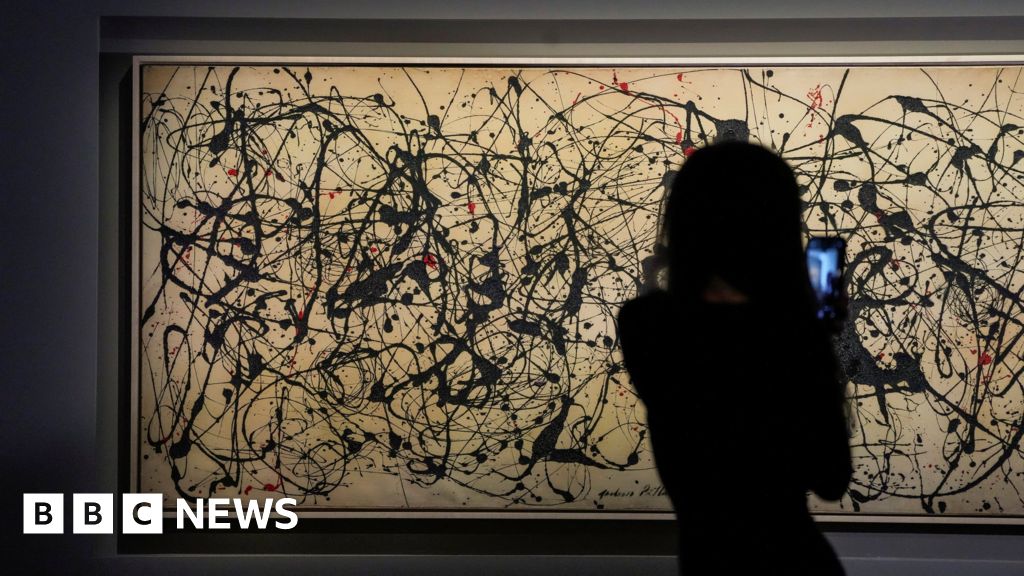
Jackson Pollock's Number 7A, 1948 sold for a record $181m at Christie's in New York, setting a new auction high for the artist and becoming the fourth most expensive artwork ever sold at auction. The sale also included a Constantin Brancusi bronze that fetched $107.6m, the second-highest price ever for a sculpture at auction. The result is a positive signal for high-end art market demand, though the broader market impact is limited.
This reads less like a one-off art headline and more like a stress test of the ultra-high-end collectible market’s liquidity. Record prints at the top end typically matter because they reset perceived reserve levels for the next tier of sellers, which can pull forward supply from family offices, estates, and institutions sitting on trophy assets. The incremental winner is the auction ecosystem itself: once a few landmark lots clear, consignors gain confidence that depth exists even in a softer discretionary environment. The second-order effect is on wealth signaling and cross-asset behavior. For ultra-HNW buyers, a trophy purchase competes with private jets, wine, watches, and blue-chip contemporary art for a finite “status budget,” so this kind of transaction can temporarily crowd capital toward scarce, museum-grade assets and away from broader luxury spend. That is constructive for price dispersion at the very top, but it does not necessarily lift the whole market; mid-tier and secondary works usually lag because the financing rationale is weaker and buyer bases are shallower. The contrarian view is that these prints can be late-cycle rather than confirming an all-clear. Auction records often reflect a small number of motivated buyers and can mask thin underlying breadth; if these buyers are mostly repricing existing wealth rather than expanding participation, the signal is more about concentration of capital than improving demand. The key risk over the next 3-12 months is that macro volatility, tighter liquidity, or a rise in opportunity cost cools bidding just as more estates come to market, turning a headline record into a local peak. From a tradable perspective, the cleaner expression is not to chase the art itself but to lean into the enablers of luxury transaction volume while fading weaker breadth. The strongest setup is to favor exchange-adjacent and luxury-platform names with recurring fee streams over pure discretionary luxury suppliers, and to watch for any follow-through in private-bank, auction, and high-end advisory activity over the next quarter. If record prints fail to produce broader transaction growth, the bounce in sentiment should fade quickly.
AI-powered research, real-time alerts, and portfolio analytics for institutional investors.
Request DemoOverall Sentiment
mildly positive
Sentiment Score
0.18
