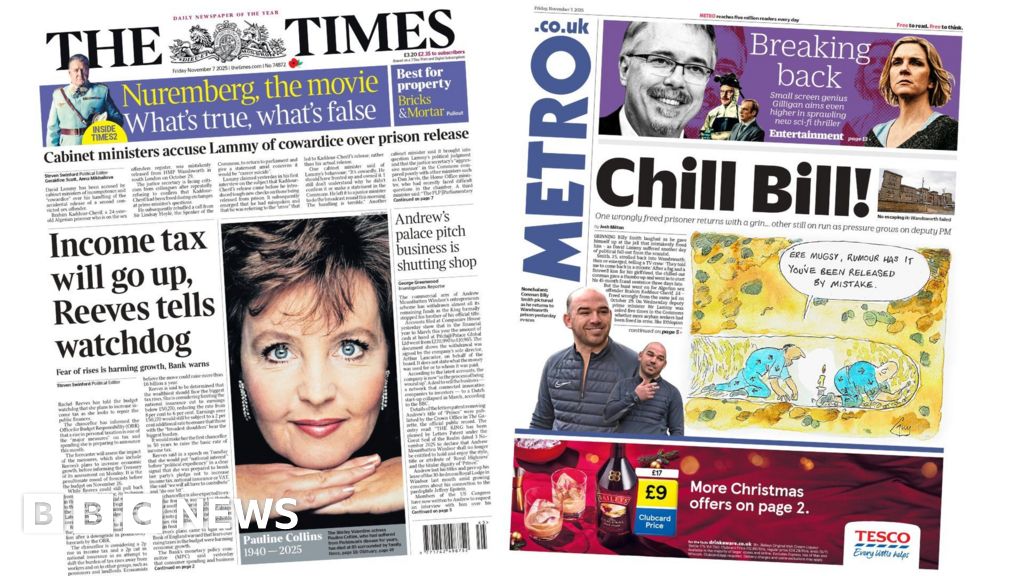
Chancellor Rachel Reeves has reportedly signaled to the Office for Budget Responsibility her intention to increase income tax, indicating a potential deviation from Labour's manifesto pledge. This move is generating internal party pressure, with Labour's deputy leader, Lucy Powell, publicly advocating for adherence to the commitment against raising income tax, national insurance, or VAT. This development suggests a significant potential shift in future UK fiscal policy, which could influence economic projections and market sentiment for institutional investors.
Chancellor Rachel Reeves has reportedly signaled to the Office for Budget Responsibility her intention to increase income tax, marking a potential significant deviation from Labour's prior manifesto pledge against raising income tax, national insurance, or VAT. This development, highlighted as the "clearest signal yet," introduces considerable uncertainty regarding future UK fiscal policy and aligns with themes of "Tax & Tariffs" and "Fiscal Policy & Budget."
The proposed shift is already generating internal party pressure, with Labour's deputy leader, Lucy Powell, publicly advocating for adherence to the original commitment. This internal dissent, classified under "Elections & Domestic Politics," underscores the political challenges associated with such a policy change and could impact the stability and predictability of the next government's economic agenda.
The potential for increased income tax, coupled with the overall "moderately negative" sentiment and "uncertain" tone, suggests a possible dampening effect on consumer spending and economic growth. The associated "market_impact_score" of 0.5 indicates a notable potential for market reaction, primarily driven by concerns over fiscal policy shifts and political stability.
AI-powered research, real-time alerts, and portfolio analytics for institutional investors.
Overall Sentiment
moderately negative
Sentiment Score
-0.45
