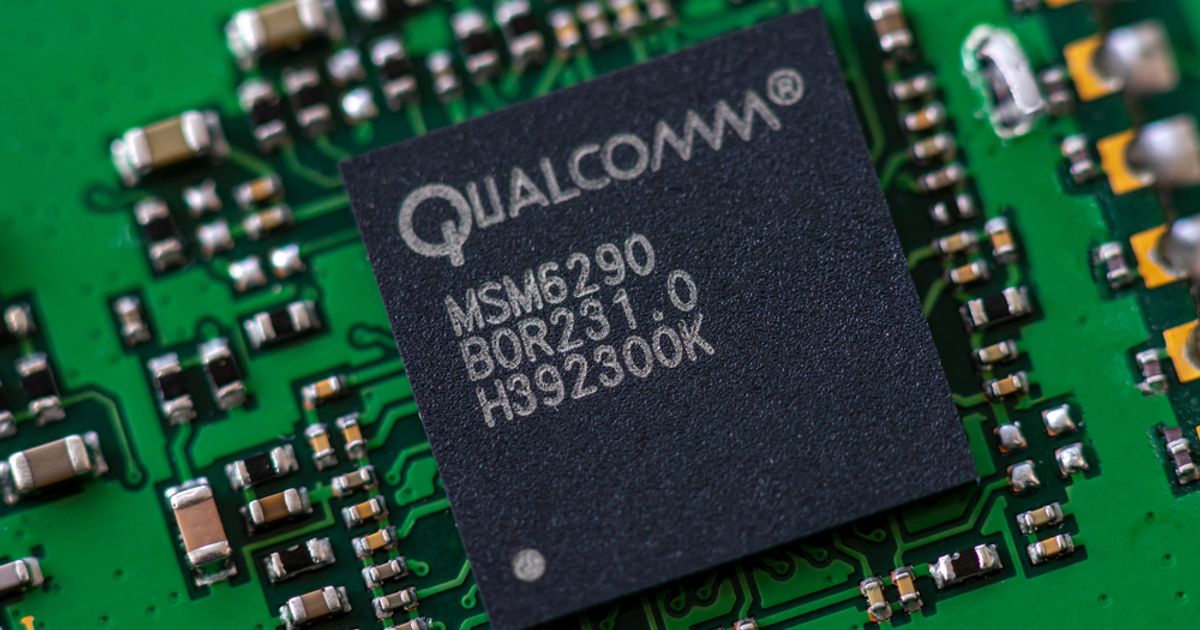
Qualcomm beat consensus on Q4 revenue and adjusted EPS but issued materially weaker guidance for the current quarter, blaming a global memory-chip shortage that is constraining smartphone production. Handset revenue was $7.82bn, up 3% year-on-year; licensing brought in $1.59bn, while IoT grew 9% and automotive 15%, yet these areas remain too small to offset handset exposure. Management said demand remains healthy, but supply bottlenecks — not market share loss — are capping near-term growth, and meaningful data‑centre/AI revenue is not expected until fiscal 2027, prompting investor concern and a sharp market reaction to the outlook.
Market structure: Memory suppliers (e.g., MU, SSNLF, 000660.KS) and semiconductor-equipment vendors (ASML) are short-term beneficiaries as DRAM/NAND tightness pushes prices and capex; OEMs and contract manufacturers face margin pressure and curtailed volumes, and QCOM is the direct loser for the coming quarter. Competitive dynamics likely leave Qualcomm’s share intact but cap its near-term pricing power — OEMs will prioritise premium SKUs, raising ASPs but reducing unit volumes, so revenue downside is magnified while gross margins may hold or improve slightly.
Risk assessment: Tail risks include a prolonged DRAM shortage >6 months that converts deferred demand into permanent lost sales, and geopolitically driven export restrictions that fragment supply chains (high-impact, low-probability). Near-term (days–weeks) expect volatility around guidance and memory spot-price releases; medium-term (3–9 months) watch OEM inventory adjustments and memory OEM capex; long-term (12–24 months) Qualcomm’s auto/IoT/AI diversification can replace a portion of handset revenue if execution and design wins persist.
Trade implications: Tactical trades should play memory tightness and Qualcomm guidance fatigue: long DRAM suppliers/equipment (MU, ASML) and defensive licensing beneficiaries; hedge smartphone cyclicality by shorting QCOM or buying puts (2–3 month expiries). Use pair trades to be sector-neutral (long MU, short QCOM) and employ options spreads to cap cost — buy-put spreads on QCOM and buy-call LEAPs for a 12–18 month recovery thesis into FY2027 AI/data‑centre inflection.
Contrarian angles: Consensus underestimates that shortages are temporary — deferred handset demand could produce a sharp recovery once memory supply normalises, so a >15% sell-off in QCOM may present a low-risk long entry via long-dated calls. Historical DRAM cycles show 6–12 month mean reversion; unintended consequences include OEM destocking prolonging weakness, so size exposure around memory-price inflection points (+/-10% month-on-month).
AI-powered research, real-time alerts, and portfolio analytics for institutional investors.
Request DemoOverall Sentiment
moderately negative
Sentiment Score
-0.45
Ticker Sentiment
