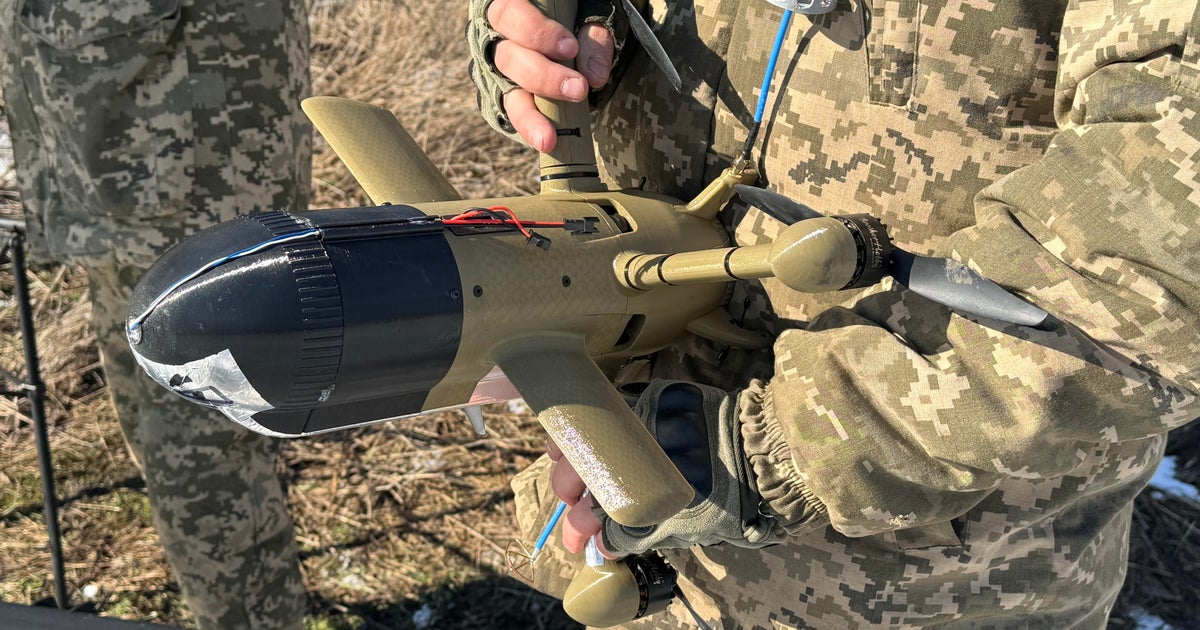
Ukraine and the U.S. have drafted a memorandum for a potential defense deal that could allow Ukrainian military technology exports and joint drone manufacturing with American firms. Ukraine says it has signed 4 defense agreements already and is preparing more, while projecting $55 billion of defense production capacity in 2026 versus only about $15 billion of funds currently available for weapons purchases this year. The article suggests easing political resistance and growing U.S.-Ukraine defense cooperation, with implications for drone production, counter-drone technology, and defense supply chains.
This is less about a single bilateral deal and more about the emergence of a cross-border drone industrial base anchored by wartime iteration. The key second-order effect is that Ukraine is trying to monetize a combat-proven product stack before the technology commoditizes, while the U.S. is implicitly admitting its procurement cycle cannot keep pace with low-cost drone warfare. That should widen the valuation gap between legacy primes optimized for large platform budgets and smaller unmanned-systems suppliers with faster design-to-field cycles.
The most important beneficiary is not necessarily the obvious prime contractor layer, but the suppliers of avionics, electronic warfare, secure comms, thermal imaging, propulsion, and small-batch manufacturing equipment. If joint ventures scale, the bottleneck shifts from “can we build enough drones?” to “who controls software, IP, and export rights?” — which creates a durable premium for companies with defensible middleware, anti-jamming, and mission autonomy rather than airframe-only exposure. Expect procurement attention to move toward GPS-denied navigation, EW resilience, and high-volume consumables over the next 6–18 months.
The contrarian risk is political reversibility. Any U.S. administration or Pentagon faction that frames this as technology leakage, IP dilution, or competition with domestic suppliers could slow approvals even if the headline deal advances. There is also execution risk in Ukraine’s export posture: if domestic demand or battlefield attrition worsens, Kyiv may restrict outward flows, creating a supply cliff for partners who assume steady volumes. In that sense, the deal is bullish for ecosystem formation but not yet bullish for near-term revenue certainty.
Consensus likely underestimates how quickly this could migrate from defense cooperation to industrial policy. If even a portion of Ukraine’s low-cost drone production migrates into U.S. co-manufacturing, it pressures incumbents to lower unit costs and accelerates the shift toward attritable systems across NATO procurement. Over 12–24 months, the real market signal is whether this becomes a repeatable template for allied tech transfer; if so, it is a structural margin headwind for traditional platform makers and a tailwind for small-cap drone, EW, and components suppliers.
AI-powered research, real-time alerts, and portfolio analytics for institutional investors.
Request DemoOverall Sentiment
mildly positive
Sentiment Score
0.35
Ticker Sentiment
