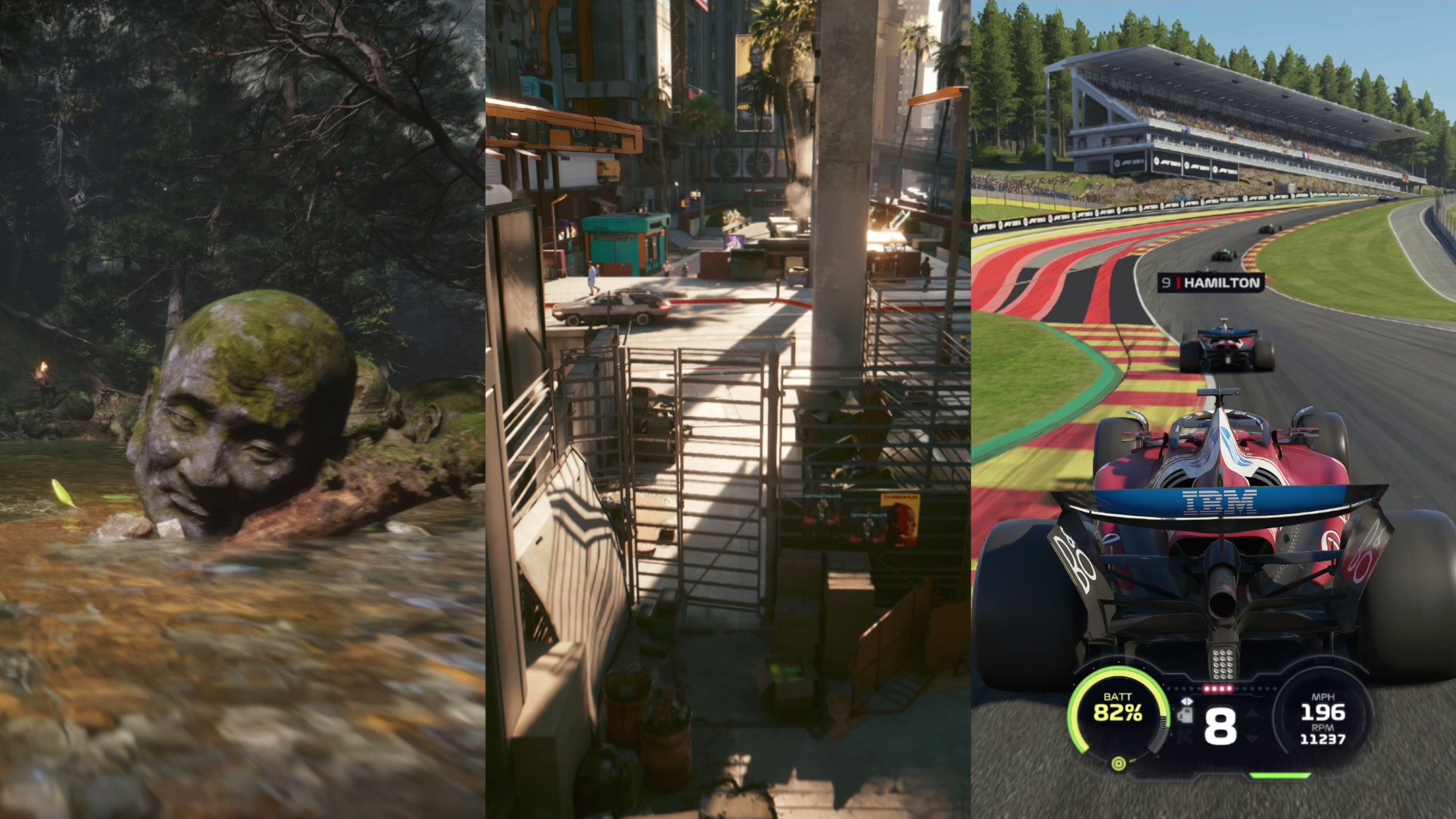
AMD has shipped its long-awaited FSR Redstone suite in the Adrenalin 25.12.1 driver, bringing ML-powered upscaling and frame generation to RDNA 4 GPUs (supported in ~31 games) and rolling out Ray Regeneration now with a developer-facing Radiance Cache coming next year. In testing the ML upscaler and frame generator deliver clear image-quality gains over FSR3 with only modest performance costs (the upscaler accounts for most of the hit and frame gen is largely low-cost), while results vary by title—stronger in Black Myth, Cyberpunk and F1 25, mixed in GTA V—and AMD still lacks multi-frame generation and parity with Nvidia/Intel multi-frame solutions. The release closes some of the feature gap with competitors but is late to market, hampered by confusing naming and driver-level workarounds for enabling features; Radiance Cache could materially improve ray-tracing efficiency if developers adopt it, but its workflow and performance benefits remain unproven.
AMD has shipped FSR Redstone in the Adrenalin 25.12.1 driver, bringing ML-powered upscaling and an AI frame generator to RDNA 4 GPUs and enabling FSR Ray Regeneration now, with a developer-facing FSR Radiance Cache slated to appear in engines next year; Redstone currently works on roughly 31 games and requires driver-level toggles to activate.
Independent testing on an Asus Radeon RX 9070 XT with a Ryzen 9 testbed shows the ML upscaler delivers clear image-quality gains versus FSR3 while accounting for most of the performance hit, and the AI frame generator adds little additional overhead; title-level outcomes vary — Black Myth, Cyberpunk 2077 and F1 25 show notable visual and motion improvements with small perf costs, whereas GTA V at 4K High RT exhibited material strain (reported averages near ~30 fps and 1% lows near ~25 fps).
Strategically, Redstone narrows AMD’s feature gap with Nvidia and Intel but is late to market (Nvidia introduced AI frame gen in Sept 2022; Intel in Dec 2024) and still lacks multi-frame generation parity; the combination of confusing naming, driver-only workarounds and limited native game support makes developer adoption of Radiance Cache and broader Redstone integration the critical drivers of any sustained competitive or financial impact.
AI-powered research, real-time alerts, and portfolio analytics for institutional investors.
Request DemoOverall Sentiment
mildly positive
Sentiment Score
0.35
Ticker Sentiment
