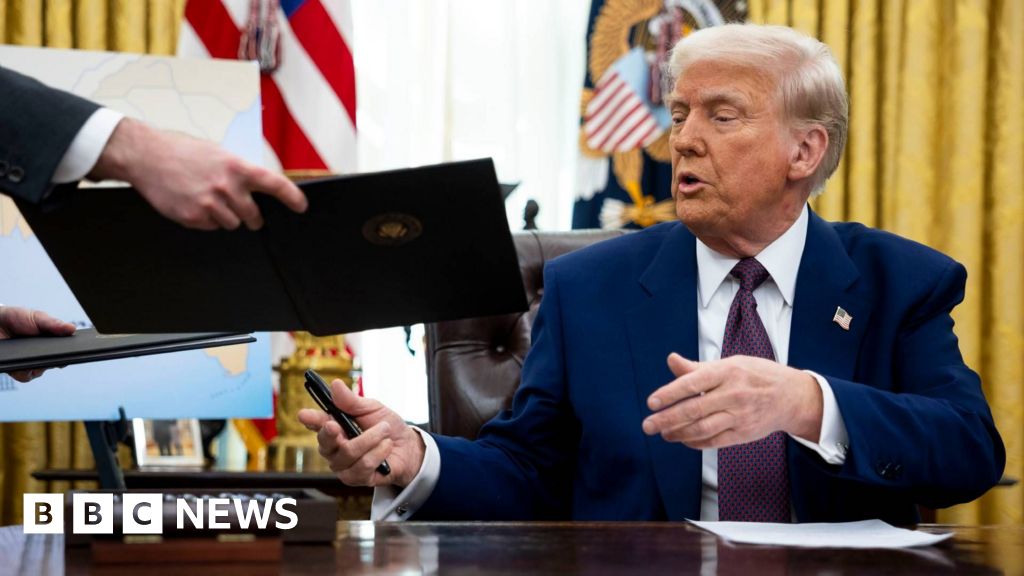
A federal appeals court has ruled most of former President Trump's "reciprocal tariffs" illegal, asserting he overstepped his authority under the International Emergency Economic Powers Act (IEEPA) by imposing levies not explicitly permitted by the statute. This 7-4 decision, which upholds a lower court's finding, creates significant market uncertainty as the tariffs remain in effect only until mid-October, pending an anticipated appeal to the Supreme Court. Should the Supreme Court affirm the ruling, it could necessitate the repayment of billions in collected import taxes and disrupt existing and future trade agreements, while also setting a crucial precedent regarding presidential economic powers and potentially impacting global trade dynamics.
A recent U.S. federal appeals court ruling has declared the 'reciprocal tariffs' imposed by the Trump administration illegal, creating significant uncertainty for global trade and financial markets. The 7-4 decision asserts that the International Emergency Economic Powers Act (IEEPA) does not grant the president the authority to impose such levies, a finding that directly challenges the executive branch's use of emergency powers for trade policy. While the tariffs remain in effect, they are set to expire after October 14, pending a likely appeal to the U.S. Supreme Court. This legal limbo introduces a period of heightened risk, with economists like Dr. Linda Yueh highlighting the potential for dampened economic activity as trading partners may delay business with the U.S. The outcome of a Supreme Court challenge presents two divergent paths: affirming the ruling could trigger market chaos by forcing the U.S. to repay billions in collected taxes and potentially nullifying individual trade deals with allies like the UK, Japan, and South Korea. Conversely, an overturn would set a powerful precedent, significantly expanding presidential authority to unilaterally enact trade measures. It is crucial to note this ruling does not impact the separate tariffs on steel, aluminum, and copper, which were enacted under a different legal authority.
AI-powered research, real-time alerts, and portfolio analytics for institutional investors.
Overall Sentiment
moderately negative
Sentiment Score
-0.40
