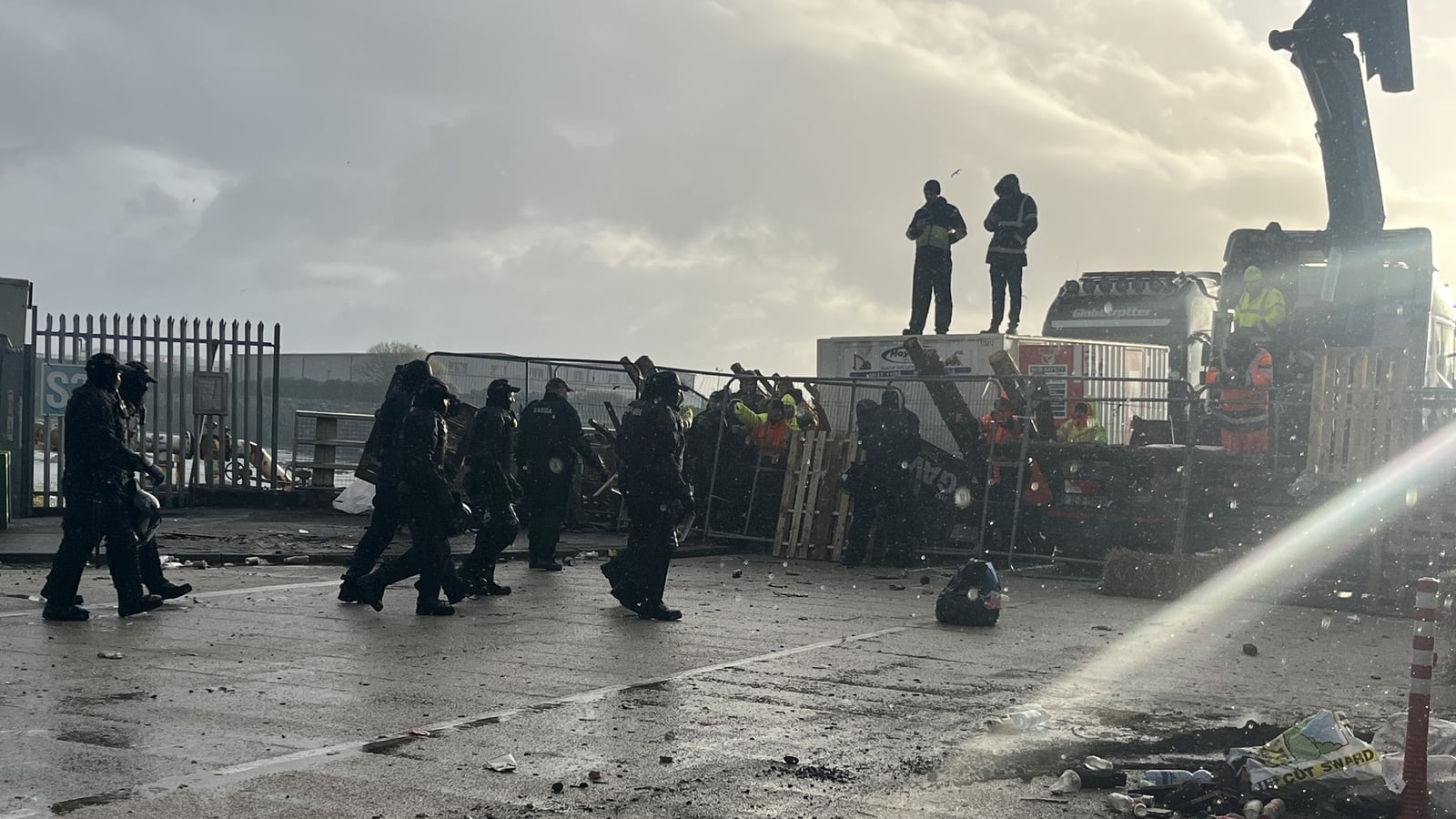
The Port of Galway blockade has ended, allowing the oil tanker Thun Gemini to berth and begin offloading 6 million litres of fuel, a process expected to take around 12 hours. Fuel disruptions were also cleared at Foynes Port and Rosslare Europort, easing nationwide pressure on fuel distribution and freight movement. While operations should normalize by tomorrow morning at Galway, the article notes fuel supply could still take up to ten days to fully restore.
The immediate market read is not “supply destroyed,” but “inventory velocity restored.” The real sensitivity is the gap between physical throughput resuming and the downstream replenishment cycle: when a bottleneck clears after several days, distributors often rebuild buffers aggressively, creating a short-lived spike in tanker demand, terminal utilization, and inland trucking before volumes normalize. That makes this more bullish for logistics capacity than for outright fuel price inflation, unless the disruption had already forced meaningful stock drawdowns at the wholesale level.
Second-order winners are likely the operators with flexible storage and short-haul distribution rather than the origin asset itself. Ports, tank storage, and road freight should see a catch-up wave over the next 1–2 weeks as backlogged cargoes and delayed deliveries are sequenced through a constrained system; the key risk is not demand destruction but scheduling congestion, which can keep spot premiums and wait times elevated even after protests end. Any evidence that regional depot inventories were materially depleted would extend the effect into retail margins and heating/fuel distribution costs, but that is a days-to-weeks trade, not a months-long macro shock.
The contrarian angle is that the event may be a volatility overhang for energy prices rather than a directional rerating. Once physical supply normalizes, traders who chased the disruption higher may unwind quickly, especially if broader crude fundamentals remain soft; the more durable implication is that fragility in last-mile infrastructure is now visible, which supports a modest risk premium for storage, logistics, and security providers. If protest spillover risk fades, the move in fuel-related instruments should decay faster than the operational backlog clears, leaving a potential fade setup.
AI-powered research, real-time alerts, and portfolio analytics for institutional investors.
Request DemoOverall Sentiment
mildly negative
Sentiment Score
-0.15
