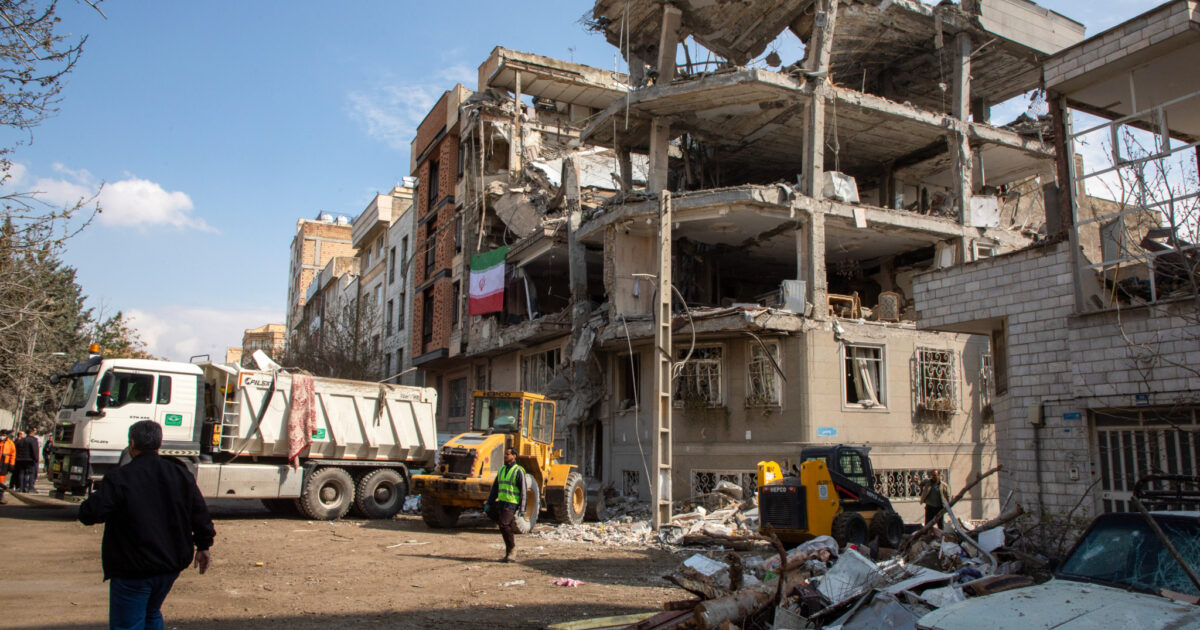
Thousands killed and millions displaced in the U.S.-Israel war against Iran, which the author argues is an illegal war of aggression violating the UN Charter and U.S. constitutional war powers. The article warns the conflict is eroding the rule of law, deepening a humanitarian and economic crisis (’Gazafication’ of Tehran) and raising broad, long-term geopolitical and regional stability risks. It urges civil society and international institutions to enforce legal constraints to reduce the likelihood of further escalation that would be materially risk-off for markets.
The most immediate market effect will be a persistently higher geopolitical risk premium that manifests as wider credit spreads and flight-to-quality flows. Expect EM sovereign and corporate spreads to reprice +100–200bp over a 1–3 month window if diplomatic containment fails, while 2-5y US Treasury yields compress as portfolio insurance demand rises; this reallocation will reduce risk appetite for cyclical SMID and EM exposures.
Defense and reconnaissance supply chains will see multi-year demand rephasing rather than a one-off spike: procurement lead times lengthen, inventories shift to higher-specification avionics, sensors and shipbuilding, and component supply tightness could add 6–12 months to delivery calendars. Aerospace/defense names with sustainment/backlog visibility and low sovereign-concentration risk are positioned to compound upside; adjacent beneficiaries include cybersecurity and ISR software vendors that capture recurring revenue.
Shipping, insurance and commodity logistics are a nonlinear transmission channel — war-risk insurance and rerouting increase delivered energy and trade costs, layering inflation pressure into already-tight supply chains. Airlines, cruise operators and container lines will suffer margin compression before energy beneficiaries fully capture higher price realizations; volatility in freight indices is likely to spike in the near-term and then drive differentiated winners based on route exposure.
Key catalysts: negotiated ceasefire or UNSC diplomacy (weeks–months) can unwind risk premia quickly; broader regional escalation (Turkey/Arab states opening fronts or blockade of chokepoints) is a low-probability, high-impact tail over 6–24 months that would push commodity and insurance shocks into systemic stress. Position sizing should assume a binary outcome and be sized to withstand a 25–40% drawdown in equities during escalation scenarios.
AI-powered research, real-time alerts, and portfolio analytics for institutional investors.
Request DemoOverall Sentiment
strongly negative
Sentiment Score
-0.85
