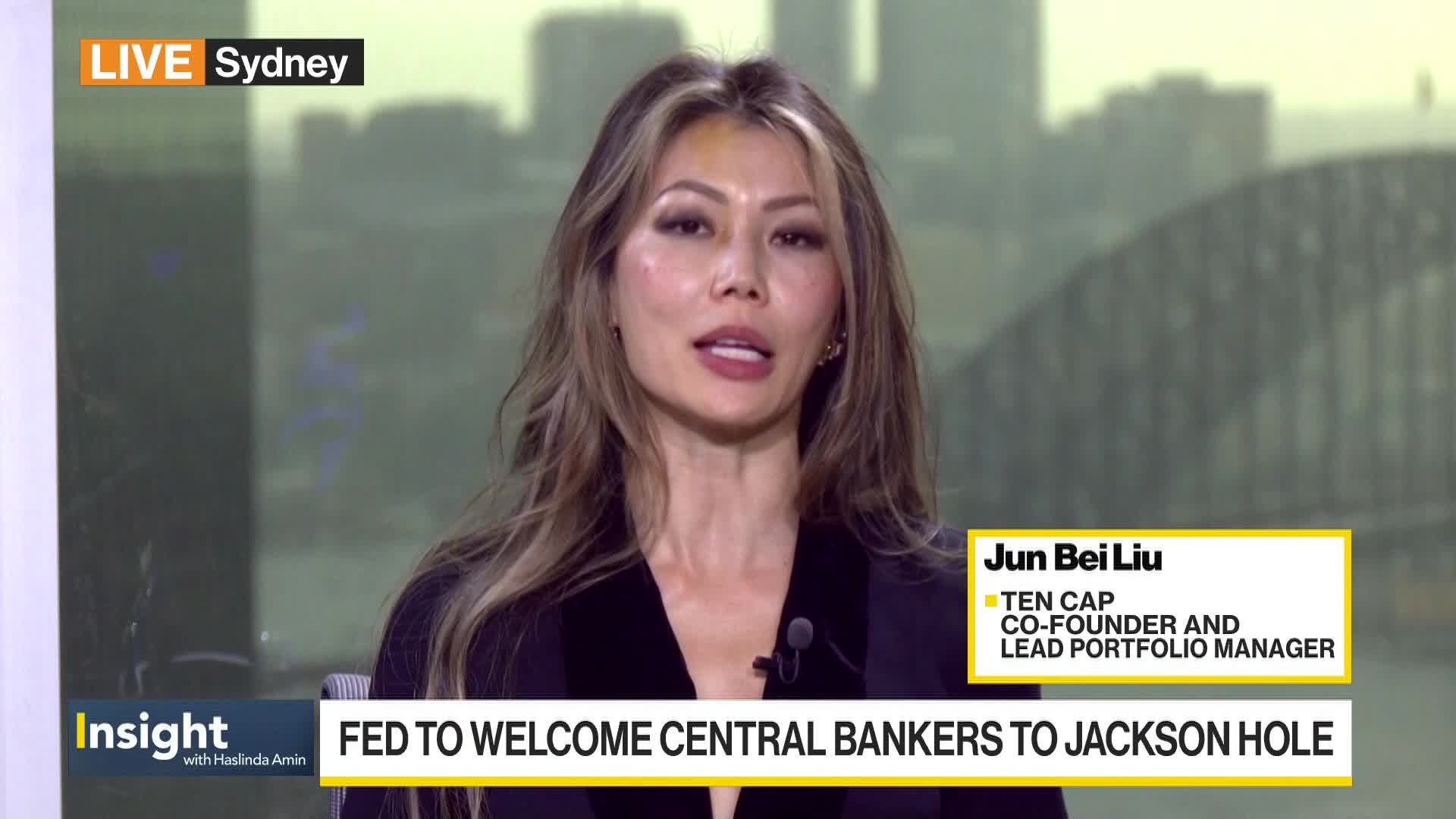
Ten Cap Co-Founder and Lead Portfolio Manager Jun Bei Lu anticipates a potential US interest rate cut, citing recent economic data. This expectation comes ahead of the annual Economic Policy Symposium in Jackson Hole, where Federal Reserve Chair Jerome Powell is slated to unveil the central bank's new policy framework, a key event for market participants seeking clarity on future monetary policy.
A high-impact (market impact score: 0.8) dovish sentiment is building ahead of the Federal Reserve's Jackson Hole symposium, driven by expectations of a potential US interest rate cut. Jun Bei Lu, a lead portfolio manager at Ten Cap, has publicly stated this view, attributing it to recent economic data. This commentary sets the stage for the symposium, where Fed Chair Jerome Powell is expected to unveil a new policy framework. The market's moderately positive sentiment score of 0.4 suggests that investors are interpreting the potential for looser monetary policy as a favorable development for risk assets. The key takeaway is the market's heightened sensitivity to upcoming Fed communication, with Powell's speech being a pivotal event that could either validate or contradict the current dovish expectations.
AI-powered research, real-time alerts, and portfolio analytics for institutional investors.
Request DemoOverall Sentiment
moderately positive
Sentiment Score
0.40
