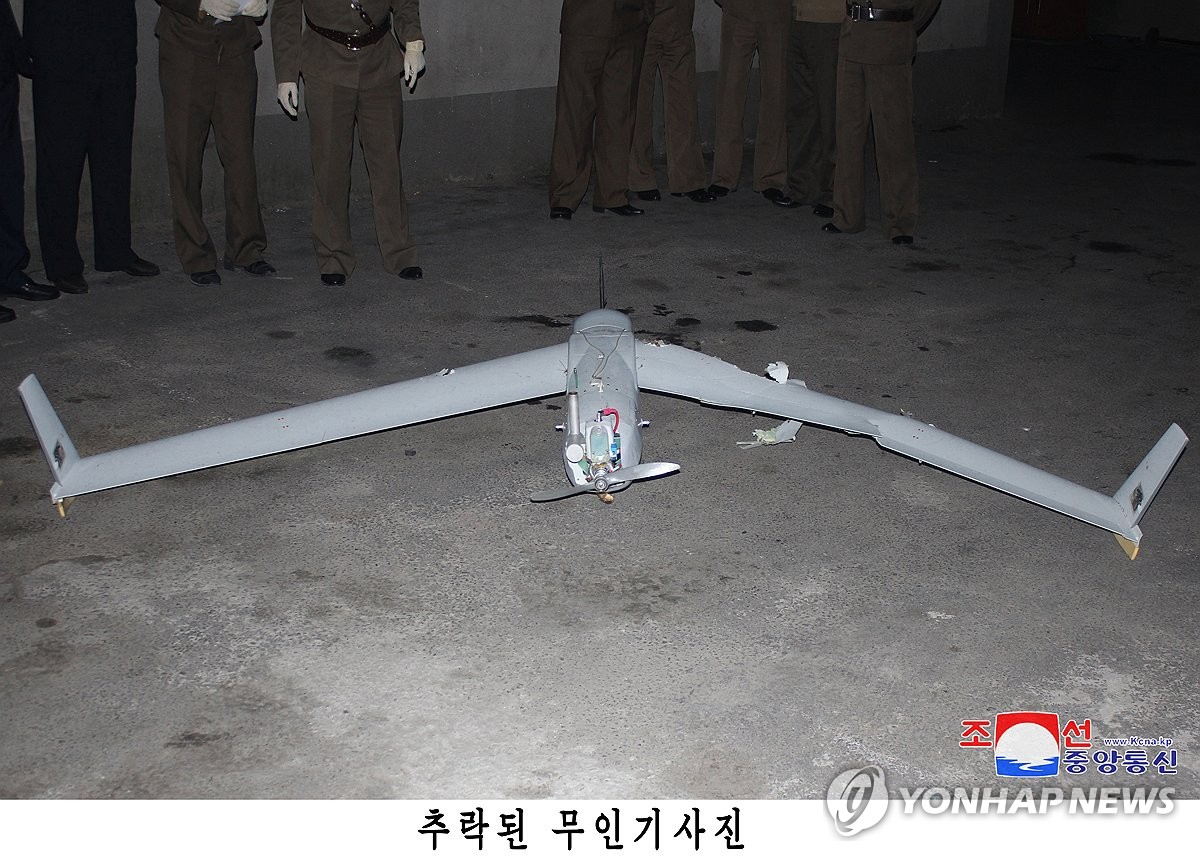
On Jan. 4 North Korea reported that its military tracked and captured an air target it says moved northward from South Korea's Kanghwa County and struck the drone with electronic warfare assets, forcing it to fall about 1,200 meters from Muksan-ri near Kaesong; Pyongyang warned of countermeasures and denounced the ROK as an irreconcilable enemy. The incident represents a localized escalation in inter-Korean military tensions that could raise regional geopolitical risk premia and short-term volatility for Korean assets, the won, and defense-related equities; hedge funds should monitor follow-on military responses, official statements from Seoul, and any shifts in risk sentiment across Northeast Asian markets.
Market structure: Near-term winners are defense OEMs and aerospace & defense ETFs (e.g., LMT, NOC, RTX, ITA) as governments re-price risk and signal higher procurement; losers include Korea-exposed cyclical sectors (tourism, consumer discretionary, airlines) and Korean equities (EWY/KOSPI) if tensions persist. Pricing power shifts toward prime defense primes for EW compatibility and electronic-warfare specialists; South Korean small-cap exporters face FX-driven margin compression if KRW weakens >3% in a week. Cross-asset: expect knee-jerk safe-haven flows into USTs/Treasuries and gold (TLT/GLD), inversion risk in regional credit spreads, and a potential 1–3% USDKRW rally on headlines.
Risk assessment: Tail risks include limited military escalation or false-flag incidents that trigger a 5–15% overnight KOSPI gap down and a sustained flight from Korean credit; worst-case (low prob) scenario is sustained exchange-of-fire raising regional supply-chain disruption for electronics for quarters. Time horizons: immediate (0–7 days) headline-driven volatility; short-term (1–3 months) tactical positioning and hedging; long-term (6–24 months) structural defense capex increases. Hidden dependencies: semiconductor supply-chain exposure to cross-border logistics and investor flows into Korea ETFs; catalyst list includes North Korean missile launches, inter-Korean diplomatic moves, and the Lee-Xi summit within 30–90 days.
Trade implications: Direct plays: overweight US defense names (LMT, NOC) and ITA for 6–12 months with target +8–20% if regional procurement uplifts; hedge Korea equity exposure via short EWY or buying EWY puts for 1–3 months. Options: implement put spreads on EWY (buy 3-month 5% OTM puts, sell 3-month 2% OTM puts) to cap premium; consider 1–2% allocation to GLD as tail hedge and VIX call spreads (30–60 day) for tactical volatility spikes. Sector rotation: trim Korean consumer cyclicals (KOSPI discretionary exposure) and rotate into US defense, commodities (gold), and cash/floating-rate instruments until headlines stabilise.
AI-powered research, real-time alerts, and portfolio analytics for institutional investors.
Request DemoOverall Sentiment
moderately negative
Sentiment Score
-0.40
Contrarian angles: Consensus assumes persistent widening of KRW and sell-off in Korea — that may be overdone if diplomatic de-escalation occurs around Lee-Xi talks in 30–90 days; mispricing risk: cheapened Korean large-caps (Samsung, SK Hynix proxy via EWY) could rebound 8–12% on resumed supply-chain visibility. Historical parallels (2010s DPRK skirmishes) show 1–3 month dislocations then mean reversion; risk: being long defense into peace could underperform while the market re-rates geopolitics, so trim into rallies and use defined-risk option structures.
