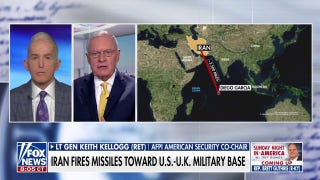
About 20% of the world’s oil supply transits the Strait of Hormuz, which Iran has been blocking after coordinated U.S.-Israeli strikes on Feb. 28; President Trump issued a 48-hour ultimatum on March 21 demanding its reopening. The U.S. and U.K. leaders agreed reopening the strait is essential to stabilize global energy markets and plan to stay in contact, even as the conflict has escalated with Iranian missile strikes across the region. Continued closure or further military strikes (including threatened strikes on Iran’s energy infrastructure) materially raises downside risk to global oil supply, shipping routes, and energy-sector prices.
An escalation that materially affects a major maritime corridor is an immediate shock to maritime economics: war-risk premiums typically jump in the order of $30k–$70k/day for tankers and container ships, and rerouting around longer passages adds ~10–14 days per voyage (≈4,000 nm), reducing annual round-trips by ~15% for long-haul vessels. That mechanically tightens effective tanker capacity and supports freight rates and spot tanker profits in the coming 2–8 weeks, while increasing bunker consumption and delivery lead times for time-sensitive goods.
Energy markets react unevenly: spot crude and refined product spreads can gap wider by $5–$15/bbl in the first 0–30 days as marginal barrels are uneconomic to route, but that shock is asymmetric — high-cost marginal producers and short-cycle US shale benefit quickly, while sustained price elevation >90 days invites demand destruction and substitution that blunt returns. Refiners with Atlantic basin crude access (and storage capacity) get optionality to capture elevated crack spreads in the near term; those tied to short-haul feedstocks see margin compression.
Defense/logistics are the embedded optionality few price: allied base access and surge deployments create visible procurement windows (naval support, munitions, airframes) with contract lead times of 3–12 months and typical uplifts to SMEs in ship repair and military services. Political signaling and election cycles are a two-way valve — de-escalatory diplomacy or rapid reopening of routes would unwind much of the premium within 30–90 days, while protracted disruptions push the shock into structural cost increases for global trade and insurance over 6–18 months.
AI-powered research, real-time alerts, and portfolio analytics for institutional investors.
Request DemoOverall Sentiment
mildly negative
Sentiment Score
-0.35
