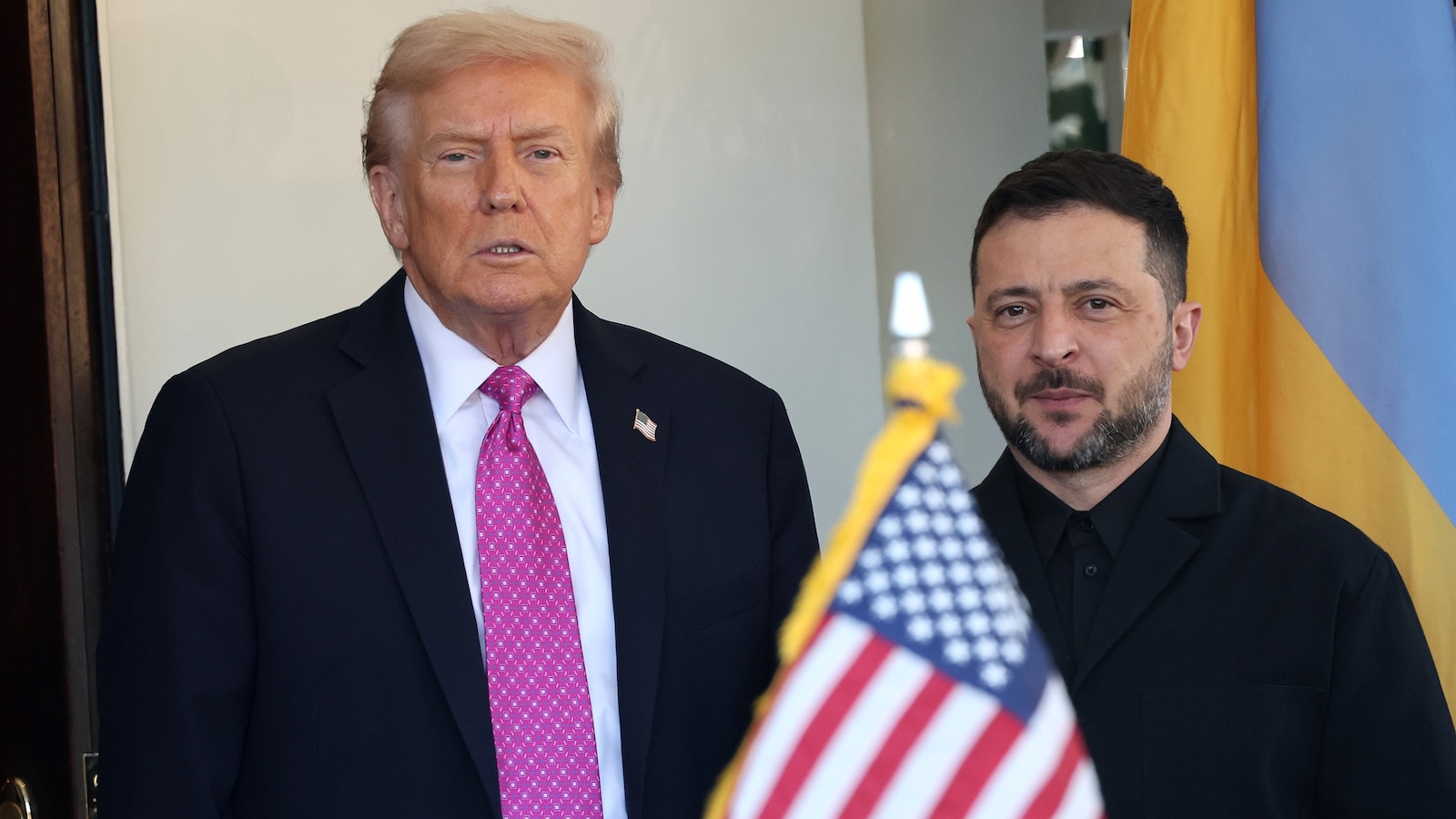
The Trump administration presented a draft 28-point peace plan to President Zelensky in Kyiv that would compel Ukraine to make significant concessions—including recognizing Crimea, Luhansk and Donetsk as de facto Russian, freezing Kherson and Zaporizhzhia along the line of contact, enshrining a constitutional ban on NATO membership and capping its armed forces at 600,000—while offering NATO-style security guarantees (with conditions and compensation to the U.S.) and a large Western-led reconstruction and economic package. The proposal also envisions phased reintegration of Russia into the global economy, staged lifting of sanctions, a $100 billion allocation of frozen Russian assets for Ukrainian rebuilding (with the U.S. to receive 50% of profits), joint U.S.-Russian security working groups and a Trump-chaired Peace Council to monitor implementation. Still a draft that Zelensky said prompted “very serious” talks, the plan if pursued would materially reshape European security guarantees, sanctions policy, energy and reconstruction investment flows and poses major political and legal hurdles for Ukraine and its Western backers.
The Trump administration presented a detailed 28-point draft peace plan to President Zelensky in Kyiv that, if implemented, would require Ukraine to accept major concessions—including de facto recognition of Crimea, Luhansk and Donetsk, freezing Kherson and Zaporizhzhia along current lines, a constitutional ban on NATO membership and a cap on the Ukrainian armed forces at 600,000—while offering NATO-style security guarantees with explicit conditions, compensation to the U.S., and a Trump-led Peace Council to enforce compliance. The proposal couples security guarantees with a large economic package: $100 billion of frozen Russian assets earmarked for Ukrainian reconstruction (with the U.S. to receive 50% of profits), a matching European contribution of $100 billion, prioritized EU market access, and joint U.S.-Ukraine projects in gas infrastructure, data centers and AI. Market and sector implications are material but uncertain; staged sanction relief and Russia’s reintegration would pressure energy and commodity prices and create opportunities in reconstruction, energy infrastructure and technology, while the security architecture changes and limits on NATO and troop basing may alter European defense demand dynamics. Near-term risk is high because the plan is a draft, Zelenskyy and senior Ukrainian officials have not finalized acceptance, and implementation depends on complex political, legal and timing conditions (100-day elections, amnesty clauses, phased asset releases), so outcomes and timelines remain highly uncertain.
AI-powered research, real-time alerts, and portfolio analytics for institutional investors.
Request DemoOverall Sentiment
mixed
Sentiment Score
0.00
