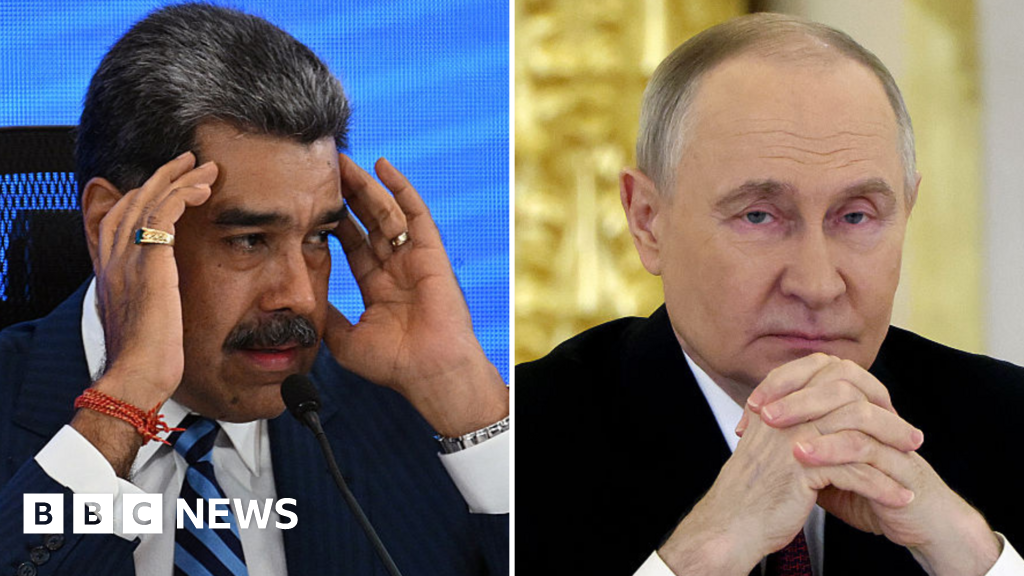
Under intensifying U.S. pressure — including the deployment of air and naval forces (a nuclear-powered submarine, spy planes and some 15,000 troops), strikes on suspected drug-smuggling boats that U.S. officials say killed more than 80 people, and the seizure of a sanctioned oil tanker — Venezuelan President Nicolás Maduro has found only rhetorical backing from longtime patrons Russia and China rather than concrete military or financial aid. Moscow and Beijing have publicly condemned U.S. actions but, experts say, are unwilling to risk further sanctions or damage to improving ties with Washington (and in Russia’s case are constrained by the costly war in Ukraine), while China is focused on recovering loans from a collapsed Venezuelan economy and positioning for engagement with any successor. The net effect is growing isolation for Maduro after a disputed July 2024 election, leaving his regime politically vulnerable even as Russia and China continue limited verbal support but stop short of tangible intervention.
The article reports a significant U.S. military and law-enforcement escalation around Venezuela — deployment of air and naval forces including a nuclear-powered submarine, spy planes and roughly 15,000 troops, strikes on boats the U.S. says were smuggling drugs (killing more than 80 people), and the seizure of a sanctioned oil tanker — while the Trump administration frames actions as counter-narcotics operations and Venezuelan officials interpret them as aimed at regime change. Senior Venezuelan requests for military assistance to China and Russia reportedly went unanswered, and Moscow’s public comments (including a Putin call and Deputy FM Sergey Ryabkov’s statement) have been rhetorical rather than material.
Experts cited in the piece argue both Russia and China are constrained from offering concrete support: Russia is focused on financing and prosecuting the war in Ukraine and avoiding further sanctions, while China has reduced new lending to Venezuela, is focused on recovering past loans, and seeks to avoid damaging improving ties with the U.S. after recent Trump–Xi engagement. Commentators conclude that Beijing and Moscow have signalled political sympathy but not willingness to risk economic or diplomatic costs for Maduro.
The reported disputed July 2024 election, with the CNE declaring Maduro the winner amid fraud allegations and opposition claims that Edmundo González won, increases political isolation and sovereign risk. That combination — weaker patron support, potential for further U.S. sanctions or interdictions, and a degraded oil sector — elevates the probability of oil-market volatility, creditor disputes, and rapid political change in Venezuela with contagion risk for regional emerging-market exposures.
AI-powered research, real-time alerts, and portfolio analytics for institutional investors.
Request DemoOverall Sentiment
moderately negative
Sentiment Score
-0.55
