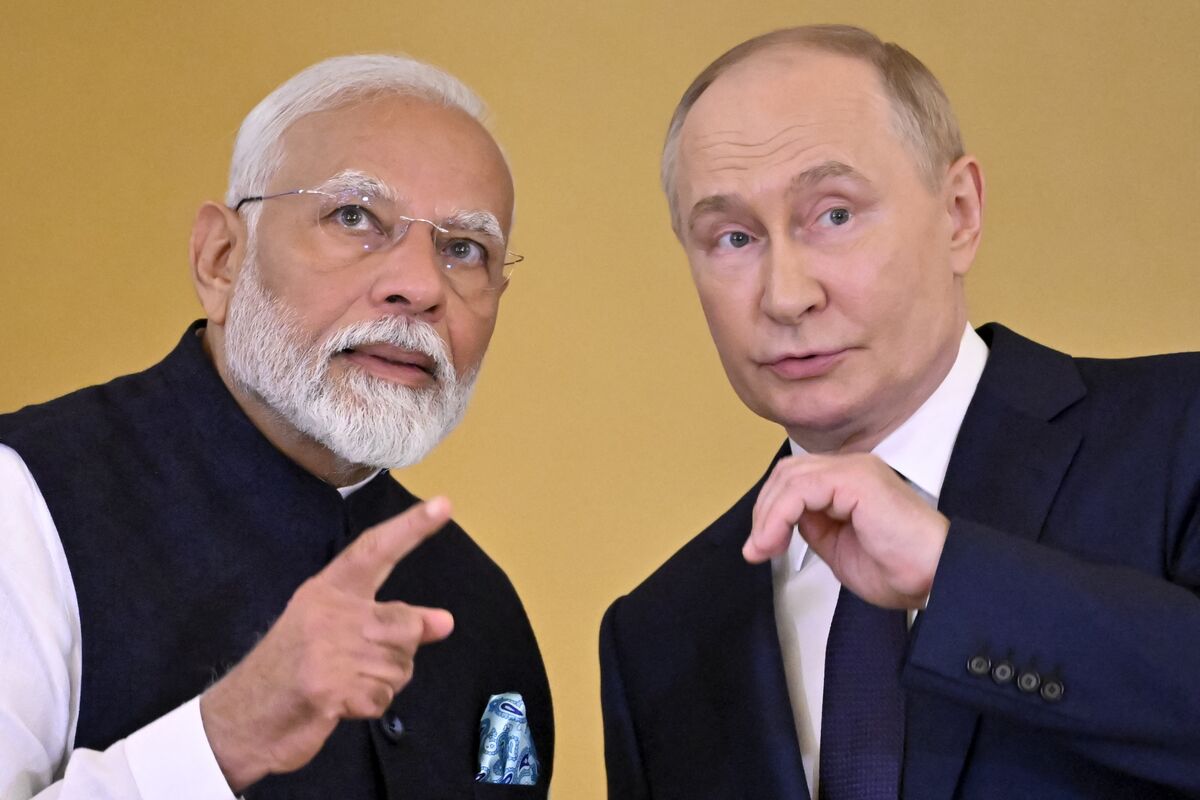
Russian President Vladimir Putin’s visit to India is posing a diplomatic test for New Delhi as it seeks to balance relations with Washington and Moscow, raising questions about how India will respond to US pressure over sanctions, defense ties and bilateral trade. For investors, the visit merits monitoring for any concrete defense agreements, energy or trade deals that could affect sanctions enforcement and regional supply chains, although absent firm commitments near-term market effects are likely limited.
Market structure: India’s deepening Russia engagement favors Indian refiners, commodity traders and domestic defense suppliers that can source discounted Russian crude and equipment — think Reliance/Indian refiners and HAL/BEL — while Western suppliers and insurers face margin pressure or lost market share. In supply terms, incremental seaborne Russian flows to Asia (likely in the 100k–500k bpd band) act as a cap on global oil upside but add complexity to shipping/insurance markets, compressing spot tanker rates unevenly. Cross-asset: expect modest INR strength tails and tighter Indian credit spreads if trade volumes rise; oil volatility may fall to muted levels unless sanctions escalate.
Risk assessment: Key tail risk is US/EU secondary sanctions or insurance blacklists within 30–90 days that trigger rapid rerouting and liquidity shocks to shipping and Asian refiners — probability moderate but impact high. Near-term (days–weeks) watch headlines and shipping data; medium-term (3–12 months) risk is policy normalization or Western pushback that forces repricing; long-term (12–36 months) is strategic diversification of India’s military procurement and energy supply chains. Hidden dependency: profitability gains hinge on secure payment/insurance rails; removal of those rails would reverse winners quickly. Catalysts: summit communiqués, new bilateral trade/rupee settlement mechanisms, or sudden sanctions updates.
Trade implications: Favor selective longs in India-focused refiners and defense OEMs with 6–18 month horizons and hedge sanction tails via options or credit protection. Implement relative trades that capture arbitrage (Indian refiners vs global majors) and use FX forwards or INR options to express currency moves. Volatility plays: buy asymmetric oil call spreads for sanction-driven spikes and buy downside protection on Indian bank exposure if contagion risk rises.
Contrarian angles: Consensus assumes worsening West–India relations; miss is underestimating India’s appetite for autonomy — earnings upside for Indian refiners/defense could be underpriced by 10–30% over 6–12 months. Reaction may be underdone in local equities but overdone in sanction-sensitive insurance/shipping names. Historical parallel: India’s 1990s pivot to multiple suppliers shows durable market-share gains despite initial political friction. Unintended consequence: deeper Russia ties could prompt faster Western incentives to cement India into alternatives (trade deals, defense financing), capping downside.
AI-powered research, real-time alerts, and portfolio analytics for institutional investors.
Request DemoOverall Sentiment
neutral
Sentiment Score
-0.05
