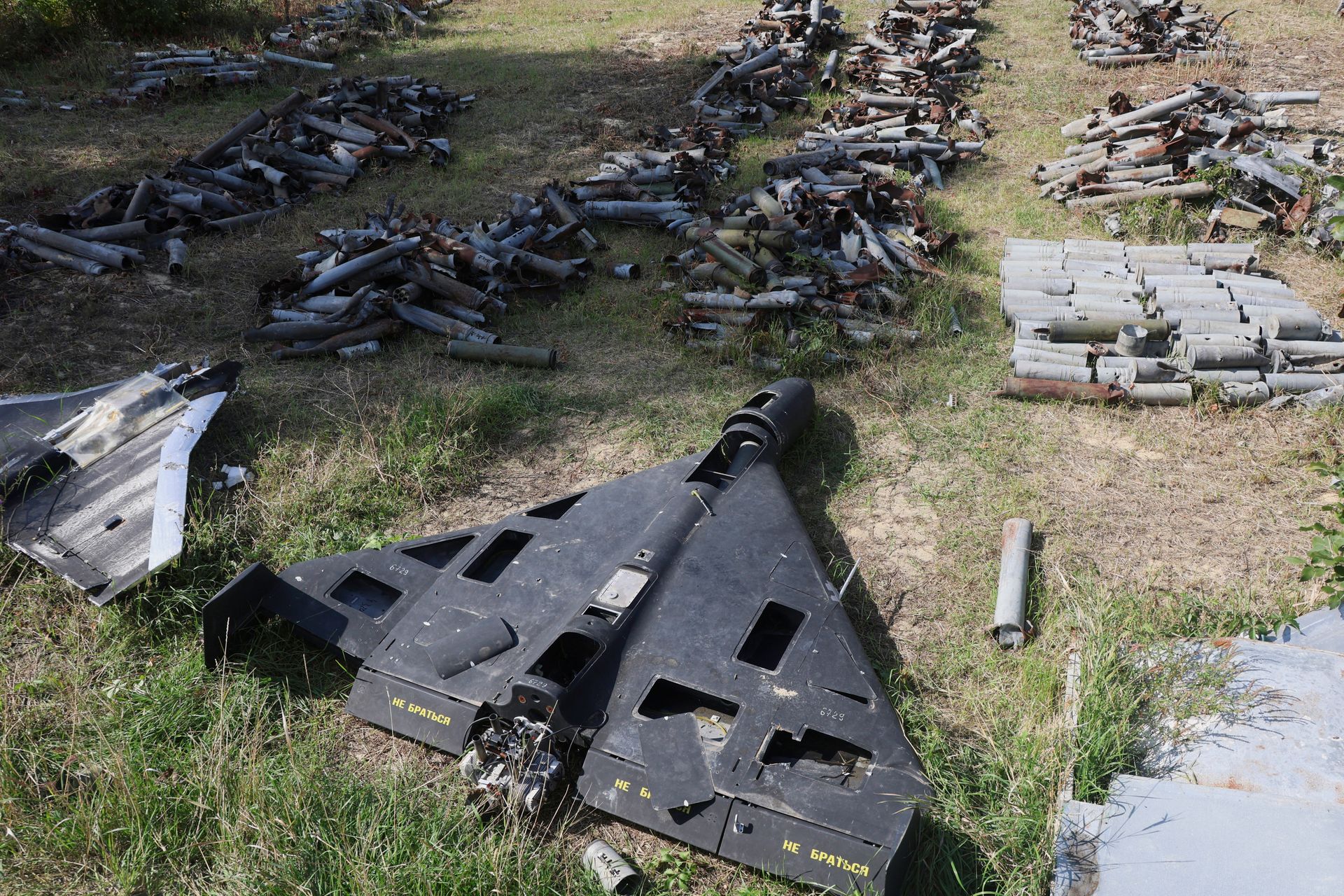
Ukraine's air defenses intercepted or suppressed 541 of 556 Russian kamikaze drones (97%) in a rare mass daytime strike on March 24. Fifteen drones struck cities nationwide, causing at least 32 injuries in Lviv and two deaths in Ivano-Frankivsk, with explosions reported in multiple other regional centers. Russia continues near-daily large-scale drone assaults (estimated 150–200/day) and previously launched a record 728 drones and decoys in July 2025; Kyiv's growing expertise countering Shahed-type drones is being offered to other states.
Ukraine's high interception effectiveness is not just a tactical victory — it signals that layered, networked air-defense architectures (sensors + EW + kinetic interceptors + counter-drone UAVs) have reached operational maturity under combat conditions. That maturity raises the marginal value of systems that integrate these layers (C2, datalinks, battle management) relative to standalone shooters; procurement will skew toward platforms that reduce human decision latency and enable reuse of interceptors via improved discrimination.
A second-order supply-chain effect: attrition-driven replenishment will prioritize fast-moving subcomponents (proximity fuzes, RF front-ends, seeker heads, high-rate propellants) and services (integration, field repairs, training). Lead times for those components are 6–18 months in current markets, favoring suppliers with vertically integrated manufacturing or large inventories over pure-assembly contractors.
On the adversary side, expect Russia to adapt by shifting mix toward longer-range cruise missiles, decoys, electronic countermeasures, and saturation waves timed to exhaust interceptors — a strategic pivot that benefits high-end SAMs, longer-range interceptors, and advanced EW systems. That pivot raises macro political upside (renewed NATO funding rounds) but also a tail risk: escalation into broader missile categories that blunt the economic case for cheap counter-drone solutions.
Contrarian risk: success can breed complacency among funders; visible kill rates may temporarily reduce urgency for straight-buy drone-kill kits, compressing short-term order flow. For investors the sweet spot is companies with recurring spare-parts and services revenue, strong backlog visibility, and modular product lines that pivot across missile and EW segments rather than one-off drone vendors.
AI-powered research, real-time alerts, and portfolio analytics for institutional investors.
Request DemoOverall Sentiment
neutral
Sentiment Score
0.05
