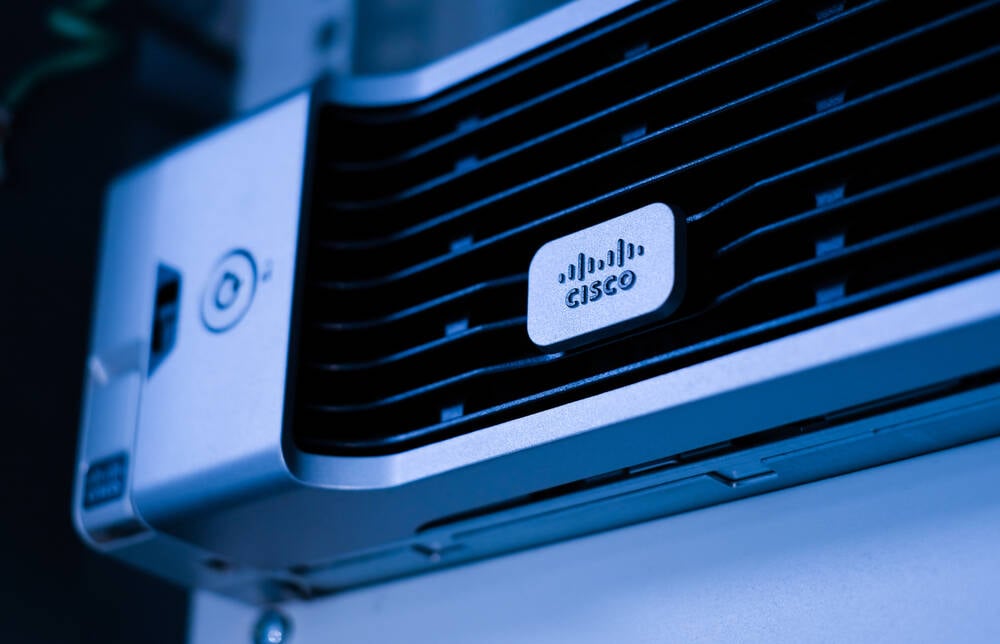
Cisco unveiled the Silicon One G300, a 102.4 Tbps switch ASIC with 512 200 Gbps SerDes supporting up to 128,000 GPUs with 750 switches or aggregated port speeds to 1.6 Tbps, and claims a collective networking engine (shared packet buffer and path-based load balancer) that can yield ~33% better link utilization and up to 28% faster training versus packet-spraying approaches. The chip is P4-programmable, will appear in Cisco’s N9000 and 8000 systems with 64 1.6 Tbps OSFP cages, and is paired with new 1.6 Tbps pluggable optics and 800 Gbps linear pluggables that, together with systems, are said to reduce switch power by roughly 30%; G300 systems and optics are slated to ship later this year. Cisco also expanded availability of its 51.2 Tbps Silicon One P200 routing silicon; the launch positions Cisco competitively against Broadcom and Nvidia in AI networking but vendor performance claims should be treated with caution.
Market Structure: Cisco (CSCO) is the primary near-term beneficiary — the G300 reduces switch count for 128k-GPU clusters from ~2,500 to ~750 (≈70% fewer switches), implying fewer chassis but higher ASP per chassis and accelerated refresh cycles for hyperscalers. Broadcom (AVGO) and Nvidia (NVDA) face direct merchant-silicon and NIC/Switch competition that could pressure AVGO’s pricing on Tomahawk-class parts and NVDA’s Spectrum-X traction in networking; optics and LPO suppliers should see rising demand as 1.6Tbps and 800Gb LPO ramps.
Risk Assessment: Key tail risks are (1) hyperscalers delaying capex amid macro, reducing 2026 order flow by >30%, (2) regulatory/antitrust scrutiny if Cisco leverages software to lock customers, and (3) optics supply bottlenecks (DSP/CPO transition) that could add 6–12 months to adoption. Immediate price moves will be headline-driven (days–weeks), commercial design wins and benchmarks will drive share shifts over 3–12 months, and system-level adoption or CPO transitions will determine durable market share over 12–36 months.
Trade Implications: Tactical trade is long CSCO (2–3% portfolio) into G300 shipments due H2 2026 with a 10% stop; offset with a 1–2% short in AVGO to express merchant-silicon margin compression — a classic long CSCO/short AVGO pair over 3–9 months. Use limited-risk option structures: buy CSCO 6–12 month call spreads to capture shipment-driven re-rating and buy AVGO 3–6 month put spreads to hedge against immediate pricing reactions.
Contrarian Angles: The market may overstate immediate Broadcom displacement — real customer transitions take 2–4 quarters and are topology-dependent, so AVGO downside could be overdone in the next 90 days. Conversely, Cisco’s 28% training-time claim is topology-specific; if independent benchmarks disappoint, CSCO will be vulnerable to a pullback. Watch for supplier/partner retaliation (price cuts, exclusive deals) that could trigger a price war and margin compression across the sector.
AI-powered research, real-time alerts, and portfolio analytics for institutional investors.
Request DemoOverall Sentiment
mildly positive
Sentiment Score
0.28
Ticker Sentiment
