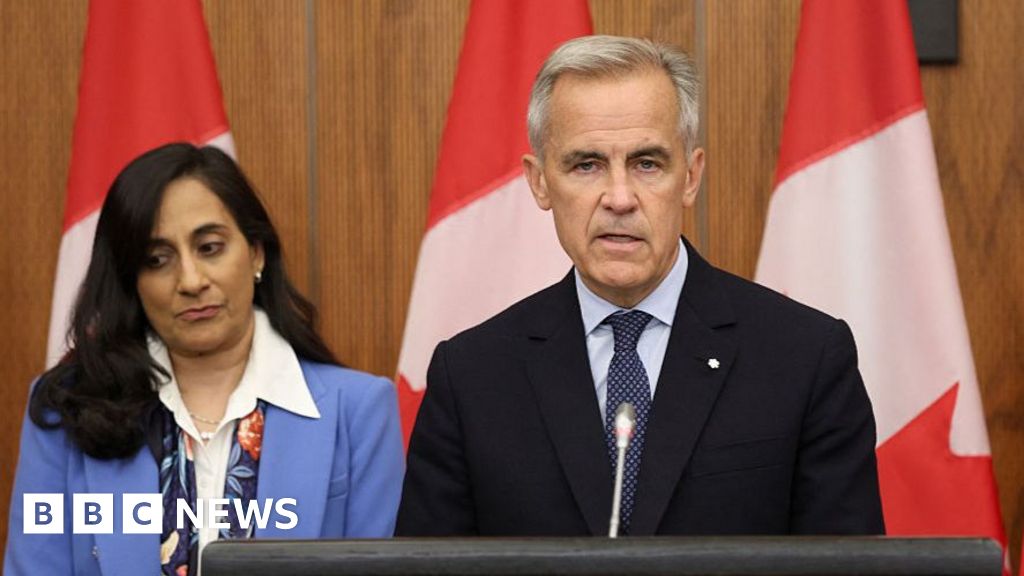
Canada announced its intent to formally recognize a Palestinian state in September at the UN General Assembly, contingent on democratic reforms by the Palestinian Authority, including elections without Hamas. This decision positions Canada as the third G7 nation, following similar recent announcements from the UK and France, and is cited by Prime Minister Mark Carney as a response to the worsening humanitarian crisis in Gaza and Israeli settlement expansion. Israel's foreign ministry strongly condemned the move, calling it "a reward for Hamas" and detrimental to efforts for a ceasefire and hostage release, while Canadian conservatives also criticized the policy shift.
Canada's plan to formally recognize a Palestinian state in September, contingent on democratic reforms by the Palestinian Authority, marks a significant policy alignment with fellow G7 members France and the UK. This coordinated diplomatic shift, framed by Prime Minister Mark Carney as a response to the "intolerable" humanitarian situation in Gaza and expanding Israeli settlements, effectively abandons the long-held tenet that statehood must emerge from a negotiated peace process, which is now deemed "no longer tenable." The conditionality, requiring Palestinian elections without Hamas participation, functions as a diplomatic lever intended to spur governance changes. However, the move introduces considerable geopolitical friction, drawing sharp condemnation from Israel, which views it as a "reward for Hamas" that undermines ceasefire and hostage-release efforts. It also faces domestic opposition from Canada's Conservative party. While the immediate market impact is assessed as low, this development heightens regional diplomatic tensions and signals a potential isolation of the United States' position within the UN Security Council, adding another layer of complexity to the Middle East geopolitical risk profile.
AI-powered research, real-time alerts, and portfolio analytics for institutional investors.
Request DemoOverall Sentiment
neutral
Sentiment Score
0.00
