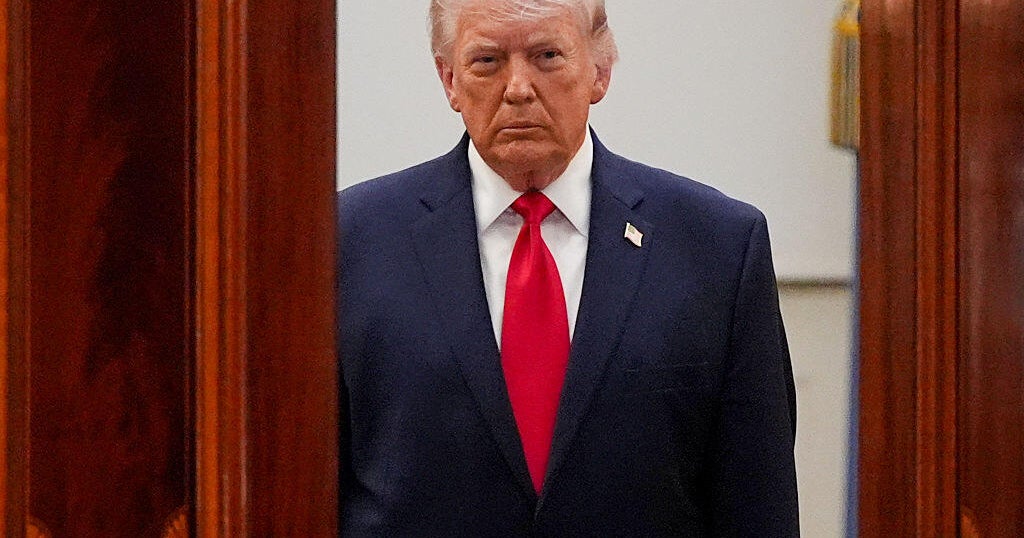
Brent crude jumped more than 7% after President Trump's prime-time remarks as the Strait of Hormuz — which handles about 20% of global oil flows — remains effectively choked. Trump issued conflicting signals, saying Iran is “decimated” and the strait will ‘‘open up naturally’’ while also urging other countries to take the lead in securing transits; the U.S. has offered naval escorts and political-risk insurance. Data show a majority of recent vessels transiting are linked to Iran and persistent mine/attack risks raise the probability of sustained supply disruption and a longer conflict than initially forecast.
Ambiguous security posture toward a major oil chokepoint has raised the probability that markets carry a sustained geopolitical risk premium rather than a one-off spike. Mechanically, higher war-risk and political-risk insurance, plus longer voyage distances for tankers if owners avoid the shortest route, will add on‑the‑water carry costs and widen delivered crude differentials by a few dollars per barrel within weeks; that spreads into refinery crack volatility and temporary re-routing of feedstocks.
Immediate winners are firms that underwrite, broker, or harden shipping and energy logistics (insurance brokers, reinsurers, private maritime security) and producers with flexible export hubs that can shift barrels to long‑haul tankers; losers are regional refiners and commodity traders long prompt physical crude into Asia lacking alternative logistics. Expect freight and VLCC time charter rates to lead indicators — a sustained elevation for 4–12 weeks signals persistent disruption, while normalization of war‑risk premia or coordinated naval escorts can compress those signals within 7–30 days.
Tail risks include miscalculation or mine/ASuW escalation that pushes oil risk premia into a $15–40/bbl shock range (months) or prompts strategic stock releases and diplomatic near‑term de‑escalation that removes the premium in 2–6 weeks. Watch three reversal triggers: sanctioned parties reaching a commercial workaround, multi‑national convoy arrangements backed by insured corridors, or a calibrated SPR release coordinated across major consumers. The market is pricing volatility; quantify exposure by tracking insurance rate cards, VLCC TCEs, and Brent backwardation steepness as your real‑time signals.
AI-powered research, real-time alerts, and portfolio analytics for institutional investors.
Request DemoOverall Sentiment
mildly negative
Sentiment Score
-0.20
