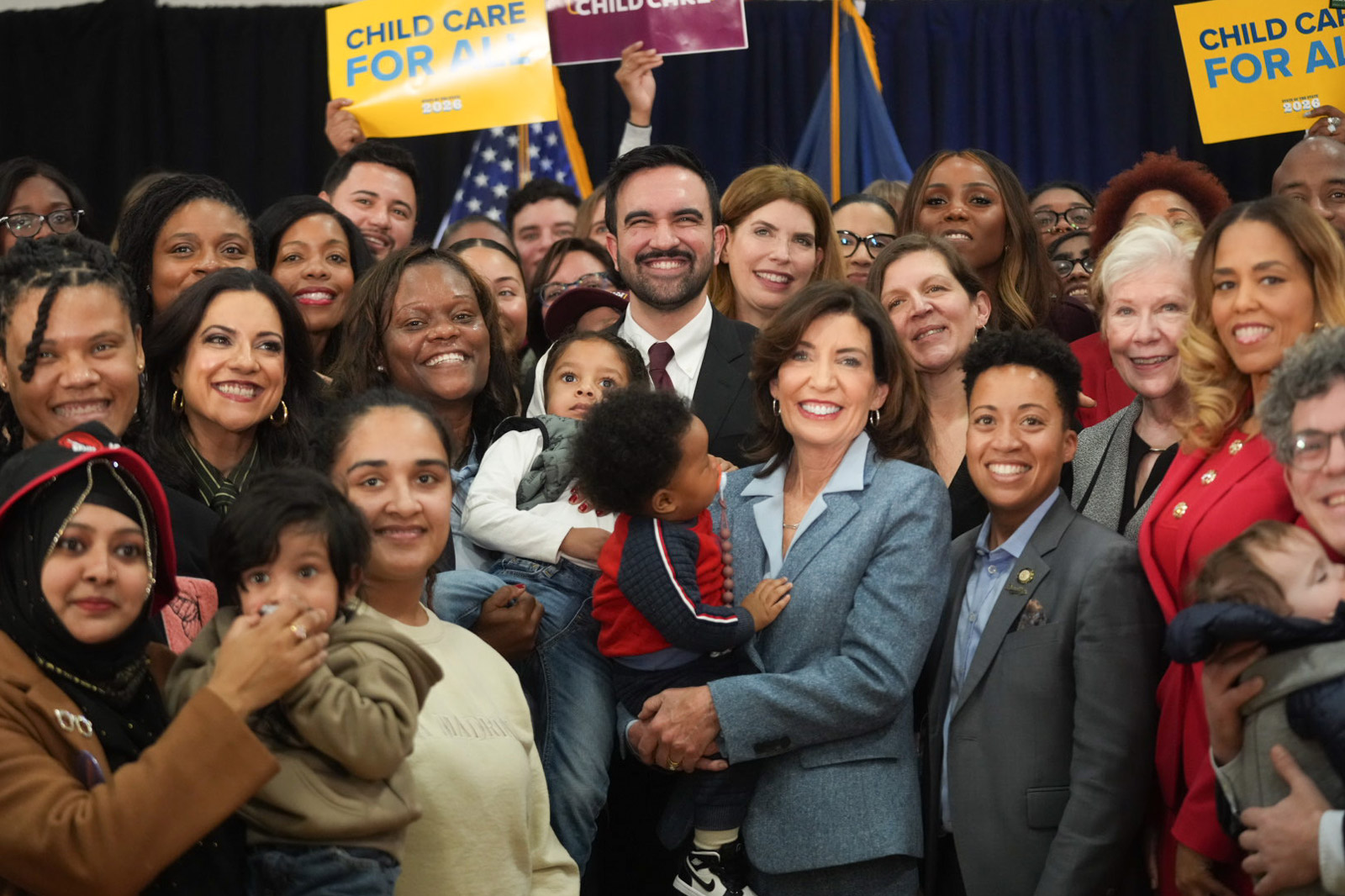
New York Governor Hochul announced a major expansion of state-funded childcare, partnering with NYC Mayor Zohran Mamdani to launch a city 2‑Care program for two‑year‑olds, strengthen universal 3K, and make pre-K universal for all four‑year‑olds by 2028–29. The plan builds on $8.6 billion of prior childcare funding, commits roughly $500 million to achieve universal pre‑K seats and higher per‑pupil funding, adds $1.2 billion in subsidies (bringing total subsidies to over $3 billion), aims to serve nearly 100,000 additional children (an incremental ~100,000 supported since the governor took office), caps most families’ costs at $15/week, raises provider reimbursement rates by ~50%, and will create an Office of Child Care and Early Education to implement the programs.
Market structure: State commitment (roughly $0.5bn for Pre-K + $1.2bn incremental CCAP and part of $8.6bn already deployed) creates a material, multi-year demand pool — roughly 100k incremental children implies a conservatively estimated $1bn/yr service market at ~$10k/slot — that benefits large, scalable childcare operators, payroll/HR vendors and construction/modular-build firms while squeezing small, unaffiliated providers with thin margins. Pricing power shifts toward accredited operators who can secure public contracts and higher reimbursement rates; fragmented local operators face margin pressure and consolidation risk over 2–5 years.
Risk assessment: Tail risks include budget reversals post-election, implementation delays, or wage-driven margin compression for providers (a 30–50% reimbursement-rate increase has already occurred); these could cause bankruptcies among small centers and spike M&A. Immediate (days–weeks) risks center on muni-market reaction to perceived fiscal strain; medium term (6–18 months) on workforce shortages and capex execution; long term (by 2028–29) on full universality roll-out and steady-state demand.
Trade implications: Direct buys are large public childcare operators and payroll/benefits platforms that will administer subsidies (e.g., BFAM; ADP, PAYX) and select construction/modular contractors with NY exposure; debt-side, expect incremental NY muni issuance — prefer short/intermediate-duration munis (3–7y) over long duration. Use option call spreads on childcare operators to express upside while capping premium; consider pair trades long scalable operator (public) vs short small regional private-equivalent exposures (private-equity-owned chains) if available after quarter reporting.
Contrarian angles: Consensus prizes pure play operators but underestimates implementation risk and the potential for accelerated consolidation that favors operators owning real estate or with franchise models (asset-light operators may underperform). Also, fiscal strain could widen NY muni spreads by 25–75bp if markets price issuance risk — an underappreciated source of alpha (short long-duration NY munis into 1H 2026 if budget language lacks dedicated revenue offsets).
AI-powered research, real-time alerts, and portfolio analytics for institutional investors.
Request DemoOverall Sentiment
moderately positive
Sentiment Score
0.45
