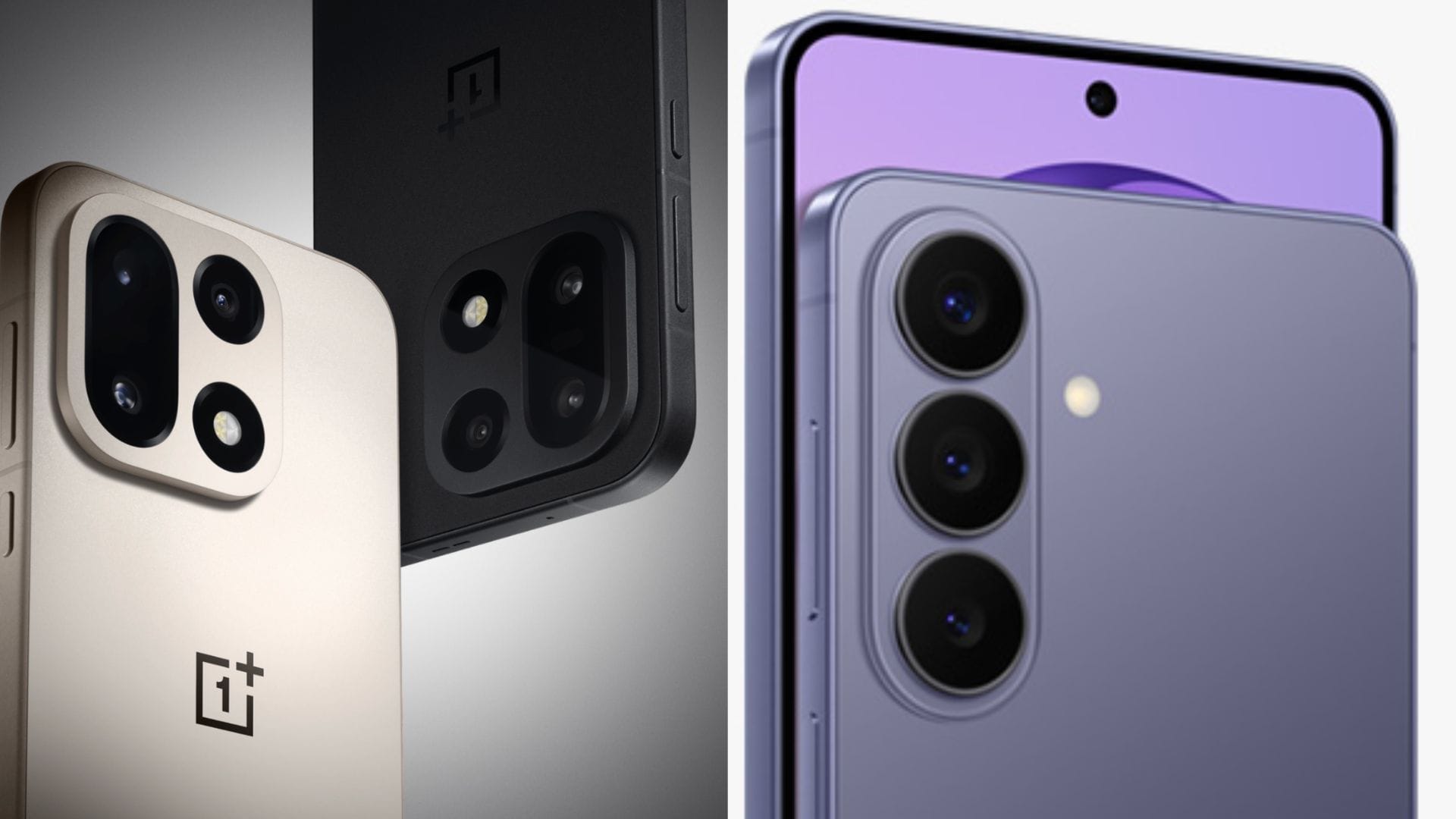
Key differentiator: Samsung offers a seven-year flagship software update commitment versus OnePlus’ roughly 5–6 years and maintains broader offline after-sales reach in India, while OnePlus leads on hardware metrics—7,300 mAh silicon‑carbon battery and 120W wired charging (0–100% ~30–40 min) versus Samsung S26 Ultra’s 5,000 mAh and 60W. Camera and AI strategies diverge: Samsung’s S26 uses a 200MP main sensor with 100x AI-enhanced zoom and deeper generative edits, whereas OnePlus relies on a triple 50MP Hasselblad‑tuned setup and subtler AI. For investors, this is product positioning/competitive differentiation rather than company-moving news—likely to influence consumer preference but unlikely to move stock prices materially in the near term.
The market framing as a pure feature race masks two structurally important vectors: distribution model and component roadmap. An online-first OEM that pushes battery chemistry and charging innovations shifts margin pools away from retail subsidies and into component suppliers and IP holders; expect that to amplify earnings volatility for suppliers that win the silicon-anode and fast-charging stacks, while compressing margins for legacy retail-led incumbents over a 12–36 month window.
A second-order supply-chain effect worth modeling is thermal and sensor demand: sustained-performance tuning increases demand for higher-grade thermal materials and premium camera modules at a higher attach rate per flagship, concentrating revenue upside in a handful of suppliers rather than across the broad smartphone supply chain. That concentration raises single-supplier risk but also creates easier forecasting once design wins are visible—watch quarterly design-win disclosure cadence for 2–4% rev shocks at tier-1 suppliers.
Regulatory and aftermarket dynamics are the main asymmetric risks. New battery chemistries have faster adoption curves but carry recall and certification tail risk that can wipe 5–15% off OEM multiples in 3–9 months if a safety incident occurs; conversely, a credible multi-year service footprint (offline+online) compounds ARPU through trade-in and extended-warranty monetization and can justify a persistent 3–4x P/S premium vs pure online players. Finally, AI-enabled editing and OS-level services are the lever that turns hardware parity into ongoing software monetization — a 12–24 month catalyst for platform owners and ad/assistant incumbents.
AI-powered research, real-time alerts, and portfolio analytics for institutional investors.
Request DemoOverall Sentiment
mixed
Sentiment Score
0.05
Ticker Sentiment
