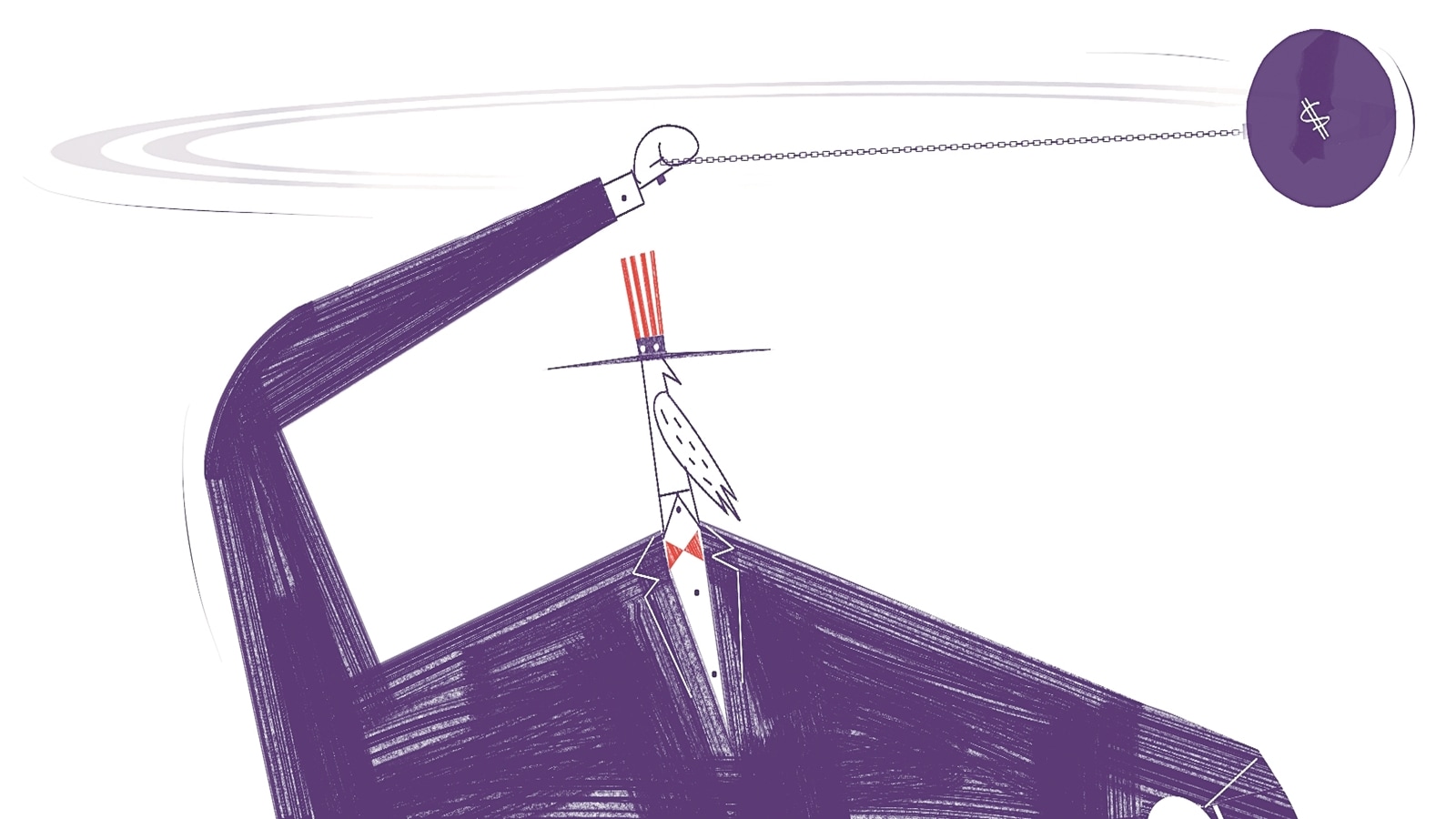
The US has significantly escalated trade tensions with India, imposing a 50% tariff, which is perceived by India as a politically motivated punitive action linked to its Russian oil imports and broader bilateral frustrations over defense, trade, and immigration. This aggressive stance is severely testing the India-US relationship, pushing India towards greater geopolitical hedging and questioning the durability of their friendship. While India aims to de-escalate and preserve the crucial relationship, anticipating continued volatility, the article suggests a 'grand bargain' remains possible despite the current strain.
A significant escalation in US-India trade tensions has occurred, with the US administration imposing an additional 25% tariff, bringing the total to 50% on Indian goods. This action is perceived not as a mere trade adjustment but as a politically motivated punitive measure, fundamentally altering the tone of the bilateral relationship from one of shared values to transactionalism. The move is reportedly driven by US frustrations over multiple issues, including India's energy imports from Russia, its hard bargaining on agriculture and high-value defense platforms, and immigration policies. This has prompted India to question the durability of the US partnership and reinforce its strategy of "geopolitical hedging." The direct economic risk involves the potential outpricing of Indian goods and services from the US market, threatening to dismantle decades of economic integration. Despite the severe strain, reflected in the negative sentiment score of -0.65, the analysis suggests the relationship is too critical to abandon. India's immediate strategy is de-escalation and damage control, with the underlying belief that a "grand bargain" remains possible amidst the anticipated high volatility.
AI-powered research, real-time alerts, and portfolio analytics for institutional investors.
Overall Sentiment
Negative
Sentiment Score
-0.65
