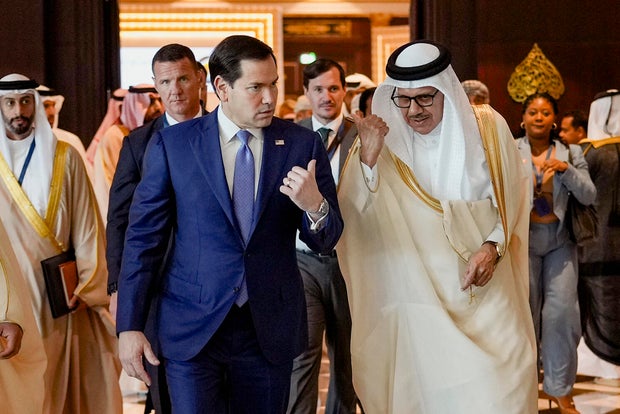
Brent crude fell 3.8% to $73.87 a barrel, with U.S. crude down 3.9% to $70.34, as tanker traffic through the Strait of Hormuz resumed more broadly under the U.S.-Iran memorandum of understanding. Oman said any joint maritime arrangement with Iran will not involve transit fees, while Rubio rejected tolls on international waterways and warned such charges would create "total chaos." The Senate also rejected a measure to curb Trump’s Iran war powers in a 50-47 vote, underscoring the ongoing political and geopolitical uncertainty.
The market is pricing a de-escalation dividend, but the bigger signal is that a geopolitical risk premium is being actively dismantled before the settlement is actually durable. That tends to compress front-end oil volatility faster than it compresses physical balances, which is why the first beneficiaries are not just consumers but also shippers and refiners that were carrying contingency inventory and war-risk logistics costs. The absence of transit fees matters less as a direct cash flow issue than as a credibility test: if Tehran cannot monetize the chokepoint, it loses leverage over the marginal barrel, and the pricing power shifts back to producers with lower headline risk. The second-order effect is a sharp rerouting normalization: the market is learning that “safe” route designations can become a quasi-regulatory regime overnight. That creates a temporary advantage for carriers and traders with the best operational intelligence and chartering flexibility, while smaller counterparties face higher execution risk and slower redeployment. If traffic keeps normalizing for another 1-3 weeks, implied freight and insurance premia should mean-revert faster than flat-price oil, which is bearish for emergency logistics winners and bullish for downstream margin recovery. The contrarian risk is that the current calm is contingent on negotiations, not settlement. Any failed talks, a single high-profile maritime incident, or a renewed enforcement dispute around routing could reintroduce a premium quickly, and the market has likely become complacent about how fast a chokepoint narrative can reprice. For energy equities, the near-term setup is mixed: integrateds with trading books benefit from volatility, but pure upstream names may underperform if crude slides toward the low-$70s before realized downstream demand catches up. For CVX and SHEL, the softer headline price is a modest negative in the near term, but it should be partly offset by improved refining, chemicals, and trading optics if the route normalization sticks. The bigger question is whether the market is underestimating how much of the recent oil spike was a risk premium rather than a structural supply loss; if so, the current move may overshoot on the downside over the next 2-6 weeks before stabilizing on actual inventory data.
AI-powered research, real-time alerts, and portfolio analytics for institutional investors.
Request DemoOverall Sentiment
mildly positive
Sentiment Score
0.15
Ticker Sentiment
