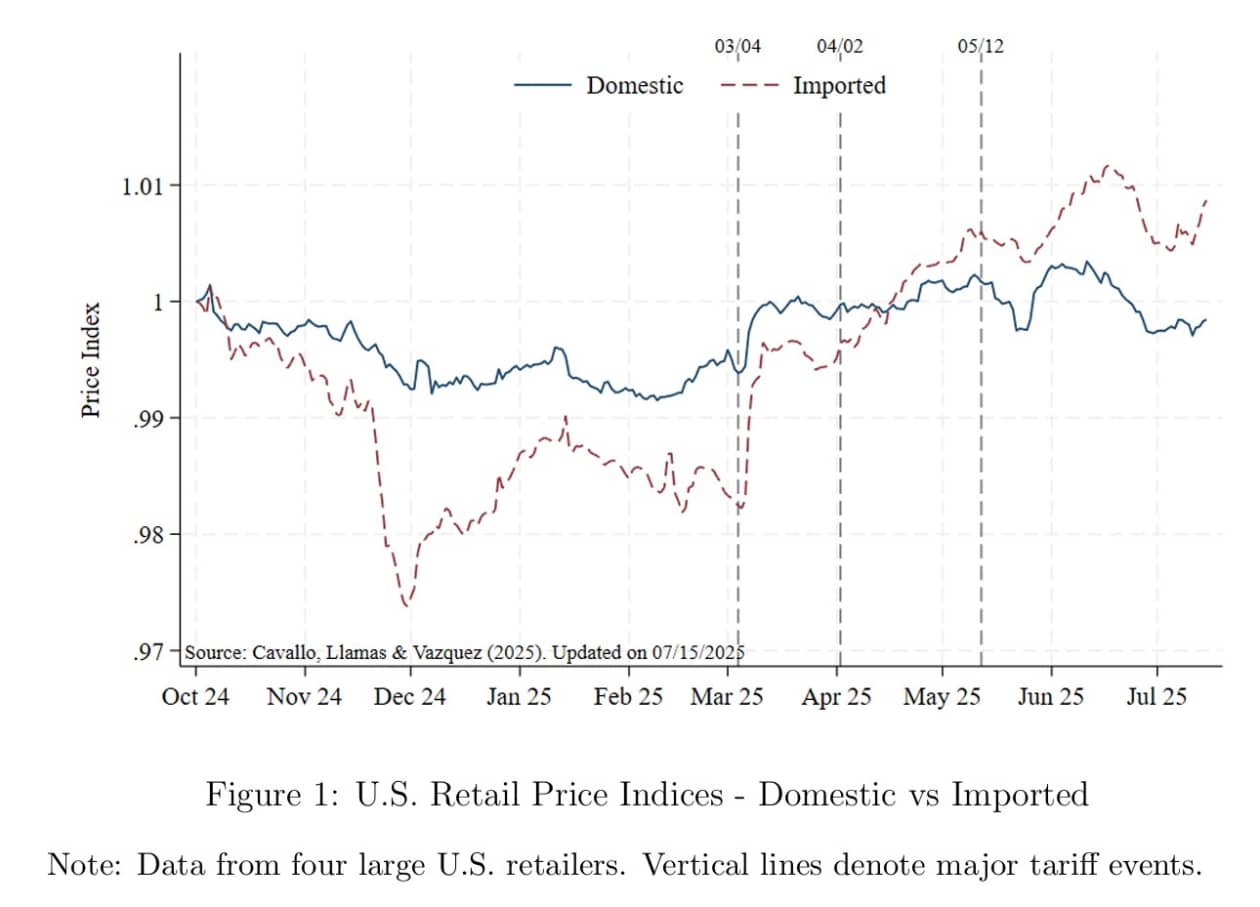
Economists report that Trump-era tariffs have led to relatively quick, albeit modest, price increases for imported goods. While current inflation readings show only scattered signs of broad cost escalation for American consumers, economists contend that more significant inflationary impacts are still anticipated, particularly if tariffs continue to rise, contrary to the White House's assertions.
The current economic data presents a nuanced picture regarding the impact of U.S. tariffs. While broad inflation readings show only "scattered signs" of rising costs, economists observe that prices for imported goods have demonstrated "relatively quick price responses to tariff announcements." This suggests a direct, albeit currently "modest," pass-through of tariff-related costs at the import level, which has not yet fully translated into significant consumer price inflation. The key discrepancy lies in the timeline; the White House highlights the lack of current widespread inflation, whereas economists counter that the more substantial inflationary damage is a lagging effect that will become more pronounced if higher tariffs are implemented as anticipated. This creates a forward-looking risk profile where the current low-impact environment could transition to one with more significant cost pressures, impacting corporate margins and consumer spending.
AI-powered research, real-time alerts, and portfolio analytics for institutional investors.
Request DemoOverall Sentiment
mixed
Sentiment Score
-0.25
