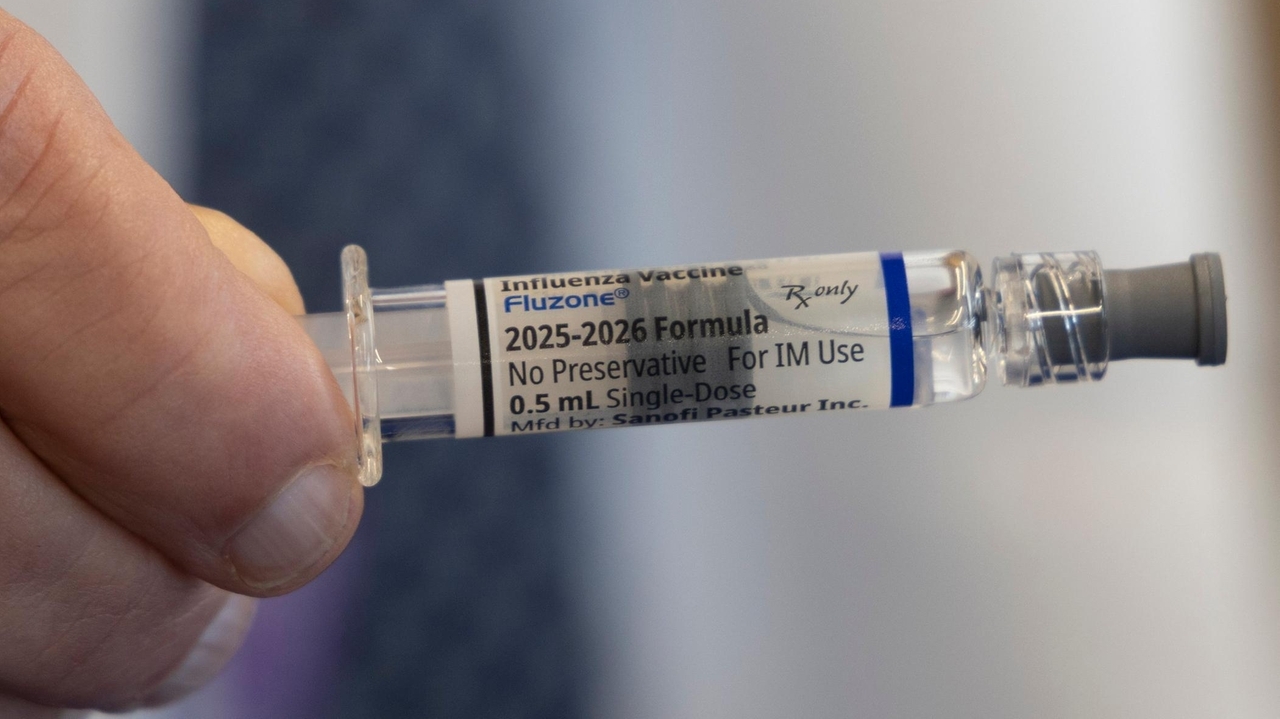
New York recorded a record 71,123 flu cases in the week ending Dec. 20 — the highest weekly total since flu became reportable in 2004 — bringing the statewide total since October to 189,312; Long Island accounted for more than 15,000 of those cases (7,924 Nassau; 7,571 Suffolk). State hospitalizations due to influenza rose 63% over the last two reporting weeks, with Suffolk's hospitalization rate jumping from 8.79 to 20.38 per 100,000 and Nassau's from 15.4 to 23.2 per 100,000, while vaccination coverage remains low (~25% statewide, 20% Suffolk, 24% Nassau), raising near-term risks to hospital capacity, staffing, elective procedures and insurer exposure.
Market structure: Immediate winners are diagnostic labs (Quest Diagnostics DGX, Laboratory Corp LH) and retail clinics (CVS, WBA) that capture testing, vaccine and antiviral demand; hospitals (HCA, CYH, THC) see revenue lift from admissions but face margin compression from overtime/agency staffing and supply constraints. Labs gain short-term pricing/power because testing is scarce and routinized; pharmacies gain incremental vaccine/antiviral gross margin but compete on walk-in capacity. Bond-funded municipal hospitals could face stress if bed-capacity drives emergency state aid requests.
Risk assessment: Tail risks include a vaccine-escape variant or antiviral shortage that increases severe cases >25% and triggers state-level emergency measures, pressuring insurers (UNH, CVS Health Aetna) and municipal budgets. In days-to-weeks expect testing and urgent-care volumes to spike (4–8 weeks peak); in 3–6 months anticipate normalization if vaccine uptake increases from 25% to >40% or targeted public campaigns deploy. Hidden dependencies: school/workplace absenteeism can shave multiple sectors' revenue (airlines, retail) and amplify short-term economic weakness.
Trade implications: Direct short-duration plays: long DGX/LH exposure (testing revenue +15–30% vs baseline over 4–8 weeks), small long CVS exposure for vaccine/clinic flows, and short leveraged/low-liquidity regional hospital operators (CYH) to capture margin risk. Use 6–12 week call spreads on labs and 4–8 week protective puts on hospital longs; rotate into broader healthcare balances by end-Q1 if vaccination rates materially rise. Entry: initiate within 3–7 days; exit/reevaluate if two-week hospitalization growth decelerates below 5%.
Contrarian angles: Consensus assumes hospitals uniformly benefit; history (2017–18 severe season) shows labs spike then normalize and hospital margins erode after staffing cost surge. The market may under-price the speed of normalization once public messaging increases vaccination from media-driven fear — that would compress lab upside by 30–50% into Q2. Unintended consequence: temporary staffing firms (AMN) could see a cliff after a 6–12 week surge; shorting post-peak multiple expansion is a viable late-stage trade.
AI-powered research, real-time alerts, and portfolio analytics for institutional investors.
Request DemoOverall Sentiment
moderately negative
Sentiment Score
-0.40
