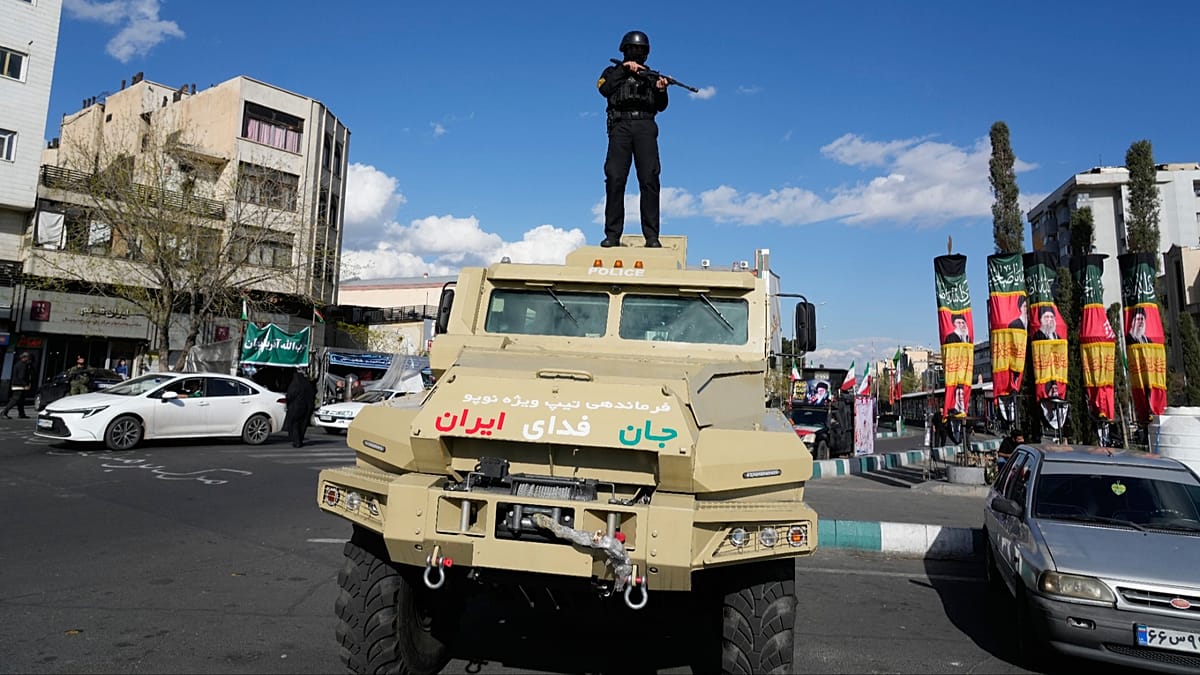
Iran executed 29-year-old aerospace engineer Erfan Shakourzadeh on espionage charges after he alleged torture and coerced confession in prison. Human rights groups said he was moved to Qezel Hesar prison ahead of the execution, and the case adds to nearly 30 recent hangings tied to political activity, security offences, and protest-related cases. The event underscores heightened geopolitical and human-rights risk in Iran.
This is less a single human-rights headline than a signal that Tehran is increasingly using executions as a coercive state-capacity tool. The second-order market effect is not on CIA directly, but on the risk premium for any asset with Iranian sovereign exposure: higher probability of abrupt escalation, more erratic enforcement, and lower confidence in any back-channel negotiation because internal security optics are now being prioritized over de-escalation. That typically widens the range of outcomes rather than shifting the median, which is bad for anyone selling vol into MENA headlines.
The more important near-term catalyst is retaliatory asymmetry. When a regime raises domestic repression into the open, it often becomes less flexible externally for several weeks, increasing the odds of proxy activity, maritime harassment, or a bargaining posture that stalls sanctions relief. That can feed into regional energy and shipping risk premia even if no barrels are immediately removed, with the first move usually showing up in front-month options and freight insurance before spot physicals reprice.
The contrarian point is that the market may already be desensitized to political violence in Iran, so the direct headline impact could fade fast unless it coincides with a larger security event. The underappreciated tail risk is that elite-flight and talent-exit accelerate after episodes like this, which compounds long-run state fragility but also raises the odds of more unpredictable internal purges. In other words, the immediate trade is volatility, but the structural trade is on regime credibility decay.
For CIA-linked sentiment specifically, there is no meaningful fundamental read-through to the agency itself; any price impact would be through broader U.S.-Iran geopolitical positioning, not earnings or cash flow. So the best expression is likely via cross-asset proxies rather than the ticker labeled in the dataset.
AI-powered research, real-time alerts, and portfolio analytics for institutional investors.
Request DemoOverall Sentiment
strongly negative
Sentiment Score
-0.80
Ticker Sentiment
