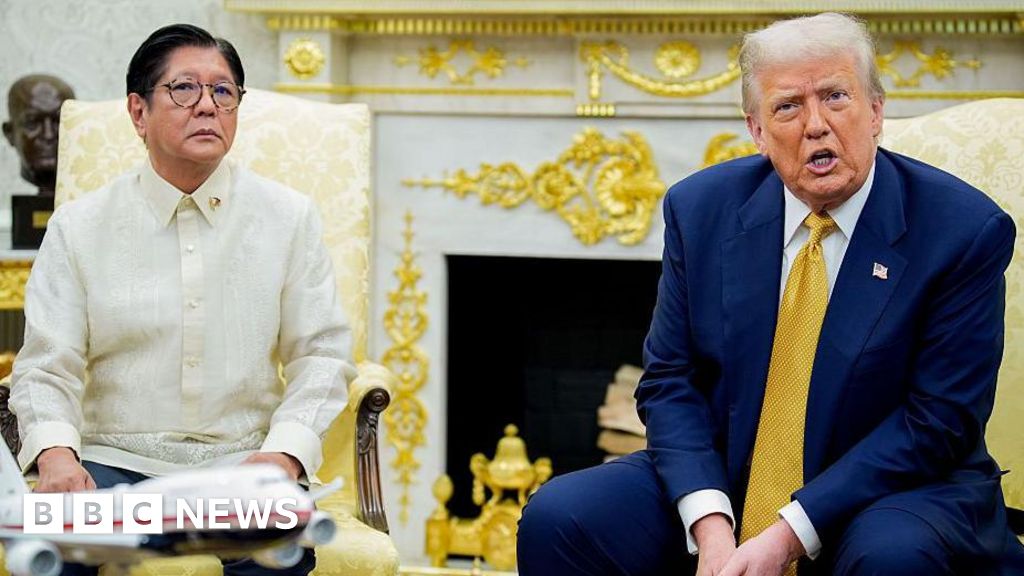
US President Trump announced a 19% tariff on Philippine imports, claiming a new trade and military cooperation pact, though the Philippines has not confirmed the agreement. This move, despite the Philippines being a minor trade partner, underscores the administration's persistent tariff strategy, with major trade partners like the EU and Canada facing new duties by August 1. The financial impact is evident, as companies like General Motors and Stellantis have reported over $1 billion and €300 million in tariff-related costs, respectively.
The US administration has announced a 19% tariff on Philippine goods, framed as part of a comprehensive trade and military pact, yet the agreement remains unconfirmed by the Philippines. This unilateral announcement introduces significant uncertainty and continues a pattern of unresolved trade negotiations with other partners, including the UK, China, and Indonesia. While the Philippines represents a relatively small trade relationship, with $14.2 billion in goods exported to the US last year, the move underscores a persistent and aggressive US tariff strategy. The broader market risk is amplified by an approaching August 1 deadline for new, higher duties on major trade partners like the European Union and Canada, with Europe already signaling potential retaliation. The tangible financial impact of this trade policy is evident in the corporate sector, particularly for automakers. General Motors has reported tariff-related costs exceeding $1 billion over a three-month period, and Stellantis has disclosed a €300 million impact, directly linking the tariff environment to negative pressure on corporate earnings and fundamentals.
AI-powered research, real-time alerts, and portfolio analytics for institutional investors.
Overall Sentiment
strongly negative
Sentiment Score
-0.65
Ticker Sentiment
