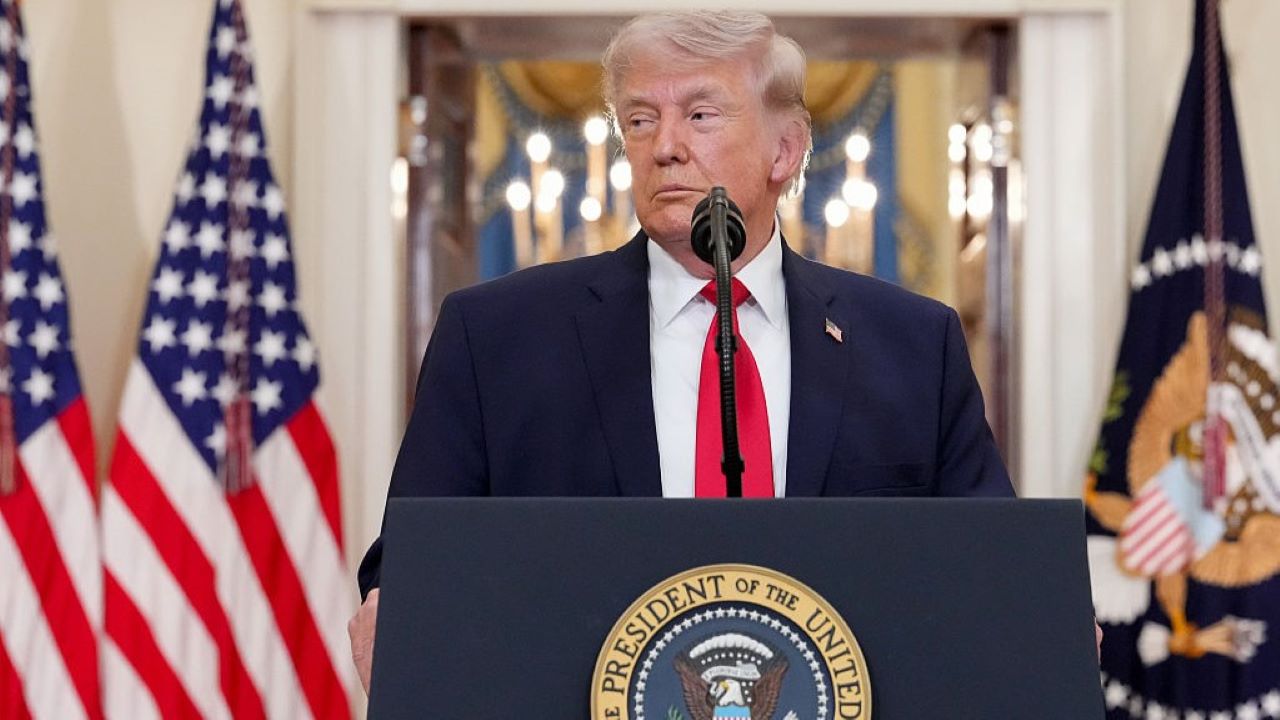
President Trump threatened to hit “each and every one” of Iran’s electric-generating plants and set a near-term deadline to reopen the Strait of Hormuz, escalating the risk of major strikes if Iran does not accept a deal. Pakistan has floated an “Islamabad Accord” calling for an immediate ceasefire and 15–20 days of talks to fully reopen the strait, but Iran has not agreed. The U.S. has already broadened targets to include mixed-use infrastructure (e.g., a major bridge) and Iran’s recent strike in Haifa killed four, creating a high risk of disruption to oil flows through Hormuz and prompting likely risk-off moves across markets.
A disruption to Persian Gulf export flows would act like a sudden reduction in available seaborne barrels combined with a material jump in voyage time and insurance costs — an outcome that amplifies near-term Brent/WTI volatility more than it tightens structural supply. Market mechanics imply a 0.5–1.0 mbpd effective export shock typically translates into $6–$15/bbl of spot upside within the first 2–6 weeks as tankers reprice and inventories draw; that move is concentrated in front-month crude and freight (TC) contracts rather than long-dated fundamentals.
Secondary winners are those that capture transitory spreads and transport scarcity rather than pure production exposure: VLCC/Suezmax owners see utilization-driven T/C rate jumps (voyage days rising ~20–30% implies 30–100% T/C uplift depending on route), short-term charterers with storage capacity can arbitrage contango, and LNG/spot gas desks benefit from routing and substitution demand. Conversely, regional refining hubs with feedstock inflexibility, marine insurers/reinsurers, and trade finance providers face compressed margins and outsized drawdowns in a spike scenario.
The path-dependence is sharp: a negotiated re-opening or diplomatic de-escalation can erase >70% of the initial premium inside 24–72 hours, while targeted strikes on energy infrastructure create 3–12 month supply-side deficits and a higher floor on energy prices. Watch three catalysts on tight timelines: rapid diplomatic reversals (fast unwind), precision infrastructure strikes (multi-month effect), and secondary market frictions—insurance, banking limits, and sanctions enforcement—that can persist and reroute flows even if chokepoints reopen.
Contrarian read: prices may be overstating duration risk. The marginal cost for key consumers to re-route, the political costs for global insurance markets to cease coverage completely, and alternative pipeline/lightering workarounds all cap the probability-weighted downside of a long, structural closure. That argues for asymmetric, short-dated option structures rather than large, directional cash exposure to producers.
AI-powered research, real-time alerts, and portfolio analytics for institutional investors.
Request DemoOverall Sentiment
strongly negative
Sentiment Score
-0.80
