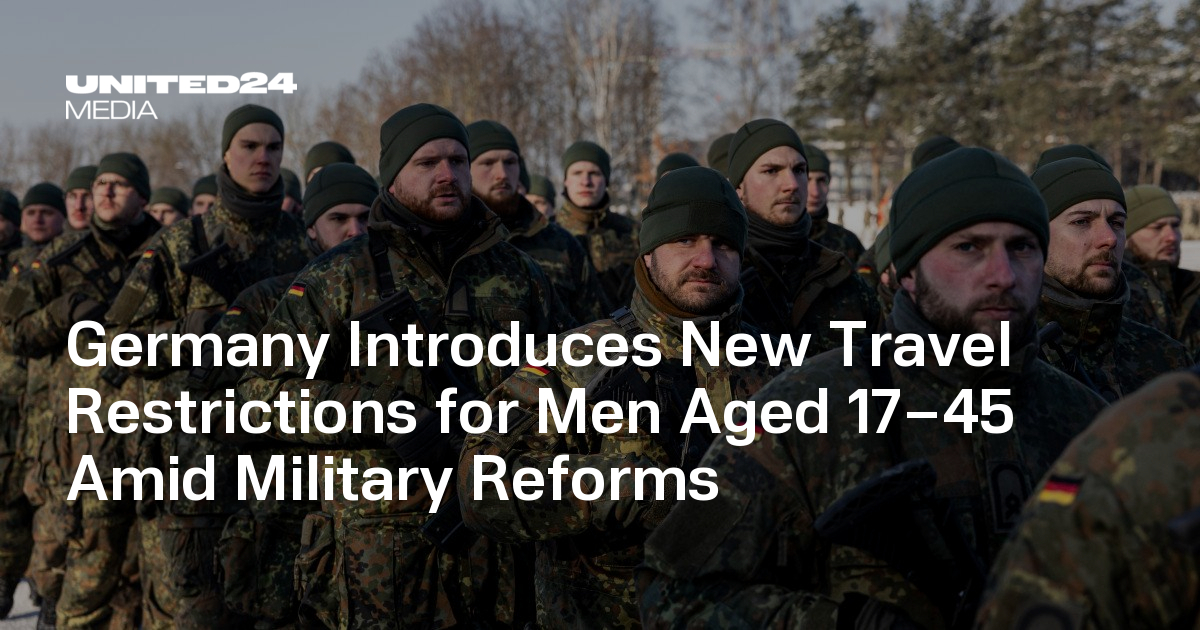
Germany will require men aged 17–45 to obtain official permission from a Bundeswehr Career Center before leaving the country for stays abroad longer than three months, effective January 1, 2026. The measure is part of the Military Service Modernization Act alongside plans to raise Bundeswehr strength from ~184,000 to between 255,000–270,000 soldiers by 2035 (roughly a 39%–47% increase) and a mandatory willingness-to-serve questionnaire for men born in 2008 or later. The rule normalizes travel authorization in peacetime and signals increased focus on mobilization and domestic manpower accounting, with commentators warning of heightened geopolitical sensitivity given Germany's strategic importance in NATO.
The policy tightens a specific segment of Germany’s labor pool and effectively re-routes public budget priorities toward multi-year defense procurement cycles; that dynamic favors mid-cap domestic prime contractors with predictable order-books and long lead-times rather than one-off service providers. Expect a 3–7 year tailwind in revenue visibility for firms that produce munitions, sensors, and vehicle platforms, with order cadence and cash conversion improving materially as MoD frameworks replace spot buys.
A less obvious effect is labor-market compression in age- and skill-cohorts concentrated in construction, logistics and lower-end manufacturing: firms will substitute labor via capex or outsource to non-EU labor pools, accelerating automation demand. This creates two correlated trades — long domestic defense OEMs and industrial automation/robotics suppliers — and a short in sectors sensitive to German wage inflation or near-term staffing frictions (hospitality, regional airlines) over the next 6–24 months.
Macro and political catalysts will govern the magnitude: bond-market repricing is plausible if defense spending forces higher deficits or sustained fiscal loosening, while legal challenges or a change in government could unwind parts of the program quickly. Watch three near-term triggers — coalition budget negotiations (3–6 months), Bundestag procurement framework releases (6–12 months), and any constitutional rulings — as binary events that can compress or expand these multi-year plays.
AI-powered research, real-time alerts, and portfolio analytics for institutional investors.
Request DemoOverall Sentiment
neutral
Sentiment Score
0.00
